

Bill of Sale Aug 31, 2026
Selling your car privately in West Virginia can be a challenging endeavour. You may be asking yourself how to deal with the DMV paperwork, how to locate serious buyers, and how to protect yourself against scams. However, choosing to go through with a private sale can put a considerable amount of extra money in your pocket compared to trading it in at a dealership.
When you sell your car to another driver directly, you eliminate the middleman, allowing you to set the sales price and negotiate directly with the buyer. This article will explore everything you will need to know about selling a used vehicle in the Mountain State. We will guide you through each step of the process from writing an attention-grabbing ad to safely passing keys to the new owner.
Reasons to Sell Your Vehicle Privately
Reasons to sell your car privately are simple: profit. When you trade in a vehicle to a dealership, the dealership needs to earn a profit on the trade-in, therefore they will always give you less than the actual retail selling price of your car. When you sell your car privately, you keep that profit.
You also have total control over the timing of the sale. You can wait for the "right price" buyer versus accepting low offer trade-in value when you're in a time crunch.

How to Sell a Car Privately in West Virginia
To master the private car sale, you should follow a step-by-step process. By breaking down the process into manageable and actionable steps, the tasks become much easier and stress-free.
1. Prepare the Vehicle for Sale
Make a good first impression. Before taking any pictures, you should make sure that your vehicle is in the best possible presentation condition.
Completely Clean the Vehicle: Wash the out and inside of the car, vacuum the carpet, and clean the exterior. If you are serious about getting top dollar, consider hiring a detailer.
Repair Minor Repairs: Replace burnt-out bulbs, clean fluids, and repair any minor scratches.
Obtain All Service Records: Buyers like to see that you have a history of maintaining your vehicle properly. This shows the buyer that the vehicle was treated well in your care.
2. Value it Appropriately
Properly pricing your vehicle is key to drawing interested buyers. If your vehicle is overpriced, your ad will not be seen by potential buyers. In contrast, if you underpriced your vehicle, then you will also be losing the opportunity to maximize your selling price.
You should check valuation services such as NADA and Kelley Blue Book for your vehicle's value.
You can also see what similar vehicles are selling for in Charleston, Huntington, and Morgantown, West Virginia.
When you set a price on your vehicle, you should build in just a bit of negotiation room. In other words, if you want $8,000, consider listing your vehicle at $8,500.
3. Create A Unique Listing:
An online listing serves as your “digital storefront”; therefore, it should be attractive.
Capture High-Quality Images: Capture images from all perspectives of the vehicle (20-25 photos): Dashboard, seating area , engine compartment, trunk, etc. it is best to take photographs at sunrise or sunset (golden hour) for optimal lighting.
Use a detailed description of the item: Do not exaggerate; be honest about: mileage, condition, upgrades, and reason for selling. This will build up trust with potential buyers.
Use multiple websites to promote your listing: Use safe, secure and private websites for setting up your selling process (i.e. KarKiosk) that will also promote your listing via social media and in local classifieds.
4. Negotiate and Finalize the Sale
Once buyers initiate communication, be prompt in your response. Be prepared to address questions and possibly negotiate multiple price quotes before settling on a sales price and settling on a final purchase agreement.
Documentation and Paperwork
There are legal requirements in West Virginia concerning documentation that must be fulfilled when transferring the ownership of a vehicle. If you do not meet these legal requirements when transferring vehicle ownership, it will create considerable problems for you and the owner of your vehicle.
The Vehicle Title
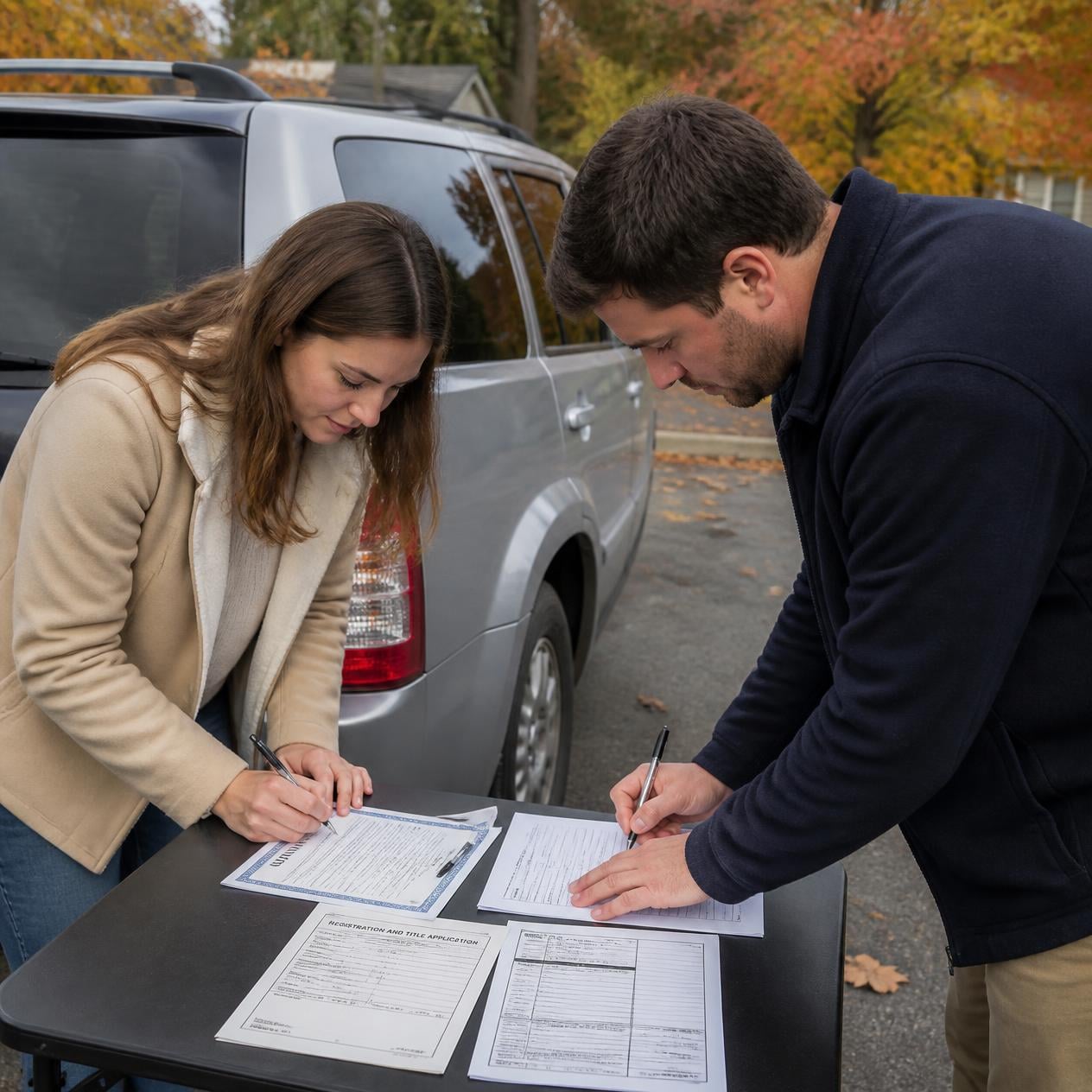
Title is by far the single most important document in the entire transaction process and you will need to complete the “Assignment of Certificate of Title” on the back of the title to legally transfer ownership in West Virginia.
Entering In The Information: You should enter your buyer’s full legal name, buyer’s address, date of sale and the exact selling price.
Odometer: You must also accurately record the current odometer reading.
Notarizing Your Signature: This is crucial for any seller in West Virginia; therefore you must have your signature notarized. Do NOT sign the title until you are physically present before a (licensed) notary public. If there are two owners shown on the front of the title - with an "AND" between their two names - they will both need to sign in front of the notary public.
DMV 7 TR FORM - Bill of Sale
The Title provides you with the primary Document proving transfer of ownership. However, a Bill of Sale is a very good idea and often required by law.
Required Use: If you sold your vehicle at less than 50% NADA Clean Loan Book value, the West Virginia Division of Motor Vehicles requires you to obtain a notarized Bill of Sale.
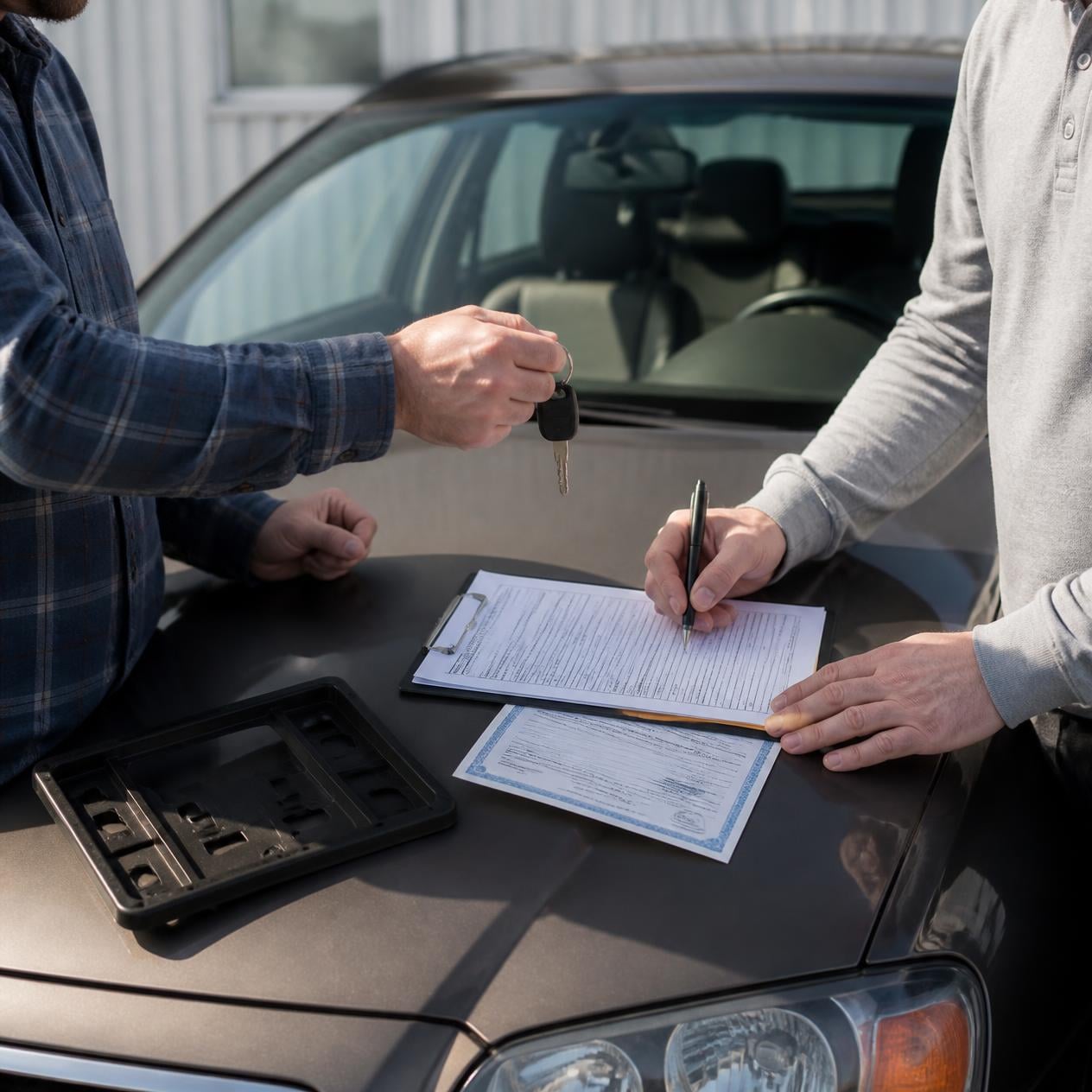
Recommended Use: Always obtain a Bill of Sale regardless of how much money you sold your vehicle for; the Bill of Sale serves as a receipt for you and the new owner indicating that you have transferred ownership of your vehicle. The Bill of Sale should contain, at a minimum, the VIN, manufacturer, motor & model, year, sales price, date of sale and signatures from both parties.
License Plates and Registration
In West Virginia, the plates are registered to you, the seller, and are tied directly to the seller rather than the car.
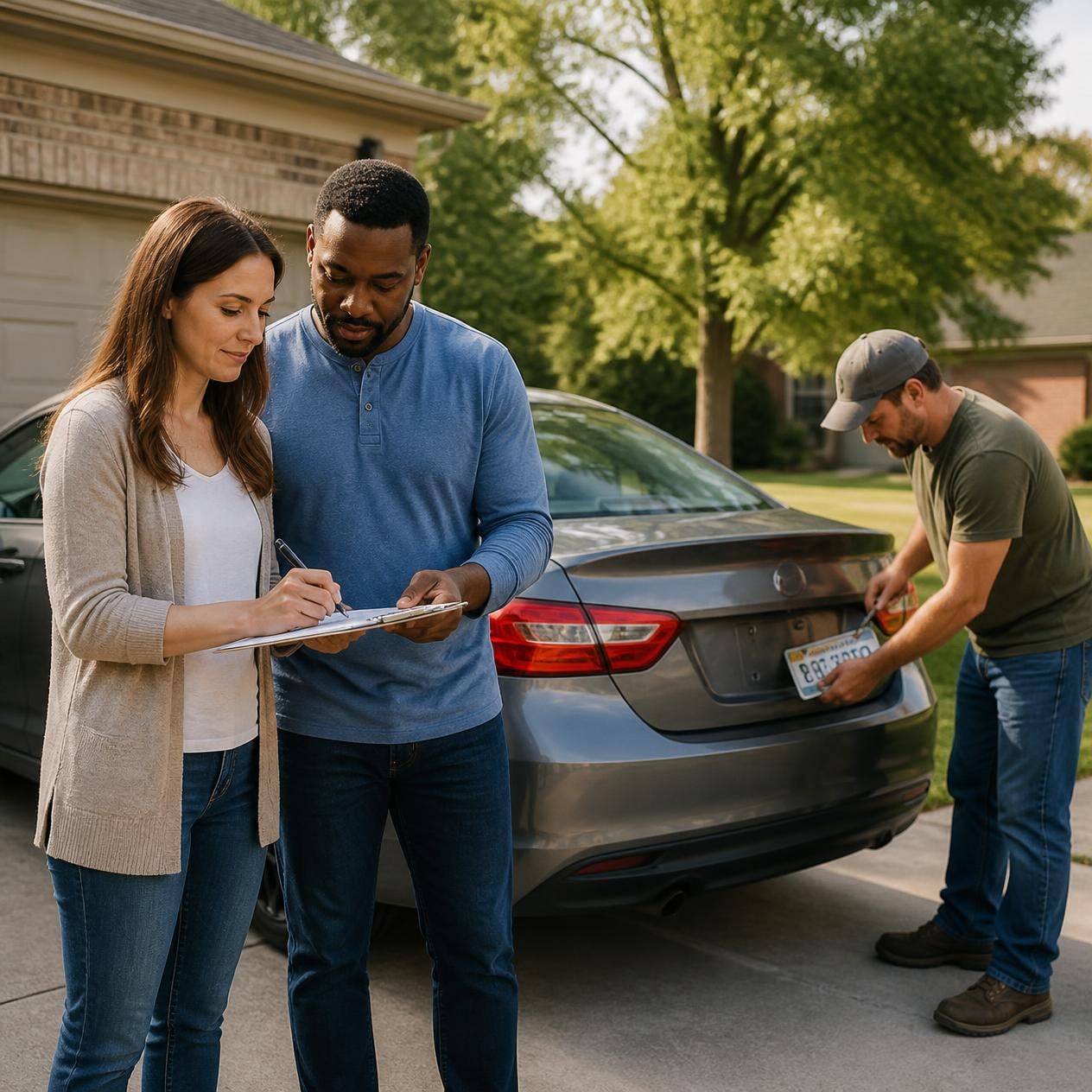
Remove the Plates: Do not allow the buyer to drive away from the sale with your plates on their vehicle. As soon as you complete the sale, you must remove the plates from your vehicle.
Transfer or Return: Once you have removed the plates from your vehicle, you can either transfer the plates from your old vehicle to a new vehicle, or you can return them to the DMV.
Cancel Insurance: Once you have removed the plates and completed the sale, you should call your insurance agent and cancel your insurance policy on that vehicle.

Seller Safety Advice
Selling a vehicle is likely to involve dealing directly with members of the public; therefore, protecting your own safety and financial security should always be a priority.
Meeting Buyers
Public Locations Only - Do not invite any strangers into your house; instead, you should always meet them in a well-lit public place that has a lot of people around it.
Safe Trade Areas - A lot of police departments in the state of West Virginia have created designated Safe Trade parking lots that are monitored with 24-hour security cameras. Other good locations include bank parking lots.
Take Someone Along - Do not sell by yourself. Bringing a second person with you is a deterrent to a potential criminal.
Managing the Test Drive
Identification Check: Ask the buyer for their valid driver's license before handing them the keys. Take a photo of the license and text it to a friend.
Ride-Along: Always ride with the buyer to experience the car first-hand. Take a ride in the passenger seat.
Route Planning: Agree on a short, populated route to take for the test drive.

Payment Collection
Avoid Personal Checks: A personal check could bounce after the buyer takes the vehicle.
Cash or Cashier’s Checks: Cash is king for inexpensive cars, and for more expensive cars you should collect a cashier’s check. You can also meet the buyer at their bank to see them issue a cashier’s check for payment.
Conclusion
Selling your car privately in West Virginia is a highly rewarding way to get the best possible value for your vehicle. By understanding the DMV paperwork, creating an honest and detailed listing, and prioritizing your safety, you can master the private sale process and walk away with cash in hand.