

Bill of Sale Aug 31, 2026
The process of selling your used car in Alaska, the Last Frontier, can determine a fair asking price for your vehicle. First, figure out what comparable cars are selling for in the Alaska markets of Anchorage, Fairbanks, and Juneau. Start by checking sites like KarKiosk to find similar makes/models/years as well as mileage & condition.
Keep in mind that dealership prices tend to be higher than what you will find on private party listings, so focus only on private party listings to get a more accurate comparison of how much comparable vehicles are selling for. Several online valuation services can help you establish an estimated market value for your vehicle.
KarKiosk provides a price range for private party sales based on the details of your specific vehicle, including its condition. While these services can help you form a baseline for your price, be sure to factor these prices against the data you collected from your local market.

Variables to Consider When Pricing
Mileage: As a general rule, lower mileage will equate to higher value.
Condition: As long as you are honest in your evaluation of condition, it will impact the sale price of your vehicle. A cleaner vehicle will sell for more than one that is dirty or has a few scratches or dings.
Features: Several features that may not seem like much in other areas (such as all-wheel drive) can really increase the value of your vehicle in Alaska. Additionally, items such as block heaters and remote starters are very common in Alaska as well as having good winter tires.
Supply and Demand: Generally speaking, the demand for smaller vehicles such as sedans or coupes tends to be less than that for larger vehicles such as trucks and SUVs. Therefore, you may want to increase or decrease your price based on the relative supply and demand within your market area.
Creating an Effective Online Ad
Your online ad serves as your digital storefront. The speed at which you sell your vehicle increases significantly when you create a comprehensive, truthful, and aesthetically pleasing advertisement that entices potential buyers.
To maximize your advertising, you must take quality images using a digital camera or smartphone. Use natural light (no shadows) and photograph during the day.
Photographic Viewpoints: Take a series of photos of all angles of the vehicle, including front and rear, both sides, and corner views of the vehicle.
Interior: Photograph the dashboard, driver and passenger area, rear seating, trunk, odometer, etc., to display the vehicle's total mileage.
Highlight Features: If your vehicle has any special features, including a touch screen, rear-view camera, or custom rims, take close-up images of those items.
Be Honest: If your vehicle has any serious defects, include images of those defects (scratches, dents, rust) to build trust with potential buyers.
Video: Include a 30-second video of yourself walking around the car and starting up the engine to help demonstrate condition.

Your text description must be easy to read, concise, and complete. Start with the year, make, model, trim level, mileage, and asking price; then tell the buyer about the vehicle by telling its story.
Be Detailed: Describe the current condition of the vehicle, maintenance records, and any upgrades. Explain the reason you're selling your vehicle.
Bullet Points: Have a bulleted list of the most important vehicle features (i.e., AWD, heated seats, new tires, remote start, etc.).
Include Items Useful in Alaska: If the vehicle has a block heater or studded tires that are included, or if it performs exceptionally well in snow, be sure to include those items in your advertisement.
Clearly Define Payment Options: Explain how you wish to receive payment and include the times available to test drive the vehicle.
Safety When Selling and Test Driving a Vehicle
As soon as you receive inquiries on your advertisement, you must manage communication and test drives safely.
Test Drive Safety Tips
Public Meeting Location: Meet in a well-lit public location such as the parking lot of a busy grocery store, police station, or bank.
Bring a Friend: Never go to meet a potential buyer alone.
Identify Buyer: Before allowing a potential buyer to test drive the vehicle, ask to see their driver's license and take a picture of it.
Accompany Buyer: You must accompany the buyer in the vehicle during the test drive to avoid theft and to answer questions about the vehicle.

Selling a Car Privately in Alaska
Selling your vehicle privately is not for everyone. Although selling your vehicle privately takes extra time and effort in comparison to trading in at a dealership, the amount of money you can receive from a private sale generally exceeds that of a trade-in.
Pros of Selling Privately | Cons of Selling Privately |
Higher Sale Price: You keep the full profit, often thousands more than a dealer trade-in offer. | Time and Effort: Requires you to clean the car, create a listing, and deal with buyers. |
Full Control: You set the price and decide who you sell to. | Safety Concerns: You must take precautions when meeting strangers for test drives. |
Direct Communication: You can talk directly with buyers to ensure your car goes to a good home. | Paperwork Responsibility: You are responsible for ensuring the title transfer is completed correctly. |
Transparent Process: You know exactly what the buyer is paying for the vehicle. | Potential for Scams: You need to be vigilant about fraudulent buyers and payment methods. |
How To Handle Paperwork in Alaska
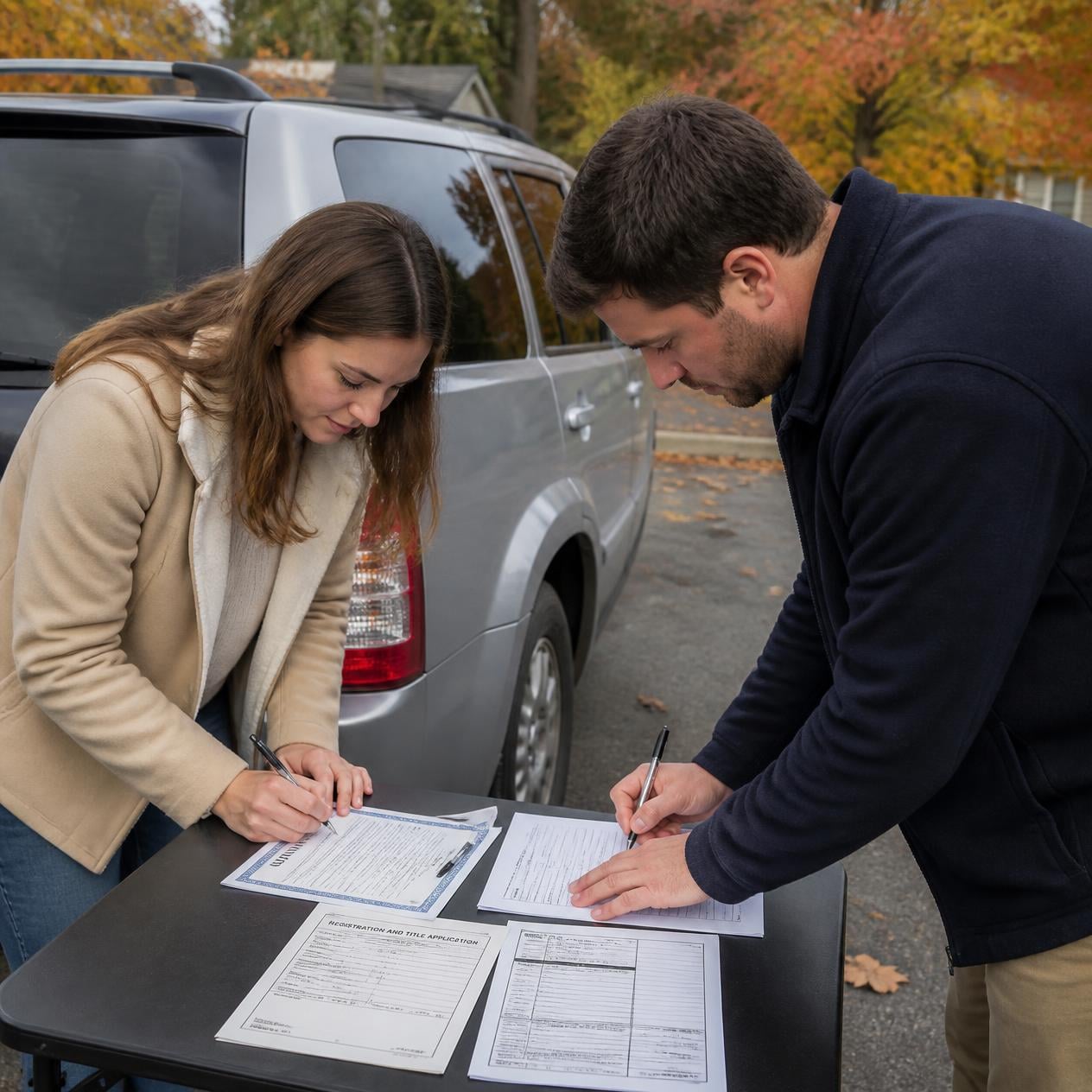
First, after coming to an agreement on price with a buyer, you need to take care of all the paperwork necessary for the sale. It is essential that you get this part completed correctly so that you can legally transfer title to your vehicle and so you will not be held liable in the future.
Document | Seller's Responsibility | Buyer's Responsibility | Notes |
Certificate of Title | Sign and print name exactly as it appears on the title. Enter sale date and odometer reading. | Sign the title to accept ownership. | If there are two owners joined by "and," both must sign. If joined by "or," only one must sign. |
Notice of Transfer Pending (Form 812) | CRITICAL: Immediately file this online or at the DMV. | N/A | This releases you from liability for anything that happens with the car after the sale. |
Bill of Sale (Form 825) | Complete and sign the form with the buyer. | Complete and sign the form with the seller. | Highly recommended. It serves as a receipt and proof of the sale price. |
Odometer Disclosure | Required for vehicles under 20 years old. This is part of the title transfer section. | N/A | Federal law requires this to be accurate. |
The Process of Transferring Title:
Complete Assignment of Title: This is typically found on the reverse of the Alaska Certificate of Title.
Print clearly the complete name and address of the buyer.
Enter the actual sale date.
Write the current odometer reading as a whole number (no decimals).
Sign your name exactly as it appears on the front of the title.
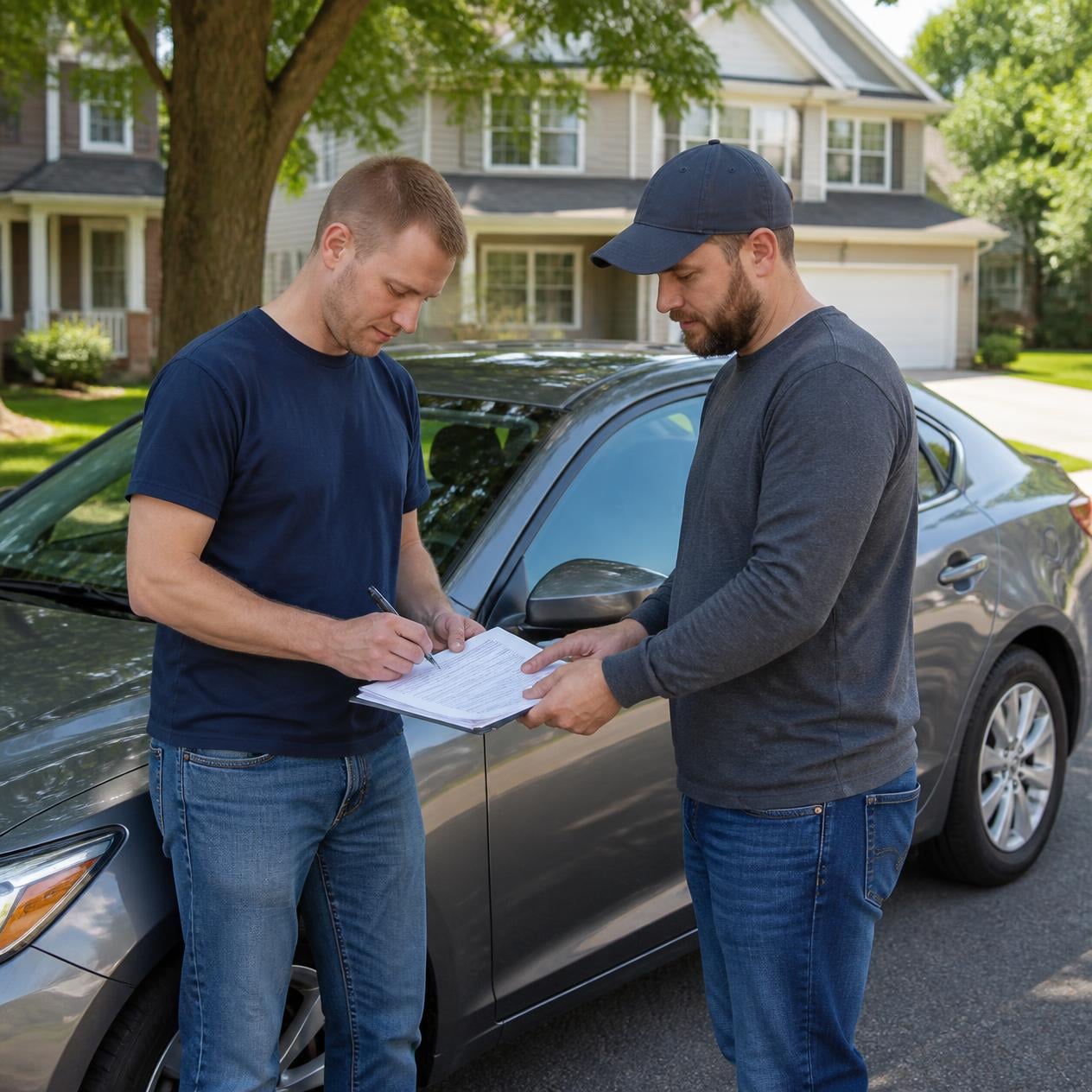
Bill of Sale: Although it is not required by law, it is always advisable to have a Bill of Sale (DMV Form 825). Both you and the buyer should sign one in addition to, but separate from your title transfer document. Both parties keep a copy of the Bill of Sale.
Notice of Transfer: This is the single most important step in protecting yourself from liability. You must complete and submit a Notice of Transfer Pending (DMV Form 812) to the DMV as soon as the vehicle is sold. This can be filed online, and is an official record you no longer own the car and will relieve you of liability for any future parking violation, accidents, or towing fees.
Finalizing the Transaction
The final step is receiving payment and handing over the keys.

Secure Payment: For large transactions, avoid personal checks. The safest methods are a cashier's check from a reputable bank or a direct wire transfer. You can also meet the buyer at their bank to witness the funds being drawn.
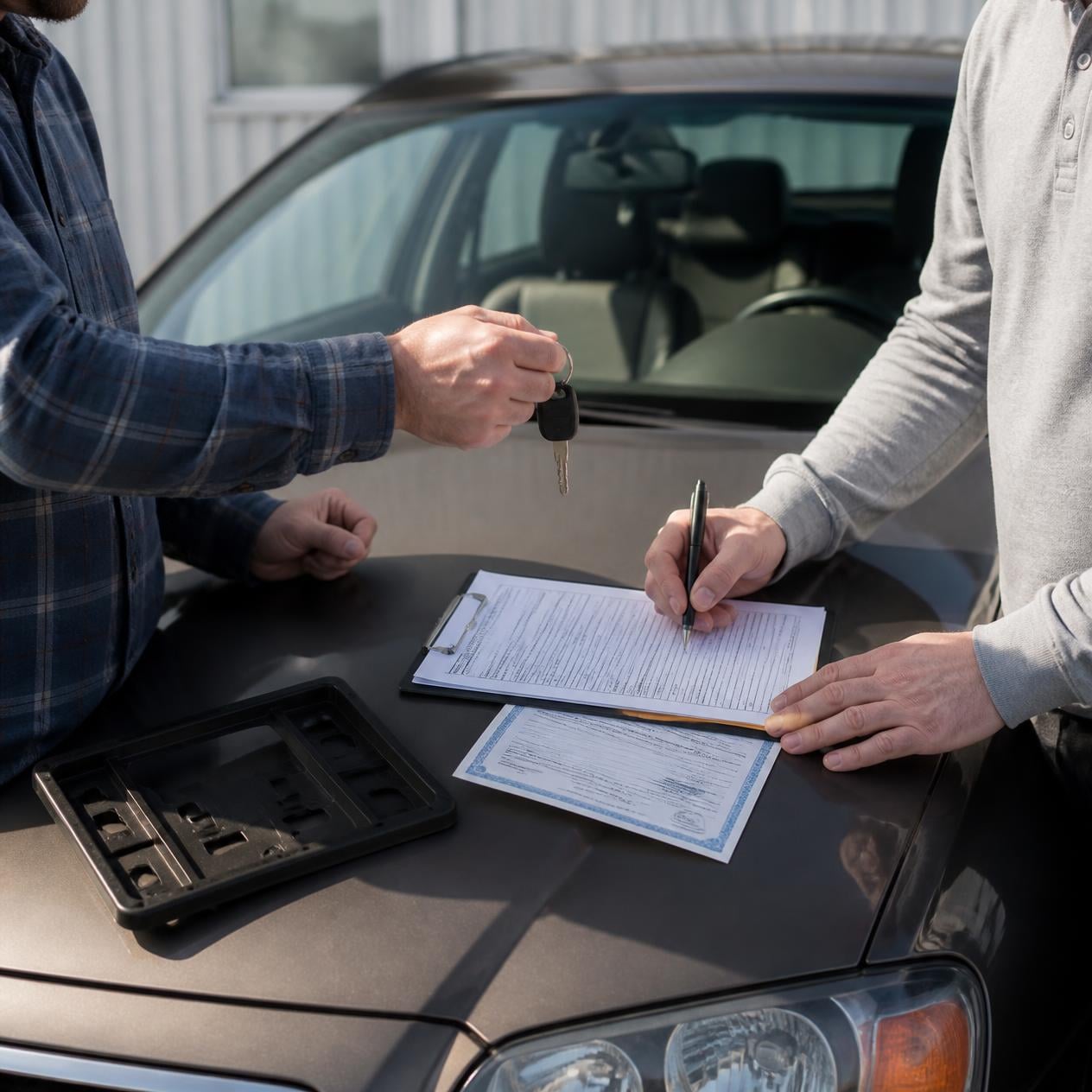
Handover: Once payment has been confirmed, provide the new owner with a signed title, bill of sale, set of keys (if applicable), and all maintenance records for the vehicle.
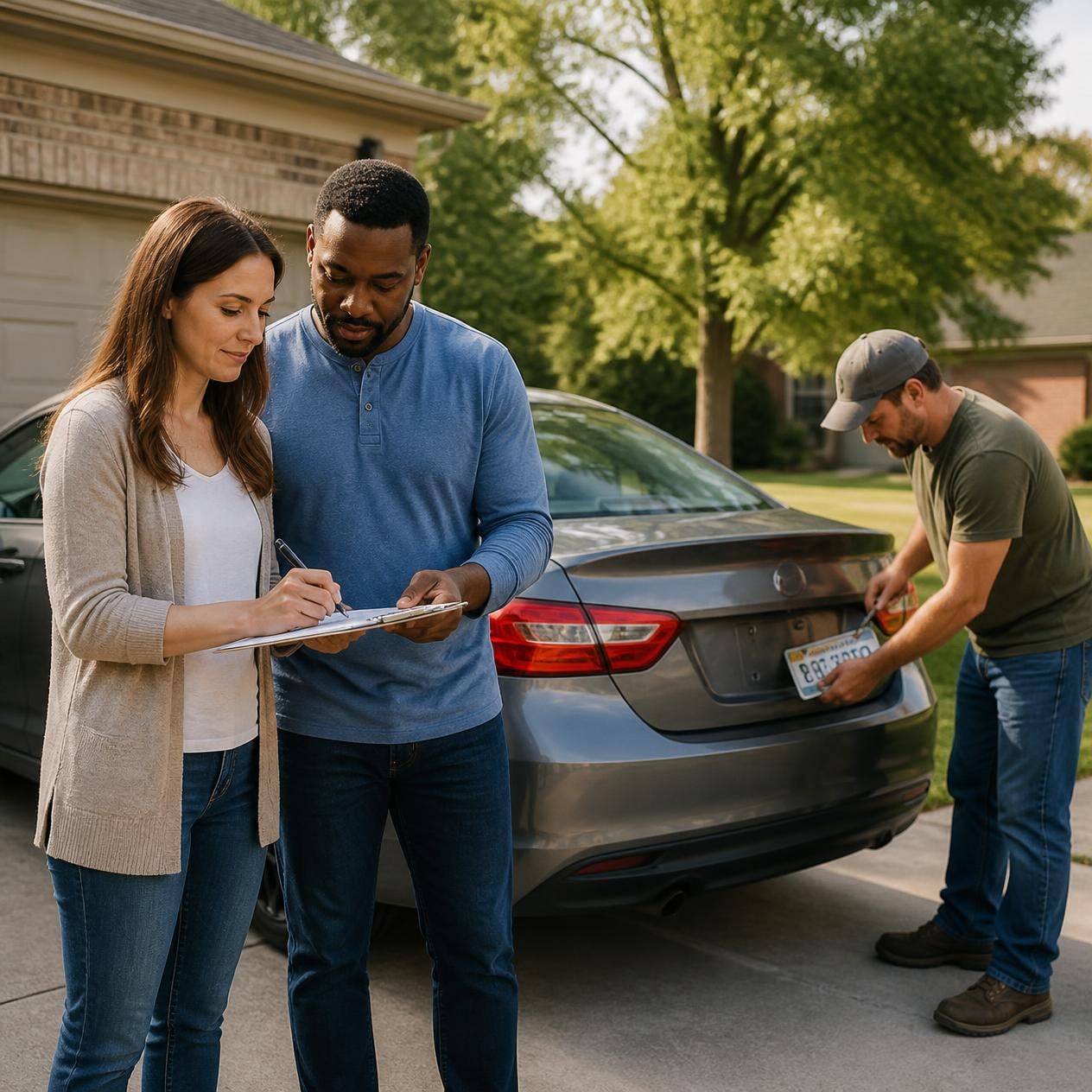
Remove Your Plates: Plates remain with you (the seller) and not with the vehicle after delivery. It is important to remove your plates from the vehicle before letting the buyer leave.
Cancel Insurance: After the sale is complete, be sure to call your insurance company and cancel coverage for the sold vehicle.
By following these steps, sellers in Alaska can sell their vehicles privately and feel confident that their vehicle sale is both safe and profitable.