

Bill of Sale Aug 31, 2026
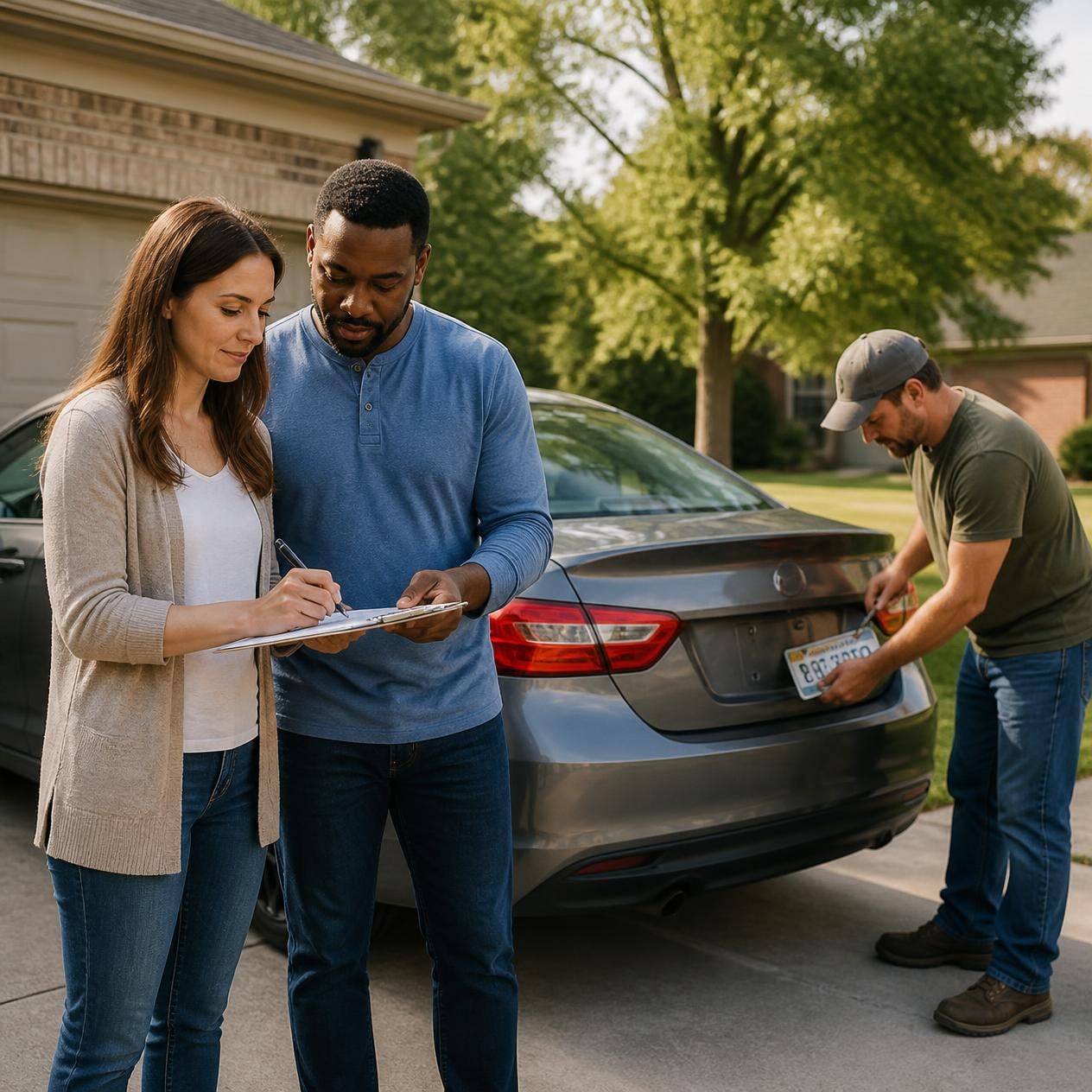
Imagine being able to leave a dealership with a high-quality vehicle (well-kept) for $2k less than what you would have paid at the dealership. For many Ohioans this is more than just wishful thinking- but actually happening. The magic behind this is simple: going directly to the seller (private individual) and avoiding having to pay dealer markup.
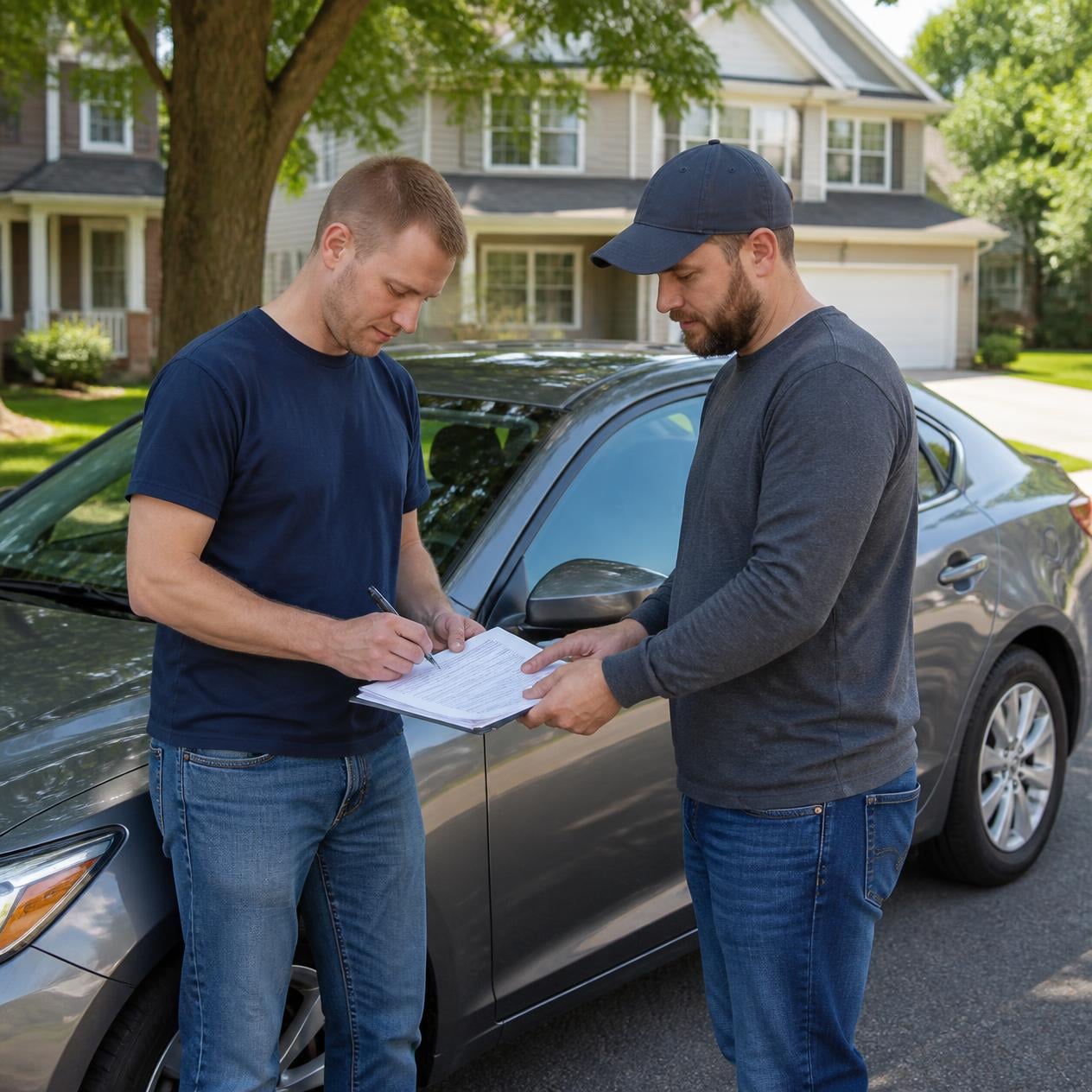
The Ohio used automobile market is thriving, with private sellers creating tremendous amounts of supply that are not available from dealers due to their inability to compete on the value provided by these transactions. However, because the transactions occur between two individuals (seller & buyer), there are some additional potential hurdles that need to be considered when performing the transaction.
Specifically, understanding applicable laws, completing the appropriate forms and documenting the transaction, and ensuring a buyer doesn't buy a "lemon." This guide provides you with a road map for all of the above. We're not simply going to show you how to buy a car; we'll show you how to become an expert at transacting privately in Ohio.
If you need to get a winter beater to drive in the snow off of Lake Erie, or are looking for a nice sedan to get to work in downtown Cincinnati, we've got you! Let's explore how purchasing a car from your friend or neighbor is better than buying from a dealership!
Private Sellers vs Dealerships: 8 Reasons for Selecting a Private Seller.
At a dealership, by the time you leave the lot, you have not only paid for your vehicle but also part of the cost of operating the dealership. The end result is much different from purchasing from a private seller as you have only purchased the vehicle.
1. Lower Selling Price
Most private sellers are desperately trying to sell their vehicle in order to make room for another vehicle or get some cash for their vehicle. They do not have any profit margin to consider in order to meet an average selling price. This makes a significant price difference between purchasing a vehicle through a private seller versus purchasing it directly from a dealer.
2. No Hidden Fees
When you go to sign contracts with a dealer, have you seen "Documentation Fee," "Prep Fee," or "Advertising Fee" added on to your total? Dealers have the right (in Ohio) to charge hundreds of dollars just to process the paperwork. Private sellers do not have a separate "doc fee." You agree on the price you will pay, and that is all there is to pay.
3. Direct History
If you purchase a vehicle from a dealer they may have purchased that vehicle at an auction, and may not know who was driving it prior to them. If you purchase from a private party seller, then many times they will have driven that vehicle daily.
Therefore, if you ask a private seller if you have ever had the timing belt replaced, they can tell you, "Yes, it was done at 90k," or if you ask, does the rear window stick when the temperature is below freezing, they can say, "Yes, it does." This type of honesty is priceless.
4. Negotiation Power
When negotiating with a professional salesperson it is very intimidating; however, when negotiating with an average person, the negotiation process can be as simple as having a conversation. Therefore, you have the opportunity to say, "I have cash in hand if you are willing to lower the price by $500."
Pros vs. Cons of Buying from Private Sellers
A quick overview will provide you with some of the positives and negatives associated with buying from a private seller.
Feature | Buying from a Private Seller | Buying from a Dealership |
Price | Generally lower; better bargains. | Generally higher; includes overhead costs. |
Fees | Zero documentation or "admin" fees. | Dealers often charge $250+ in doc fees. |
Warranty | Usually "As-Is." No warranty. | Often includes limited warranties or certified options. |
Financing | You must arrange your own loan or pay cash. | One-stop financing is usually available onsite. |
Paperwork | You handle the title transfer and BMV visit. | The dealer handles registration and plates. |
Trade-Ins | Not accepted. You must sell your old car. | Easy to trade in your current vehicle. |
Using Karkiosk to Search for Vehicles in Ohio
When searching for a new vehicle in the past, we often utilized the newspaper to locate vehicles. However, with today's digital environment, searching for vehicles can become overwhelming. Karkiosk is an innovative solution for buyers on the internet and is designed specifically to connect buyers to sellers privately.
Step 1: Locate with Filters
Ohio is a large state and searching for a vehicle in Toledo when the buyer lives in Marietta can be unrealistic, therefore, filtering by location will help eliminate unwanted searches from your results.
Step 2: Look for "Verified" Notices
When it comes to private vehicle sales, one of the greatest concerns for a buyer is falling victim to a vehicle scam. Karkiosk verifies sellers, so if you see a "verified" notice, you can rest assured that the listing is legitimate.
Step 3: Check The Price
Karkiosk frequently offers tools for comparing prices. If a 2018 Ford F-150 is advertised for $10K when the average price is $25K in your area, then take your time before making decisions. Things that price too well typically are!
Step 4: Use The Chat Tool
Don't supply your personal phone number right away. Use the secure messaging feature on the platform to communicate with the seller initially by asking them things such as:
"Is the title in your possession?"
"Are there warning lights illuminated in the dashboard?"
"Why are you selling it?"

Documentation Requirement for Purchasing a Vehicle in the State of Ohio
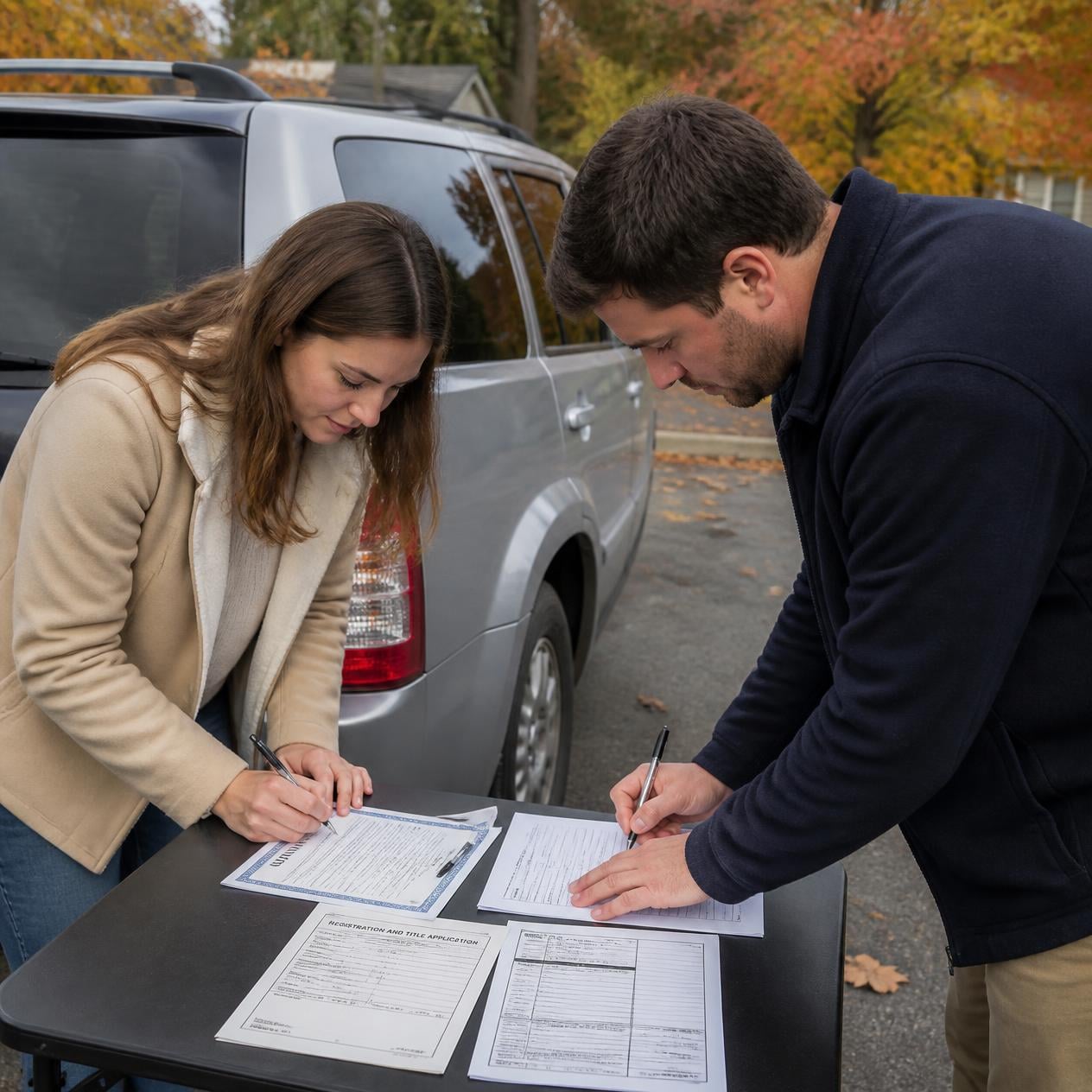
This is the part that makes many people anxious, but as long as you're prepared it is a piece of cake to complete this process. Ohio Law has some specifics on power of attorney for transferring ownership of a vehicle; if not done correctly, the BMV can deny you those services.
Rule of Thumb: Documented and Notarized
Title transfers require a Notary to complete them; you cannot simply sign your name on the back of a title and leave.
Requirements For Seller:
Physical Title Certificate: The seller must provide an actual physical title certificate as proof of ownership.
Assignment of Ownership: The seller must complete the Assignment of Ownership located on the reverse side of the title document indicating the new owner's name, prior to completion. This must be done before a Notary Public.
Mileage: The seller must provide the odometer reading (the mileage) in the appropriate area on the title.
Purchase Price: The seller must provide accurate and honest value of the purchase price to determine the total amount of sales tax owed.
Requirements For Buyer:
Proof of ID: A valid form of government issued identification, usually a driver's license, is required from the buyer.
Proof of Insurance: Proof of Insurance is required in order to secure a vehicle registration.
To Register the Vehicle, the Buyer Must Pay: All applicable fees and taxes (i.e., sales tax, paid to the `Clerk Of Courts, not the seller) at the time of registration).
Myth of the Bill of Sale
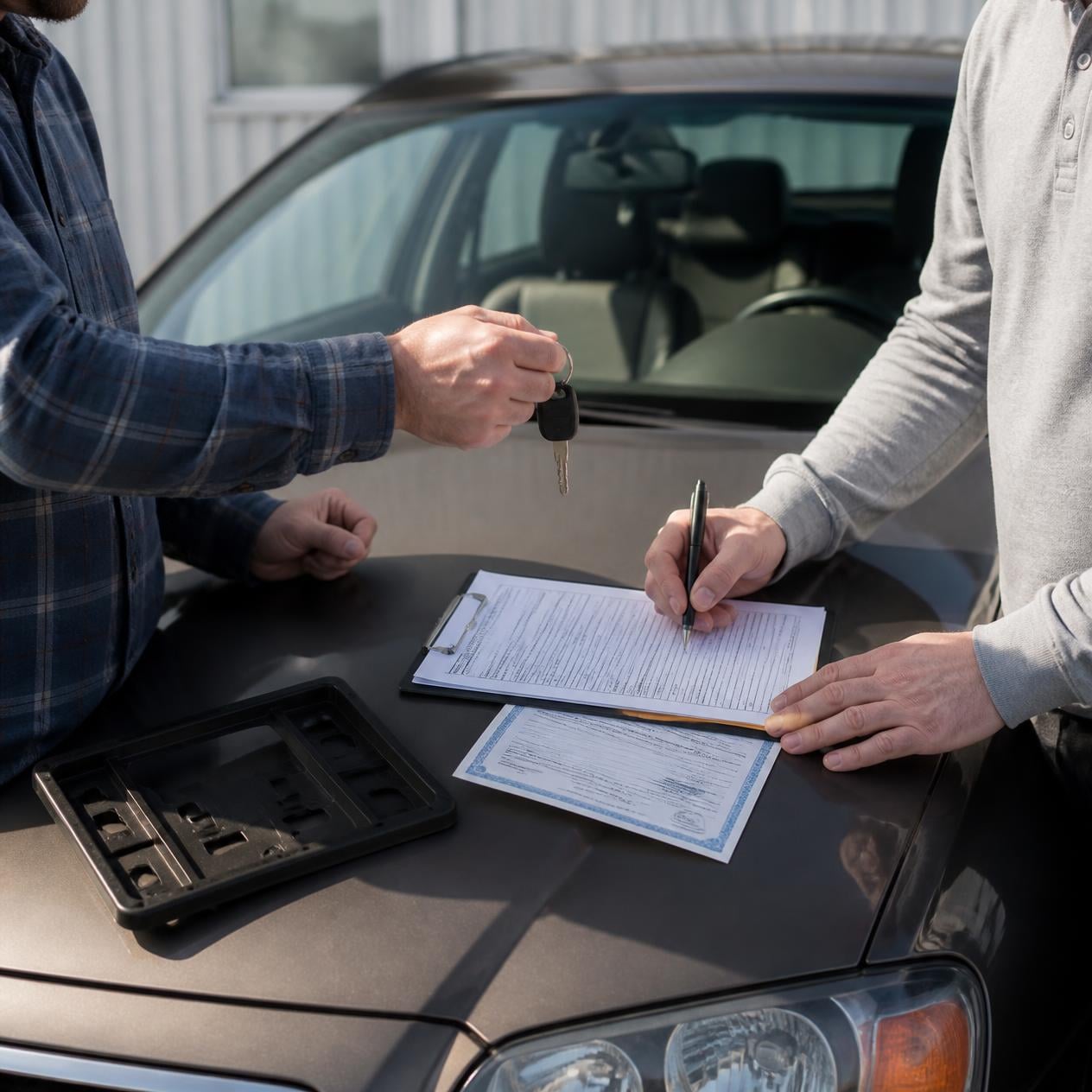
In Ohio, you do not have to have a separate Bill of Sale form created if you fill out the title the correct way, but it is a good idea to have one. This document serves a very important purpose...it's a receipt for you. It shows you paid $X for the vehicle on Y date.
If the seller later alleges that you stole the vehicle or if you happen to get a traffic ticket that predates your purchase of the vehicle, the Bill of Sale provides proof that you indeed purchased the vehicle.
Before You Buy a Vehicle
You do not have to be a qualified mechanic to spot a bad vehicle, you simply have to pay attention. If you are planning to look at a vehicle in Ohio, there are some key elements of the environment that you should pay close attention to.
1. Examine for Rust Belt:
Ohio applies salt to the roads during the winter, causing automobiles to rust.
When checking under the vehicle's doors, if the paint is bubbling then your vehicle is prone to rusting from inside out.
Inspect the wheel wells.
Get down on the ground, looking up towards the frame rails. While surface rust is customary, holes are not.
2. Cold Start
When you go to check out a vehicle, request that the engine be cold. Unless you can touch the hood and it isn’t warm, this means the seller has been operating the vehicle prior to your arrival. What does this mean to you?
There could be a bad battery hidden inside a warm engine.
Some strange rattles may exist only at cold start.
Most blue smoke coming from the tailpipe is easiest to see when the engine is at a cold start.
3. The Fluid Inspection
Engine Oil will appear similar to honey or dark syrupy texture. If it looks like chocolate milkshake, check if it contains coolant as (blown cylinder head gasket) is present.
Transmission Fluid should be a bright red or pinkish colour, If this has an odour of burnt and/or brown in colour it means the vehicle's transmission will fail.
4. Test Drive
Take a test drive longer than just around the block, okay?
Highway: Is the steering wheel shaking when you go 60 mph?
Bumps: Ohio's got a lot of potholes - hit a couple (softly). Do you hear a clunking noise?
Brakes: On a flat road, let go of the steering wheel a little, and hit the brakes. Does it pull to the left or right?

Secure Your Online Car Buy
Purchasing online offers convenience but there’s always the chance of meeting a stranger. Therefore, safety should be top priority.
Location: A busy gas station, grocery store parking lot, or even better - the parking lot of your local police station. Most police departments in Ohio have “Safe Exchange Zones” where you can meet with 24-hour video surveillance.
Time of Day: Never check out a vehicle at night. The reason for this is that you won’t be able to assess the exterior condition (paint) and it’s unsafe.
Someone With You: You should never go by yourself, while your friend might not know much about cars, he/she is there to provide you with an additional source of safety while meeting the seller.
Cash: If you’re carrying cash in excess of thousands of dollars I would recommend you meet the seller at their bank and withdraw the cash or request a cashier’s check from them. This will help to verify the validity of the cash and keep you from having to transport thousands of dollars across town.
The Importance of Car History Reports
The seller of a vehicle might tell you the vehicle has "never been wrecked," but with a Car History Report (CHR) that won't happen. You can avoid getting into a bad situation by using services such as CARFAX or AutoCheck.
What to Check For:
Rebuilt Title: A rebuilt title means that the vehicle was considered a total loss by an insurance company (due to flooding, wreck, or fire) and then put back together. In Ohio these types of vehicles usually have more difficulty finding insurance and have much lower value.
Odometer Rollback: If the Car History Report shows that the vehicle had 150,000 miles on it in 2020, but the odometer says only 80,000 miles today, this would be fraudulent.
Lien Status: The Car History Report will show if there are still any liens, or banks, on the title of the vehicle. Unless the seller owns the vehicle free and clear you cannot purchase the vehicle.
Ohio Drivers’ Acquisition of Vehicles: Cutting the Market
To know whether you’re getting a good deal, you must have a basic idea of what types of vehicles the average private party is selling in Ohio. Here’s a rough analysis of the average price for various classes of vehicles sold privately by Ohio residents.

Comparing Vehicle Cost to Mileage
The equation is simple — do you pay a bit more for lower mileage, or save on purchasing price at the expense of higher mileage?
Vehicle Type | Price Range (100k+ miles) | Price Range (<60k miles) | Best For |
Sedan (e.g., Honda Civic) | $4,000 - $7,000 | $12,000 - $15,000 | Commuters, Students |
SUV (e.g., Ford Explorer) | $6,000 - $10,000 | $18,000 - $24,000 | Families, Winter Driving |
Truck (e.g., Chevy Silverado) | $12,000 - $18,000 | $28,000 - $35,000 | Work, Towing, Rural Areas |
Final Thoughts
Buying a used car from a private seller in Ohio is one of the smartest financial decisions to make. It allows you to keep the money in your pocket instead of at the dealership. Of course, being a little more proactive is required; you'll need to check your fluids, go to the notary, and inspect your vehicle for rust. However, you will end up with a vehicle that works well for you without the burden of hidden fees or aggressive sales tactics.
You can easily find the right vehicle for you by utilizing sites such as Karkiosk, understanding how important the Ohio title transfer is, and conducting an extensive inspection before purchasing the used vehicle. That perfect vehicle is currently sitting in someone's driveway ready for you to take home. Good luck!