

Bill of Sale Aug 31, 2026
The vehicle purchasing process should not require the average person to spend the entire day at a dealer's showroom drinking cold coffee while waiting on a salesperson to speak with their supervisor three times. If you are a resident of the State of Missouri (also known as the "Show Me State"), you have incredible resources (many of which are available to you) through private sellers.
In Missouri, from St. Louis to Springfield and from Points North to South and East to West, there are everyday people selling their personal vehicles to other consumers directly. This provides a much greater transparency level with price stability than you can find at a dealership. However, in order to take advantage of this private seller market, it requires knowledge on how to navigate the state's requirements and laws regarding auto inspections and all steps necessary to protect yourself throughout the entire transaction.
This guide serves as a road map to navigating the private seller market in Missouri. It will walk you through everything you must understand before driving away from your purchase legally and safely.
What Are the Advantages of Buying a Vehicle Privately in Missouri?
Before we talk about completing the transaction and the paperwork involved, let me explain why you might want to buy a vehicle privately. When you visit a vehicle dealership in either Columbia or Kansas City, the price on the sticker is just the beginning of a long list of costs associated with purchasing a vehicle.
Before signing on the dotted line, you will be presented with many added costs including fees for documentation, preparation of your vehicle by the dealership, as well as salespeople who are pushing you to purchase added service contracts.
Purchasing a vehicle privately will remove the middle person (dealer) from the transaction.
Here’s what you can expect from a vehicle purchased from a private seller:
Significant Price Reduction: Private sellers do not have the same overhead costs as a dealership. Private sellers don’t pay to maintain a showroom and have a team of sales people that they are paying for their services. Because of this, a private seller will usually sell you a vehicle at a price closer to its actual market value and not the inflated retail price.
Complete Transparency: A private seller typically knows more about the history of the vehicle than a car dealer. Private sellers can inform you about incidents such as backing their car into a mailbox or the way their vehicle performs during the winter months in the Ozarks. On the other hand, a dealership usually purchases vehicles from auctions and has little or no knowledge about the history of the vehicle.
No Hidden Fees: The price negotiated with a private seller will be the price that you pay when you hand the seller your cash. You will not receive any "administration fees" added to your cash payment once you reach an agreement with the seller.
Unique Finds: Are you looking for a particular make or model of vehicle, or a customized off-road vehicle to use while vacationing in Branson? There are many private sellers who are avid collectors of vehicles and sell their vehicles for less than what they would be sold for at a dealership.
Does Purchasing From A Private Seller Suit Your Needs?
To assist with finding the best option for you, we've prepared a list containing both the benefits and drawbacks of purchasing from a private seller.
Table 1: Pros and Cons of Buying from a Private Seller
Feature | Pros | Cons |
Price | Generally significantly lower; no dealer markups or hidden fees. | You usually have to pay cash or secure your own financing ahead of time. |
Negotiation | You are dealing directly with the decision-maker (the owner). | It can be emotionally charged; some sellers are firm on price. |
History | You get firsthand knowledge of maintenance and quirks. | No Certified Pre-Owned guarantees; sold "as-is." |
Protection | Consumer protection laws (Lemon Laws) rarely apply to private sales. | You are responsible for your own inspection and due diligence. |
Process | Faster transaction time; no waiting for finance managers. | You must handle all DMV paperwork (Title, Registration) yourself. |

The Missouri Paperwork - Don't Let The Forms Intimidate You!
When dealing with purchasing cars from private sellers in Missouri, buyers often experience nervousness and uncertainty due to all of the paperwork required and the significance of the title. Many will ask questions like; "What if I complete the title incorrectly?" or "What forms do I need to complete?"
The department of revenue in Missouri has very strict guidelines regarding the issuance of titles, but at the same time has also provided buyers with an easy checklist to ensure that they meet all requirements and complete their transactions without any issues.
1. Important Title
The first item you should look for before giving the seller any money is a Certificate of Title. You should not hand over your money to the seller until you have physically seen the title in their possession.
Assignment: The seller must complete the Assignment of Title section on the back of the title.
Date and price: The seller must report the sale price and date of sale on the title.
Mileage: For titles that have been issued after January 1, 2020, if the vehicle is under 20 years old, or if the title was issued prior to January 1, 2020, the vehicle must be 10 years old.
Lien Release/Affidavit: If there is a lienholder listed on the title, the seller must obtain from the lender an Affidavit of Lien Release (Form 4809) or present a stamped "Paid" title before you can register the vehicle. Otherwise, you should walk away from the transaction.
2. Bill of Sale (Form 1957)
Missouri takes this issue seriously and does not accept other states as they do.
Requirement: You will need a Bill of Sale in Missouri. Specifically, we recommend using Form 1957 to help you include all the information required by the Department of Revenue (DOR) when you are registering your vehicle.
Why it is Necessary: This will help you ensure that you have the correct sales tax calculated by the State (4.225% plus any applicable local sales taxes) and protects you against potential incidents where the seller may claim that you did not pay the total amount owed for the vehicle.
3. "Show-Me" Safety Inspection
Most states require that most vehicles pass a safety inspection before they may be registered.
Regulations: If your vehicle is over 10 years old or has more than 150,000 miles, then it must pass a safety inspection.
The Seller's Responsibility: In many cases, when you buy a vehicle from a seller, they may provide you with a current inspection certificate (issued within the last 60 days). If they have done so, that is a significant benefit to you. However, if they have not, you will have the responsibility to have it inspected prior to obtaining your license plates.

Understanding Missouri's Emission Testing Requirements According to Your Location
In Missouri, emission testing varies by location, which can result in additional tasks for new private buyers. New buyers of vehicles may be surprised when they discover that their vehicle cannot pass emissions testing and potentially will not be allowed to be registered within their home county.
For example, you may be purchasing a vehicle from a remote part of Missouri that appears to run perfectly, but when you drive the vehicle back to St. Louis, the county will not allow the vehicle to be registered because it does not meet emission testing requirements for that county.
Table 2: Emission Requirement Comparison by Region in Missouri
Region | Safety Inspection Required? | Emissions Inspection Required? |
City of St. Louis | Yes (if >10 years old/150k miles) | YES |
St. Louis County | Yes (if >10 years old/150k miles) | YES |
St. Charles County | Yes (if >10 years old/150k miles) | YES |
Jefferson County | Yes (if >10 years old/150k miles) | YES |
Franklin County | Yes (if >10 years old/150k miles) | YES |
Rest of Missouri | Yes (if >10 years old/150k miles) | NO |
Note: For all cars, even if they don't require a safety inspection due to being over 10 years old or having over 150,000 miles, the potential buyer is still responsible for ensuring that they are safe to operate before making a purchase.
Follow these steps to safely purchase a vehicle in Missouri.
You've found an amazing deal on a Ford F-150 in Joplin or a beautiful sedan in Columbia. Below you will find a quick list of steps to follow to prevent yourself from being cheated or sold a "lemon".
Step 1: Investigate the Listing
Check the photo closely; does it appear that the condition of the car matches what the seller has stated? If the seller states that the car is in "perfect condition" and the photo shows that the bumper is barely held on by its own weight, that's definitely something to look into further. Use certified platforms that have a vetting process to help reduce the chances of dealing with scammers.
Step 2: Finding Safe Meeting Places for the Car Inspection
Be Safe & Smart: Always go with someone when meeting someone for the first-time at a location other than your home.
Where to Meet-Up: A busy place is the best option for meeting to inspect a vehicle. The State of Missouri has many police stations throughout the state that offer a "Safe Exchange Zone" specifically for this purpose. These Safe Exchange Zones are great places to meet with potential buyers/sellers of vehicles.
Take a Friend: Having a second set of eyes looking at the vehicle is helpful for identifying defects that you may not notice because of your excitement to purchase the vehicle.
Step 3: Inspecting the Vehicle (the Show Me stage)
Don't Just Kick the Tires.
Cold Start: When you get to the inspection location, do not let the seller start the vehicle before you arrive. Touch the hood. If it is cold to the touch that may indicate that the engine has not been driven in a long time. When you start the engine, listen for rattles or ticks that may disappear once the engine has warmed up.
Fluid Analysis – Oil: Check the oil. Is it milky? Milky oil indicates a problem with the head gasket. Transmission Fluid: Is the transmission fluid bright red (if so, that is good) or dark, burnt smelling (if so, that is bad)?
The Test Drive: Make sure to test drive the car on both highway and city streets. Listen for clunks when going over bumps. Observe the brake functionality when the car stops. When the brakes are applied, do they stop straight or do they pull to one side?
Step 4: VIN Verification
Locate the VIN on the car's dashboard and request a complete car history report, either through a site such as CarFax or Autocheck.
What to look for when obtaining a history report includes salvage title (most likely from flood areas), odometer rollback, previous accidents, and if the vehicle was sold new from a dealer in the rust belt, make sure you inspect the undercarriage prior to purchase.
Step 5: The Purchase
When you have agreed on a purchase price for the vehicle:
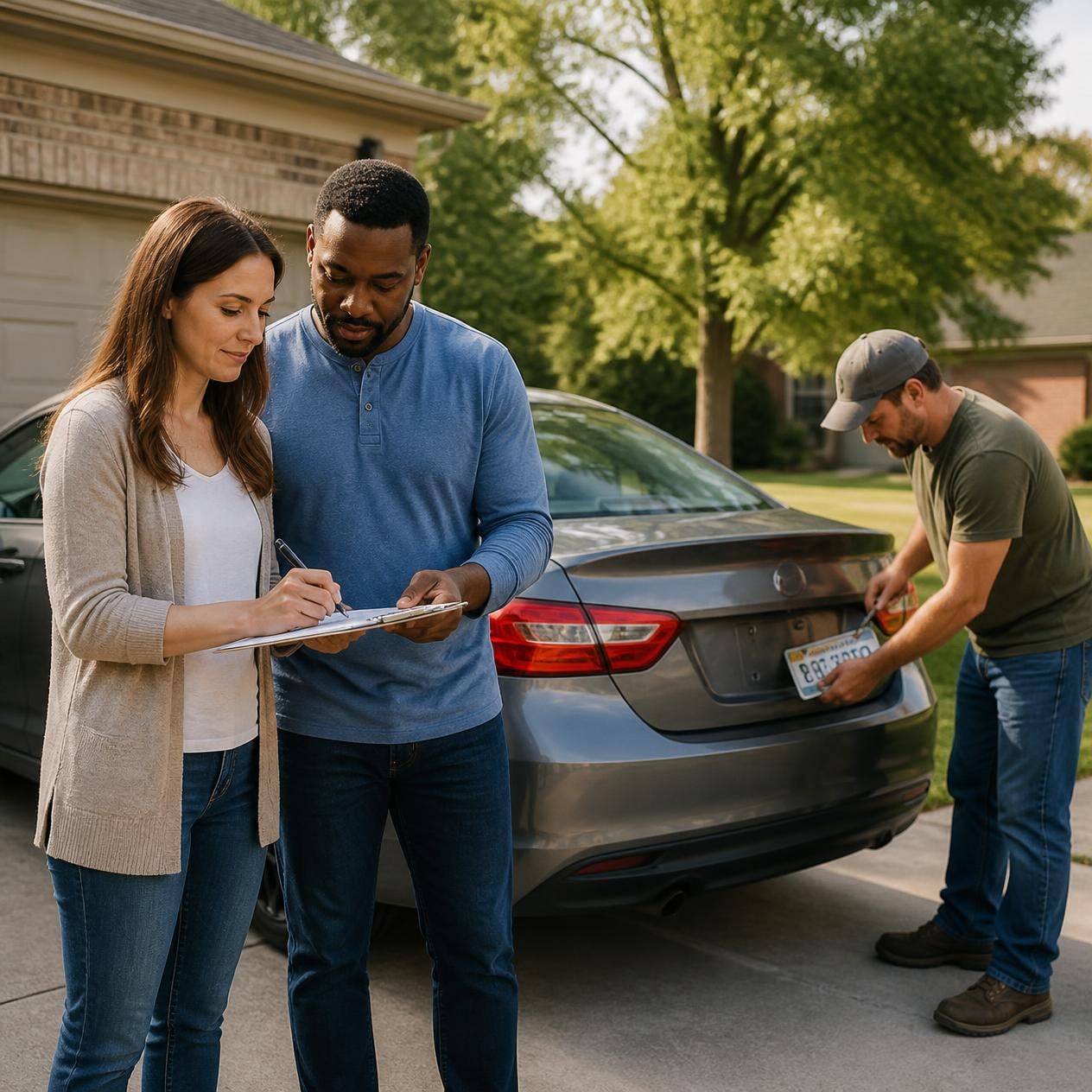
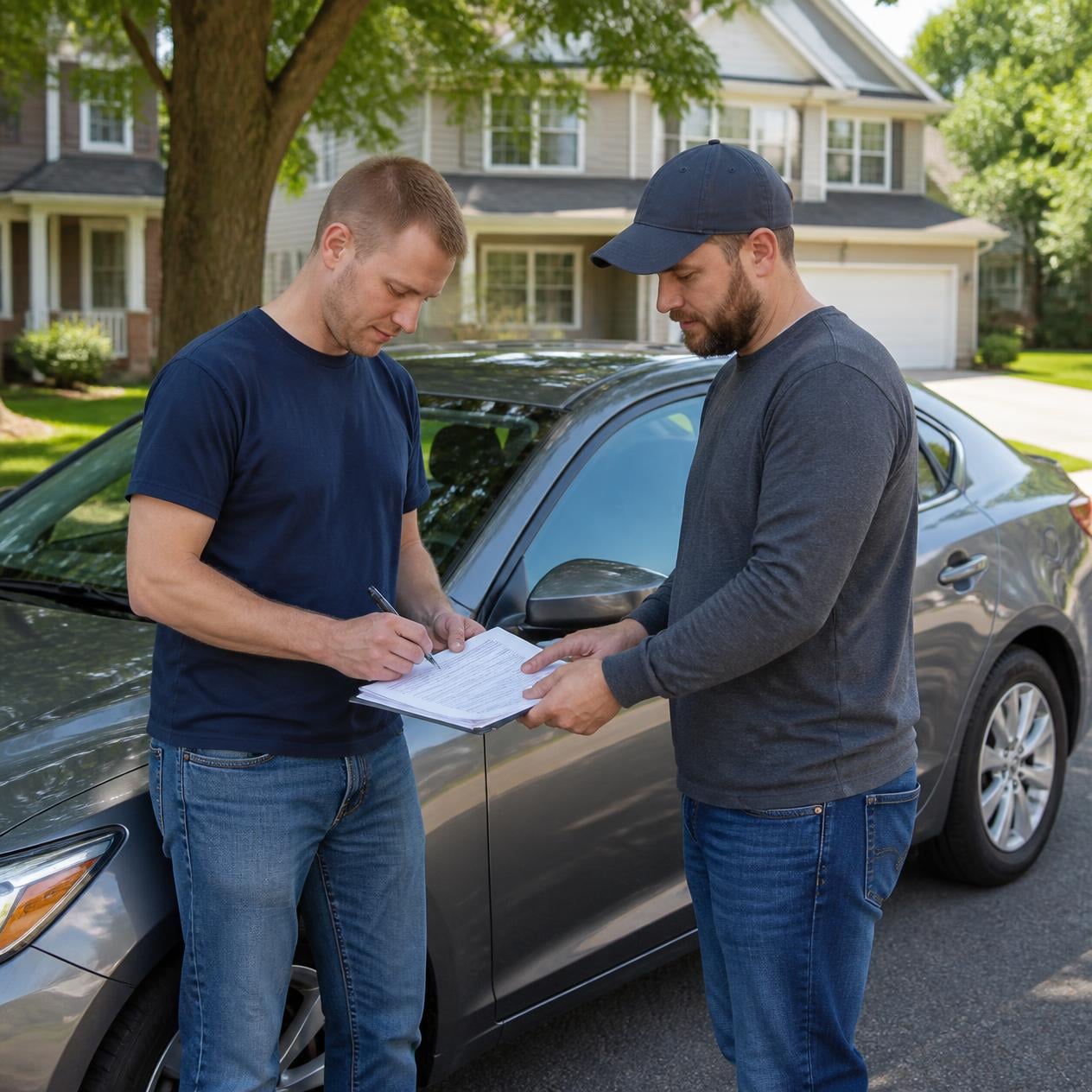
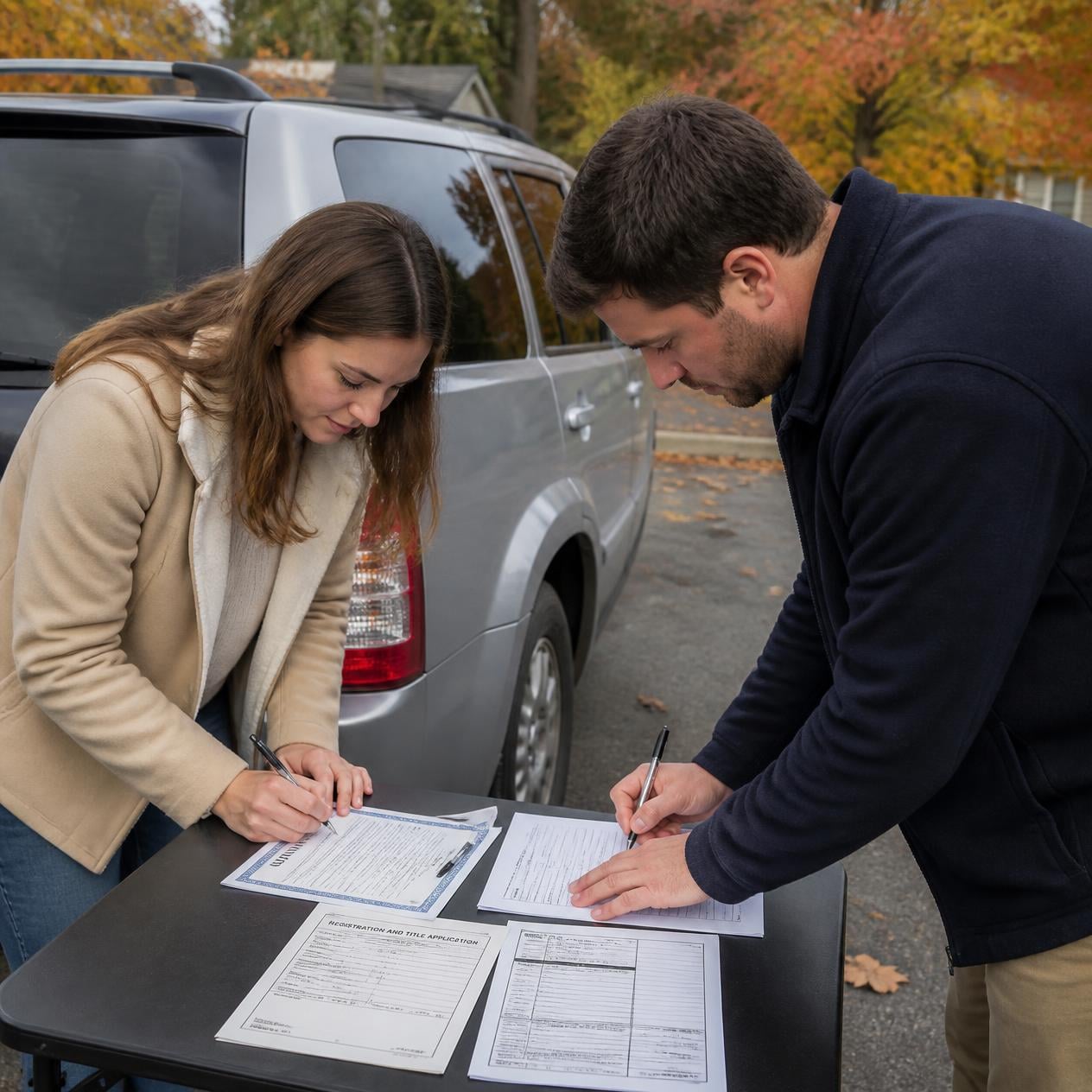
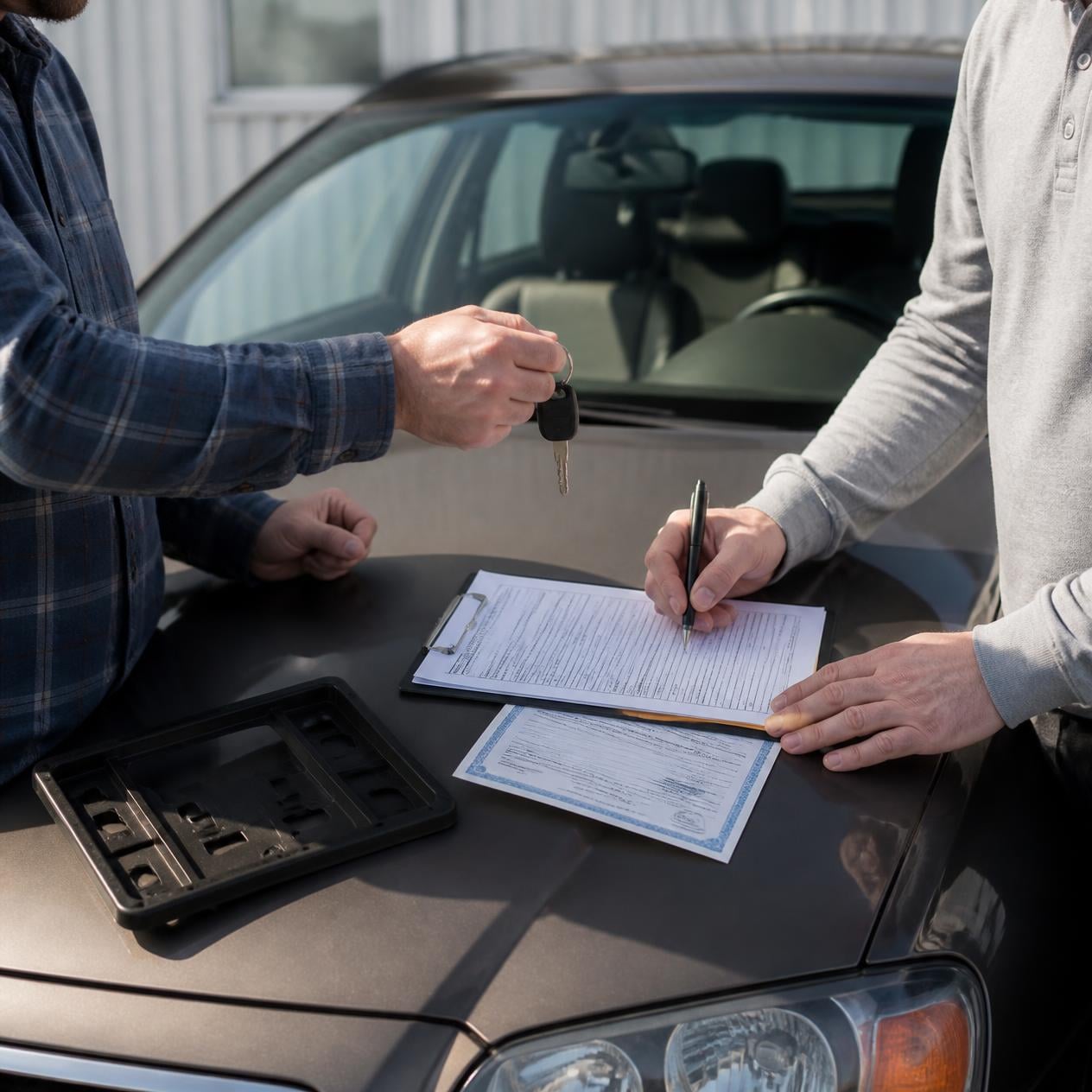
Complete the Bill of Sale (Form 1957).
Sign the Title, ensuring that it has been signed by the seller on the back.
Pay for the vehicle, which is typically done using cash or a Cashier's Check.
Get the keys to the vehicle.
Step 6: 30 Days to Title
After purchasing the vehicle, you will have 30 days from the purchase date to title and pay sales tax on the vehicle at the license office.
Do Not Wait: If you attempt to title your vehicle after day 30, you will incur a penalty fee between $25 and $200, and there is no grace period in Missouri.

Calculating Your True Out-the-Door Price: Important Financial Skills
It's important to keep in mind that when purchasing privately, you should mentally add the sales tax, registration costs, and any additional fees to the asking price in order to determine your entire budget.
If you are considering purchasing a vehicle for $10,000.
State Sales Tax (4.225%) = $422.50
Local Sales Tax (2-4% depending on where you live) = estimate of $300.00
Title Fee = $8.50
Processing Fee = $6.00
Registration/Tags (specific to vehicles with taxable horsepower) = estimate of $25-$50
The total cost before you can legally drive your vehicle is approximately $10,800, so be sure to set aside this amount in your bank account to cover the cost of your next purchase.
Table 3 - Summary of Fees at Missouri Registrar’s Office
Fee Type | Cost | Notes |
Title Fee | $8.50 | Fixed cost for all vehicles. |
Processing Fee | $6.00 | Standard administrative fee. |
State Tax | 4.225% | Calculated on the purchase price. |
Late Title Penalty | $25.00+ | Charged if you wait >30 days to register. |
Transfer Fee | $2.00 | Only if transferring plates from an old car. |

Why Missouri, the "Show-Me" State, is the Ideal Place for Vehicle Purchases
Missouri offers a diverse selection of vehicles to choose from, whether they be available in metropolitan and rural areas combined. Residents living in or near the St Louis area are able to select vehicles that will not have significant rust problems, while rural residents can select vehicles that are dependable work trucks.
Buying a vehicle from an individual seller keeps money in the local economy; rather than purchase the vehicle from a corporation. By purchasing a used vehicle, you receive first-hand knowledge from the owner concerning its history and any current problems it may have.
Although buying a vehicle from a private seller takes more effort on your behalf, it will also yield more benefits. Once you complete the purchase of your vehicle, you can enjoy driving a vehicle that you have confidence in; you will know that you received a fair price; and you will have obtained the satisfaction of successfully completing the purchase process on your own.
Read the online listings, set up meetings with the seller, verify the VIN number, and enjoy driving your new vehicle throughout the beautiful roads of Missouri!