

Bill of Sale Aug 31, 2026
Let’s be honest—nobody wakes up excited to deal with the hassle of selling a used car. It feels like a second job, right? You’re probably picturing endless tire-kickers, lowball offers that are borderline insulting, and a mountain of confusing paperwork that looks like it requires a law degree to decipher.
But here is the harsh truth: if you are trading your car in at a dealership, you are practically setting money on fire.
In the great state of Kentucky, the private market is booming. From Louisville to Bowling Green, buyers are hungry for good used cars, and they are willing to pay top dollar for them. But to tap into that cash, you need a game plan. You need to know the specific rules of the Bluegrass State, or you risk legal headaches down the road.
This isn’t just another boring "how-to." This is your blueprint to navigating the Kentucky private seller market, dodging scammers, and walking away with a stack of cash that makes the effort worth it. Let's dive in.
The "Dealership vs. Private Sale" Showdown
Before we get into the nitty-gritty of titles and notaries, let’s look at why you are here. You want the most money possible. Dealerships offer convenience, but that convenience comes with a hefty price tag—usually thousands of dollars less than your car's actual market value.
When you sell privately, you cut out the middleman. You control the price. You meet the buyer.
Pros and Cons of Selling Privately in Kentucky
Feature
Pros of Private Selling
Cons of Private Selling
Sale Price
You keep 100% of the profit. No dealer markup.
It requires negotiation skills.
Control
You decide who buys and when the sale happens.
You have to handle the schedule and meetups.
Speed
Can be instant if you find the right buyer.
Can take weeks if priced incorrectly.
Paperwork
You learn the process and ensure it's done right.
You are responsible for proper KY forms.
Trade-In Tax
N/A
You lose the trade-in tax credit on a new car.
Feature | Pros of Private Selling | Cons of Private Selling |
Sale Price | You keep 100% of the profit. No dealer markup. | It requires negotiation skills. |
Control | You decide who buys and when the sale happens. | You have to handle the schedule and meetups. |
Speed | Can be instant if you find the right buyer. | Can take weeks if priced incorrectly. |
Paperwork | You learn the process and ensure it's done right. | You are responsible for proper KY forms. |
Trade-In Tax | N/A | You lose the trade-in tax credit on a new car. |
Step-by-Step: How to List and Sell Like a Pro
Ready to get started? It’s easier than you think. Here is the playbook for a successful Kentucky sale.
Step 1: Paperwork—The Scary Part (That Actually Isn’t Scary)
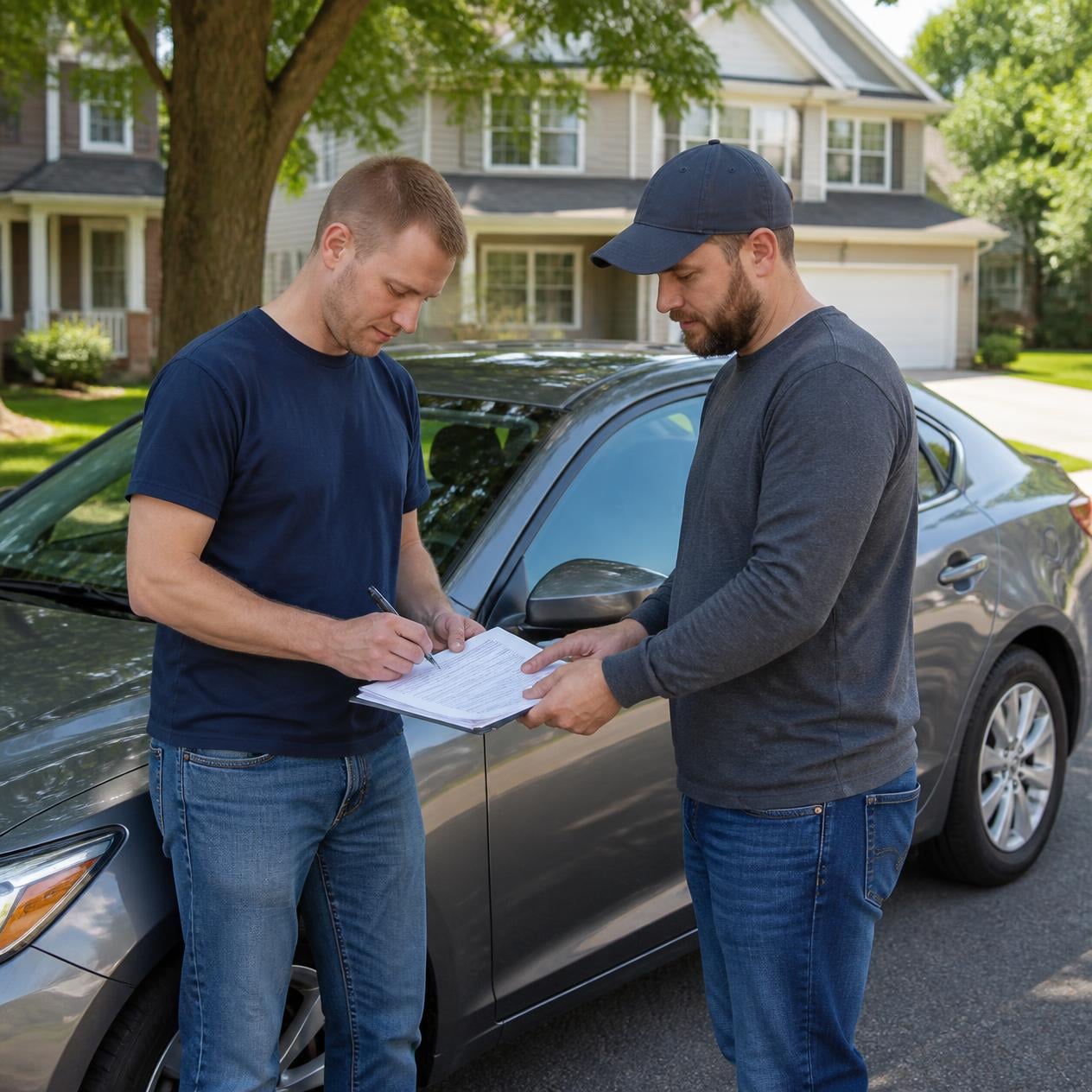
This is where most Kentucky sellers panic. But take a deep breath. Kentucky law is actually quite specific, and once you know the rules, it’s a breeze. You can’t just hand over the keys and wave goodbye; you need to protect yourself legally.
The Holy Grail: The Title Transfer
In Kentucky, you cannot legally sell a vehicle without a title. If you’ve lost yours, stop reading and go to your local County Clerk’s office to file for a duplicate (Form TC 96-182). If you have a loan, you need to pay it off to get that lien released first.
Once you have the title in hand, here is the golden rule: Do not sign it until you are in front of a notary.
How to Sign Your Kentucky Title Correctly:
Transfer of Title by Owner Section: This is on the back of your Certificate of Title.
Buyer Details: Print the buyer's full legal name and address.
Odometer Reading: Enter the current mileage. Do not guess!
Sale Price: Write the exact amount you sold it for.
Signature: Sign and print your name exactly as it appears on the front.
Notarization: This is non-negotiable. Your signature must be notarized.

Step 2: The "Hidden" Forms You Might Need
Paperwork in Kentucky doesn't always end with the title. Depending on your situation, you might need a few extra documents to keep the tax man and the DMV happy.
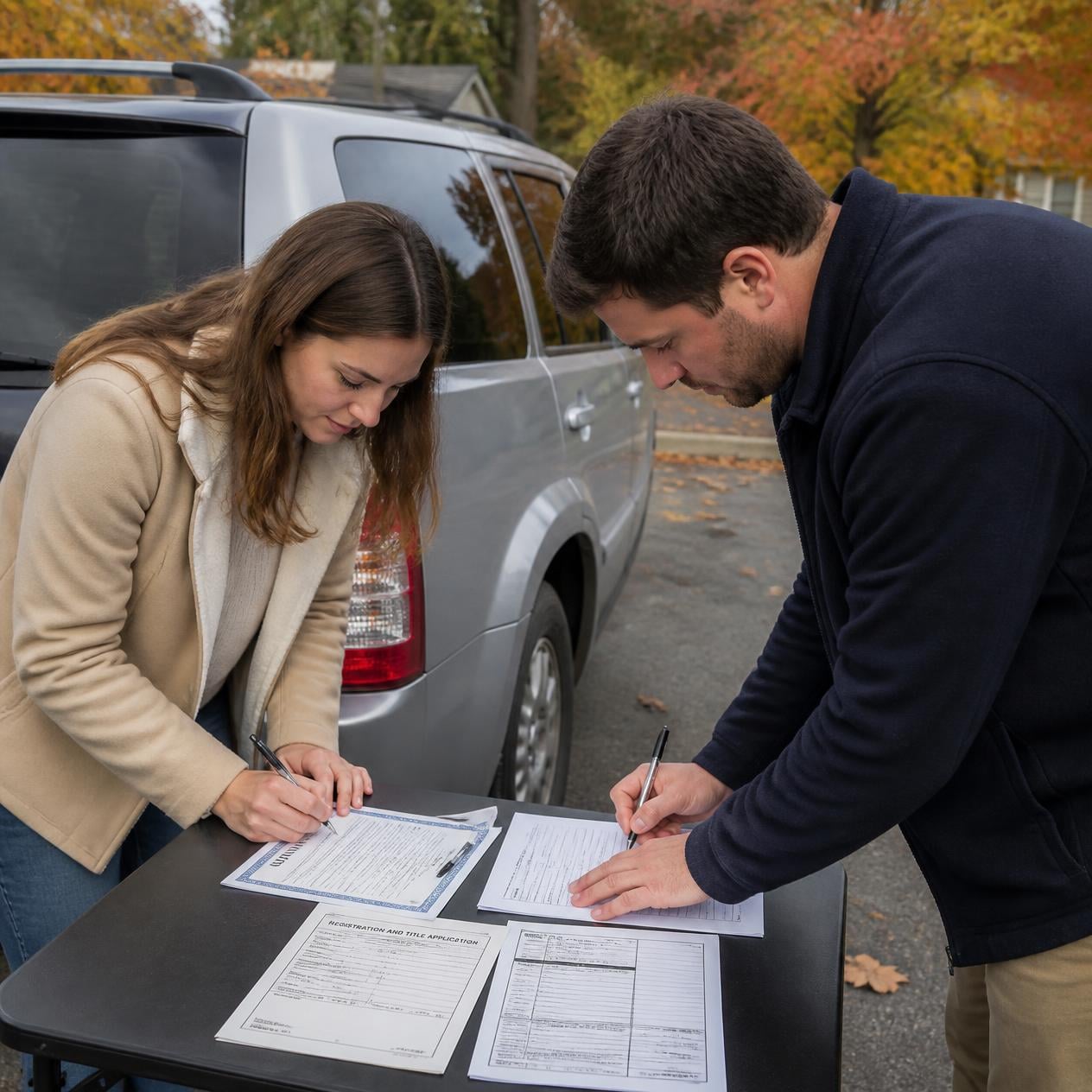
The Affidavit of Total Consideration (Form TC 96-182)
Kentucky charges a 6% motor vehicle usage tax based on the vehicle's value. Usually, they use the standard book value (NADA). However, if your car has high mileage or body damage, and you are selling it for less than book value, you need this affidavit.
What it does: It certifies the actual price paid.
Who signs it: Both you and the buyer.
Requirement: It must be notarized.
Bill of Sale
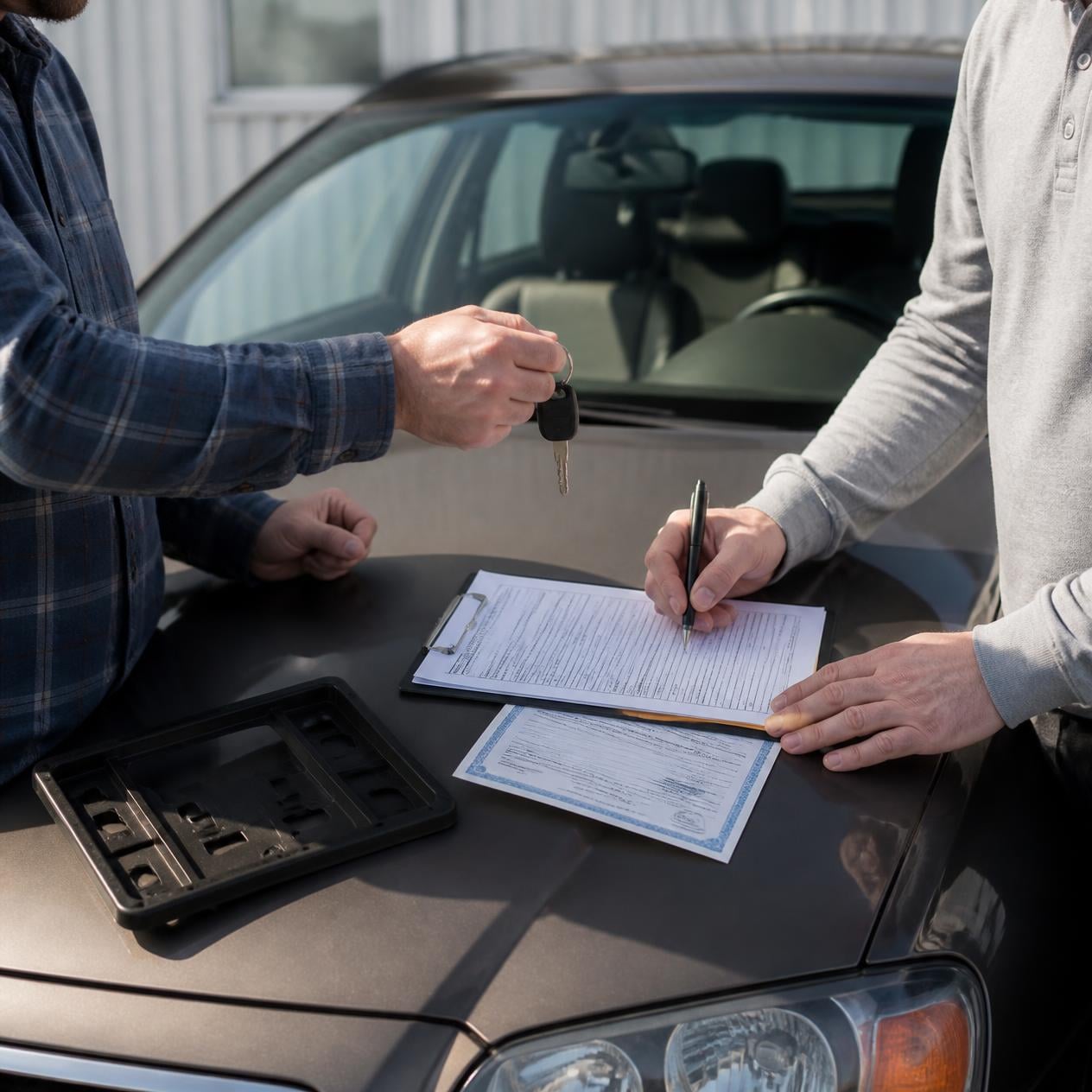
While the title transfer is the official document, a Bill of Sale is your personal receipt. It proves you sold the car on a specific date. If the new owner goes out and racks up parking tickets before transferring the title, this document saves you.
Odometer Disclosure Statement
Federal law requires this for vehicles under 10 years old. It prevents odometer fraud (rolling back miles). It’s usually a section on the title, but double-check to ensure it’s filled out.
Essential Document Checklist for KY Sellers
Document Name
Purpose
Is it Mandatory?
Certificate of Title
Proof of ownership transfer
YES (Must be notarized)
Affidavit of Total Consideration
Adjusts tax based on sale price
YES (If price differs from book value)
Bill of Sale
Personal receipt / Proof of date
Highly Recommended
Odometer Disclosure
Certifies mileage accuracy
YES (If vehicle < 10 years old)
Lien Release
Proves loan is paid off
YES (If you had a loan)
Document Name | Purpose | Is it Mandatory? |
Certificate of Title | Proof of ownership transfer | YES (Must be notarized) |
Affidavit of Total Consideration | Adjusts tax based on sale price | YES (If price differs from book value) |
Bill of Sale | Personal receipt / Proof of date | Highly Recommended |
Odometer Disclosure | Certifies mileage accuracy | YES (If vehicle < 10 years old) |
Lien Release | Proves loan is paid off | YES (If you had a loan) |
Step 3: Making Your Car Irresistible (Digital Curb Appeal)
Now that the legal stuff is covered, let's talk about marketing. You are competing with thousands of other sellers in Lexington, Louisville, and beyond. How do you make someone stop scrolling and click on your car?
Photos Matter More Than You Think
You wouldn’t buy a house if the photos were dark and blurry, right? Don't be that seller who posts one photo of the car covered in snow.
Wash and Wax: A clean car suggests a well-maintained car.
The "Golden Hour": Take photos during sunrise or sunset. The lighting makes the paint pop.
Angles: Get the front, back, sides, interior, dashboard, and engine bay.
KarStudio Credits: If you list on platforms like KarKiosk, you can use AI tools to remove messy backgrounds, making your listing look professional.

The Description: Don't Be Boring
Avoid one-word descriptions like "Runs good." Tell a story.
"Perfect commuter car for navigating Louisville traffic."
"Handled the winters in Northern Kentucky like a champ."
Mention recent maintenance (new tires, fresh oil change). Honesty builds trust.
Step 4: Pricing It Right (The Goldilocks Zone)
Pricing is an art form. Price it too high, and your listing gathers dust. Price it too low, and people assume something is wrong with it (or you leave money on the table).
Use Data, Not Guesswork
Don't just pull a number out of thin air. Look at what similar cars are selling for in your specific area. A 4WD truck might sell for more in rural Kentucky counties than in downtown Covington.
The Psychology of Pricing
$10,000 vs. $9,900: It’s an old trick, but it works. The second number feels significantly cheaper.
Room to Negotiate: If you want $8,000, list it for $8,500. Everyone wants to feel like they "won" the negotiation. Give them that $500 win, and you still get your target price.

Step 5: Safety First—Meeting the Buyer
You found a buyer! Great. Now, let’s make sure you don’t get scammed—or worse.
The Test Drive
Never let someone take your car alone. Ride along with them. Better yet, bring a friend.
Public Locations: Meet at a busy grocery store parking lot or, even better, the parking lot of your local police station. Many Kentucky police departments have designated "Safe Exchange Zones."
Verify Identity: Ask to see their driver’s license before they get behind the wheel. Snap a picture of it with your phone.
Secure Payment
Cash is king, but carrying $15,000 in cash is risky.
Bank Transfer: Meet at the buyer’s bank and watch the cashier’s check being printed.
No Personal Checks: They can bounce weeks later.
KarKiosk Message Center: If you use a platform like KarKiosk, keep communications inside the app. It protects your personal phone number and email from spammers.
Step 6: The Final Handoff
The test drive went well. They negotiated. You agreed on a price. Now it’s go-time.
Sign the Title: Remember, get to a notary! Banks, libraries, and shipping stores usually have one.
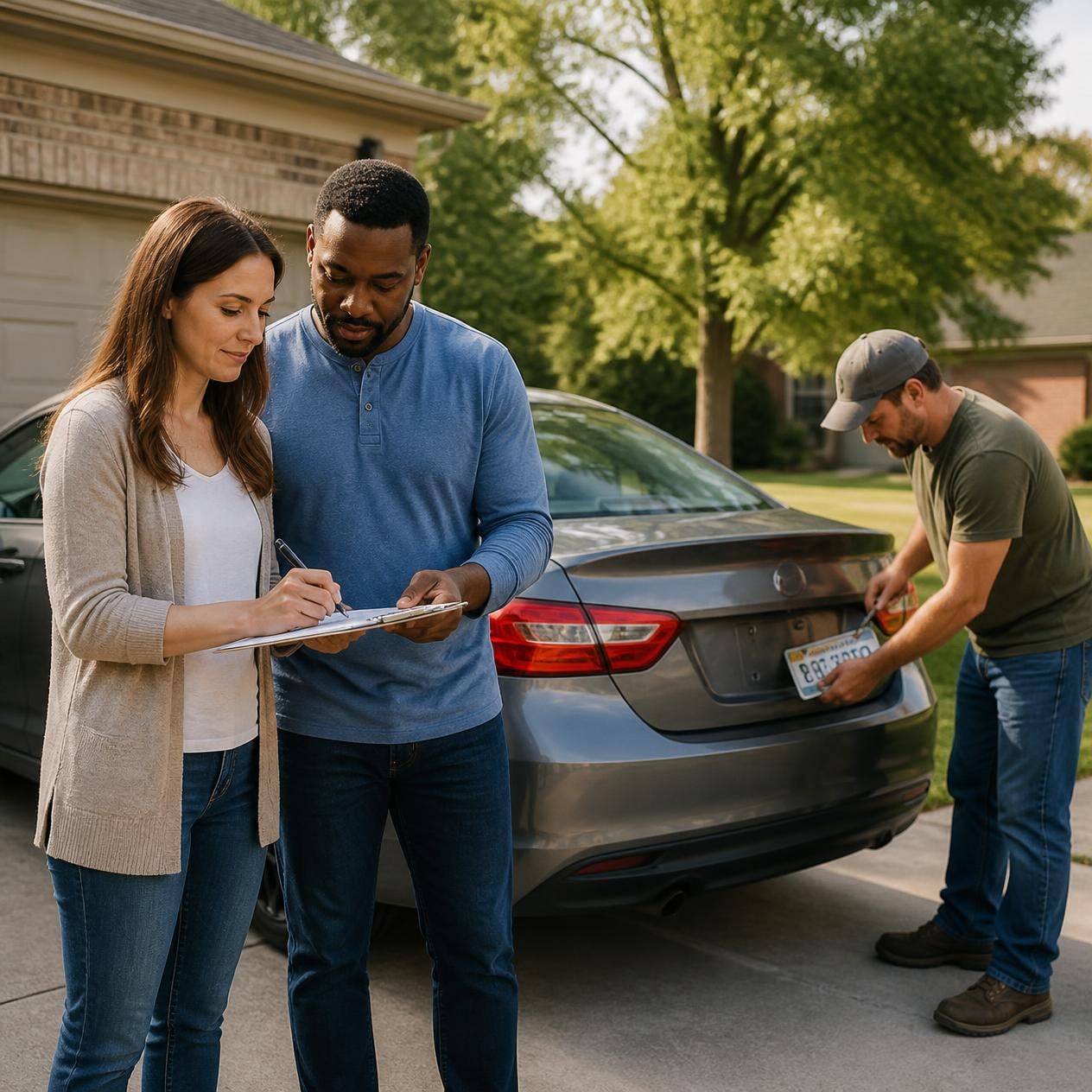
Remove Your Plates: In Kentucky, the license plate stays with the seller, not the car. Do not let the buyer drive off with your plates, or you could be liable for their tolls and tickets.
Cancel Insurance: Once the money is in your hand and the title is signed over, call your insurance agent immediately.
Hand Over Keys: Congratulations! You just sold your car privately.

Why Kentucky Sellers are Switching to Digital Platforms
The old way of sticking a "For Sale" sign in the window is dying. It limits your audience to the people who happen to drive past your house.
Modern platforms offer tools that solve the biggest headaches of private selling:
Wider Reach: Your car is seen by buyers across the entire state, from Paducah to Pikeville.
Vehicle History Reports: Providing a free report (like KarReport) builds instant credibility. It answers the buyer's question ("Has this been in a wreck?") before they even ask.
Cross-Posting: Some services automatically push your listing to other major sites, ensuring maximum visibility without you having to create ten different accounts.
Selling privately in Kentucky doesn't have to be a nightmare. It’s a series of logical steps. Gather your documents, take great photos, price it fairly, and meet safely. By following this guide, you aren’t just selling a car; you’re mastering the market.
Ready to Cash In?
Selling your car doesn't have to be a nightmare. By preparing your car, taking great photos, pricing it right, and using a secure platform like KarKiosk, you can turn that old metal into a stack of cash.
Don't let a dealership underpay you for your asset. Take control. List it. Sell it. Enjoy the profit.