

Bill of Sale Aug 31, 2026
Looking to buy a car in Virginia that isn't already marked up at a dealer? If so, then there's an opportunity for you that offers more flexibility with respect to how much you're willing to spend and with regards to how much time, effort, and money you're going to put into finding your next vehicle.
Buying from a private party (used car) will give you the option to work directly with the seller rather than going through the dealer, and it allows you a unique opportunity to find a vehicle that you won't find on many dealer lots.
Here's everything you need to know about the buying process when purchasing a pre-owned vehicle through a private seller in Virginia. We've also included some valuable tips that will help to make your experience as positive, safe, and enjoyable as possible.
Why Consider Buying from a Private Seller in Virginia?
For many individuals throughout Virginia, from the busy highways around Arlington to the small towns in the mountains of southwestern Virginia, the potential benefits of buying from a private seller far outweigh the negatives associated with purchasing through a dealership.
The Financial Advantage: Affordable Pricing and No Hidden Expenses
Typically, private sellers do not bear significant overheads as dealerships do. They do not require areas to showcase vehicles, employee salaries or promotional marketing expenditures. As a result of this "bare-bones" approach, there are often savings passed directly to you on the purchase of your vehicle.
When purchasing your vehicle, you are negotiating with the person who has actually driven the vehicle, therefore you will find that you will have more bargaining opportunities to achieve a lower price than if you purchased from a dealership.
Additionally, when purchasing a vehicle through a private sale, there are no surprises associated with add-on charges that dealers often attach to the final sale price:
Documentation Fees - Dealers typically charge hundreds of dollars to process vehicle paperwork.
Dealer Prep Fees - Dealers often charge for clean-up and preparation of the vehicle for sale.
Advertising Fees - Dealers pass on a portion of their advertising budget to you, the customer.
Transfer Fees - Dealers typically charge additional fees to transfer the ownership of the vehicle through state title and registration.
When purchasing through a private seller, the price you agree to is the price you will pay for the vehicle, which adds a level of transparency to the financial process.
More Possibility to Negotiate
When you are negotiating with a person who is selling their car privately, the seller's reason behind selling the car may be more personal compared to what you would experience if you were purchasing from a dealership.
The seller could be selling their vehicle because they are moving out of state, or perhaps they are upgrading to a new vehicle because they no longer have use for the old one. The more personal aspect of a private sale gives you more opportunity to negotiate price and terms of purchase.
The most significant difference between a private seller and a dealership is that a private seller has no sales goals or quotas to meet like a dealership employee does; therefore, a private seller may be more open to negotiating to ensure a fast and straightforward sale.
More Selection of Unique and Rare Vehicles
If you are looking for something different than the vehicles that are commonly sold at dealerships, the private market has many vehicles that fit that description. Dealerships primarily stock vehicles that are popular and have a high volume of sales.
Many private sellers sell a wide variety of vehicles that can range from a classic car that has been cared for by the current owner to a newly modified vehicle. If you are searching for a specific vintage vehicle or an extremely rare vehicle with unique history or an original trim package, then the private market is the best place to look for it.
A quick search of used vehicle sales listings in Virginia, for example, may yield results such as a classic 1990 Pontiac Sunbird located in Midlothian or a very powerful 2017 Ram 2500 located in Newport News—vehicles that may not be available at a dealership.
The Advantages and Disadvantages of Buying a Vehicle from a Private Seller
When you make the decision to purchase a used vehicle from a private seller, it is important to consider the advantages and disadvantages associated with that decision.
Pros | Cons |
Lower Prices | No Warranties or Guarantees |
No Dealer Fees | "As-Is" Condition |
Direct Negotiation with Owner | More Personal Responsibility for Paperwork |
Transparent Vehicle History | Potential for Scams or Fraud |
Access to a Wider Variety of Cars | Financing Can Be More Complicated |

Finding the Right Used Car in Virginia
Where to search for your next vehicle is the first step to making sure you purchase the right vehicle. A website like KarKiosk can help simplify your search by posting a list of vehicles available only to Virginia residents.
You can use filters to narrow your search by make/model/budget/location (e.g., Richmond area; Virginia Beach area; or various small towns such as Weems, etc.). The website creates a safe environment in which buyers can view and contact sellers who have been validated as legitimate by KarKiosk (and not fake accounts).
Since listings are limited to those in the State of Virginia, you can find listings that are both current and relevant without having to search through dozens of obsolete listings in order to find what you're looking for.
Pre-Purchase Vehicle Inspection Checklist
It is important to conduct a pre-purchase vehicle inspection before making a purchase to ensure that the vehicle is in good working condition. This inspection is also essential for preventing unexpected expenses due to vehicle maintenance issues seen after your purchase.
1. Visual Inspection
Exterior - Inspect the exterior of the vehicle for dents, scratches and rust. Look for any obvious inconsistencies in the paint which can suggest past professional bodywork on the vehicle. Check for proper alignment of the body panels on the vehicle.
Interior - Inspect the interior for upholstery damage (tears or stains) and excessive wear and tear on the interior fabric. Verify that all of the electronic components of the vehicle operate correctly (i.e., windows, electric locks, stereo, air conditioning, heater, etc.).
Under the Hood - Check the level of all vehicle fluids (oil, coolant, brake fluid, etc.) and inspect for signs of any fluid leaks or cracks in the hoses. Be cautious of a very clean looking engine compartment; this may indicate that the seller has attempted to hide engine problems from potential buyers.
2. Driving Test
This is your chance to see what the car feels like when you're driving. Be sure to drive on many different types of road surfaces, including city streets and highways. Listen to the engine, brakes, and suspension for any odd sounds. Take notice of how well it accelerates, brakes, and steers.
Do you notice that the steering pulls to one side? How do the brakes feel? Spongy? Do they grind? Smoke from the exhaust pipe is also something to be cautious of. If you see blue smoke, your oil is burning. If you see white smoke, you likely have a problem with your coolant.
3. Vehicle and Tire Inspection
Get a Professional to Inspect Your Vehicle: The most important thing you should do first is to have the vehicle inspected by a qualified, licensed mechanic. Mechanics have the proper equipment and experience to accurately find problems with your vehicle that you would not otherwise see, like frame damage or engine problems.
Inspect the Tires: Check for tread depth and if they show signs of uneven wear, this may be caused by a vehicle out of alignment.
Inspect the Battery: Check the battery terminals for signs of corrosion and ask the seller about the age of the battery. Buying a new battery may save you from an unexpected expense in the near future.
Vehicle History Report: Your Key to a Smart Car Purchase
A vehicle history report (VHR) is an important item for any person looking to buy a used vehicle. With the vehicle identification number (VIN), various services, such as CarFax and AutoCheck, will give you a comprehensive report of the history of that vehicle, which includes:
History of accidents,
Issues with the title (i.e., flood damage, salvage, etc.),
Odometer readings and possible rollbacks,
Previous owners,
Service history and maintenance by mileage.
The VHR will confirm the seller's statements, and in addition, the VHR may expose issues that the seller has not mentioned. If a vehicle has a clean VHR, it gives you a sense of security and also aids in your investment decision.

Essential Paperwork for a Private Car Sale in Virginia
Document | Purpose and Key Details |
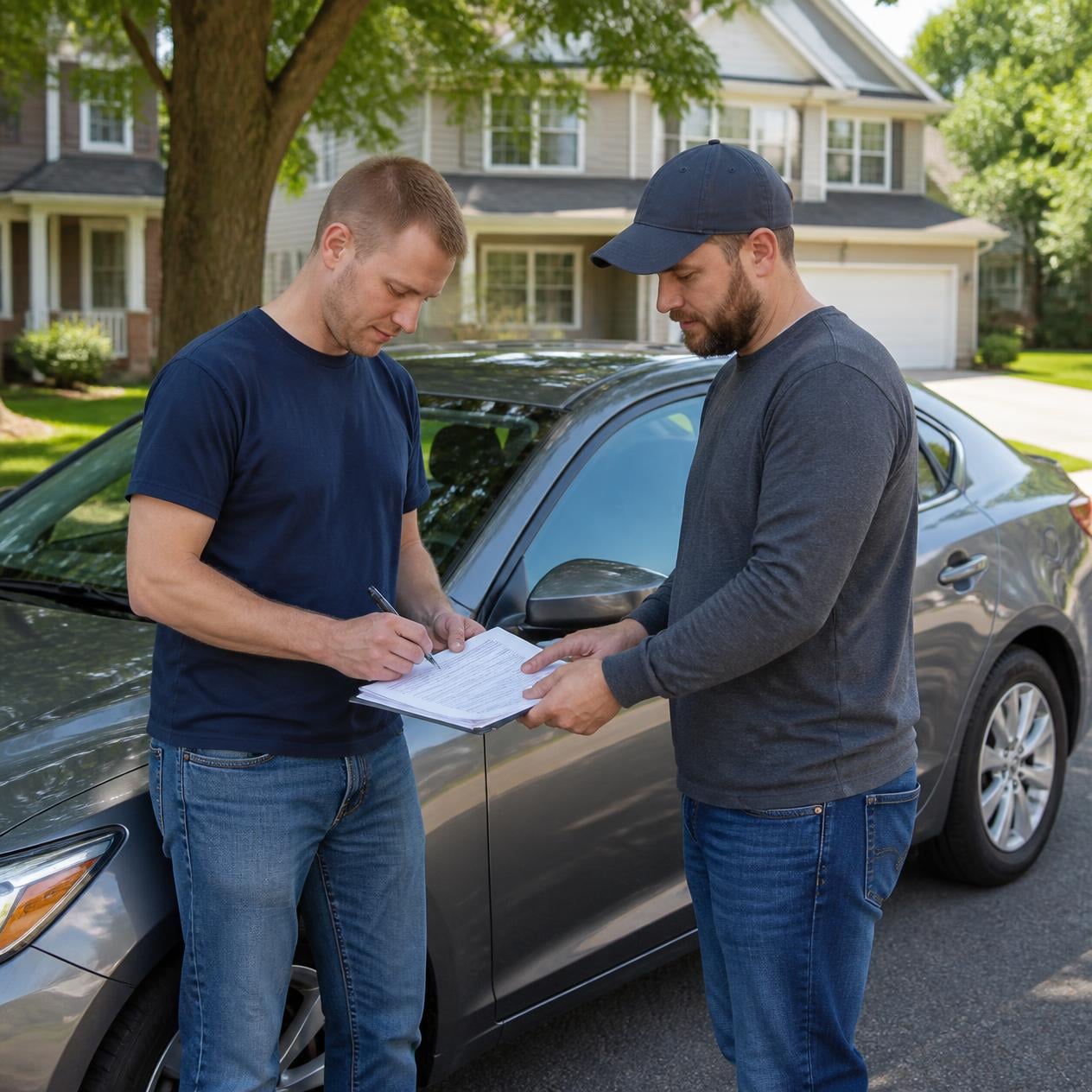
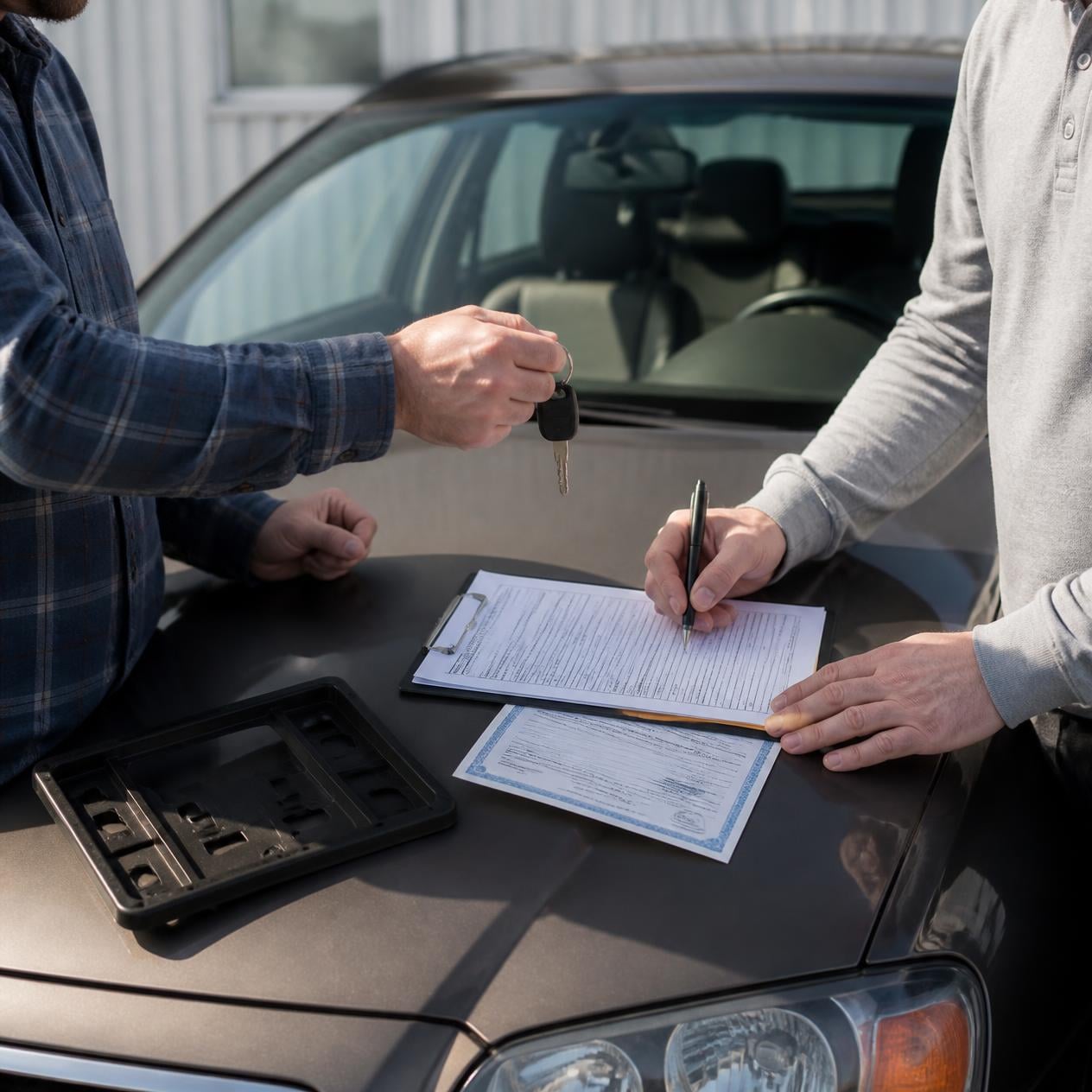
Bill of Sale | Acts as the receipt for the transaction. It must include the buyer's and seller's names and addresses, the sale date, the final price, and the vehicle's details (year, make, model, and VIN). |
Certificate of Title | The most important document. The seller must sign the title over to you. Carefully review it to ensure there are no liens (outstanding loans) on the vehicle. If there is a lien, it must be officially released by the lender before the sale can be completed. |
Vehicle Safety Inspection | In Virginia, most vehicles must pass an annual safety inspection. Check for a valid inspection sticker on the windshield. If it's expired, you will need to get the vehicle inspected before you can register it. |
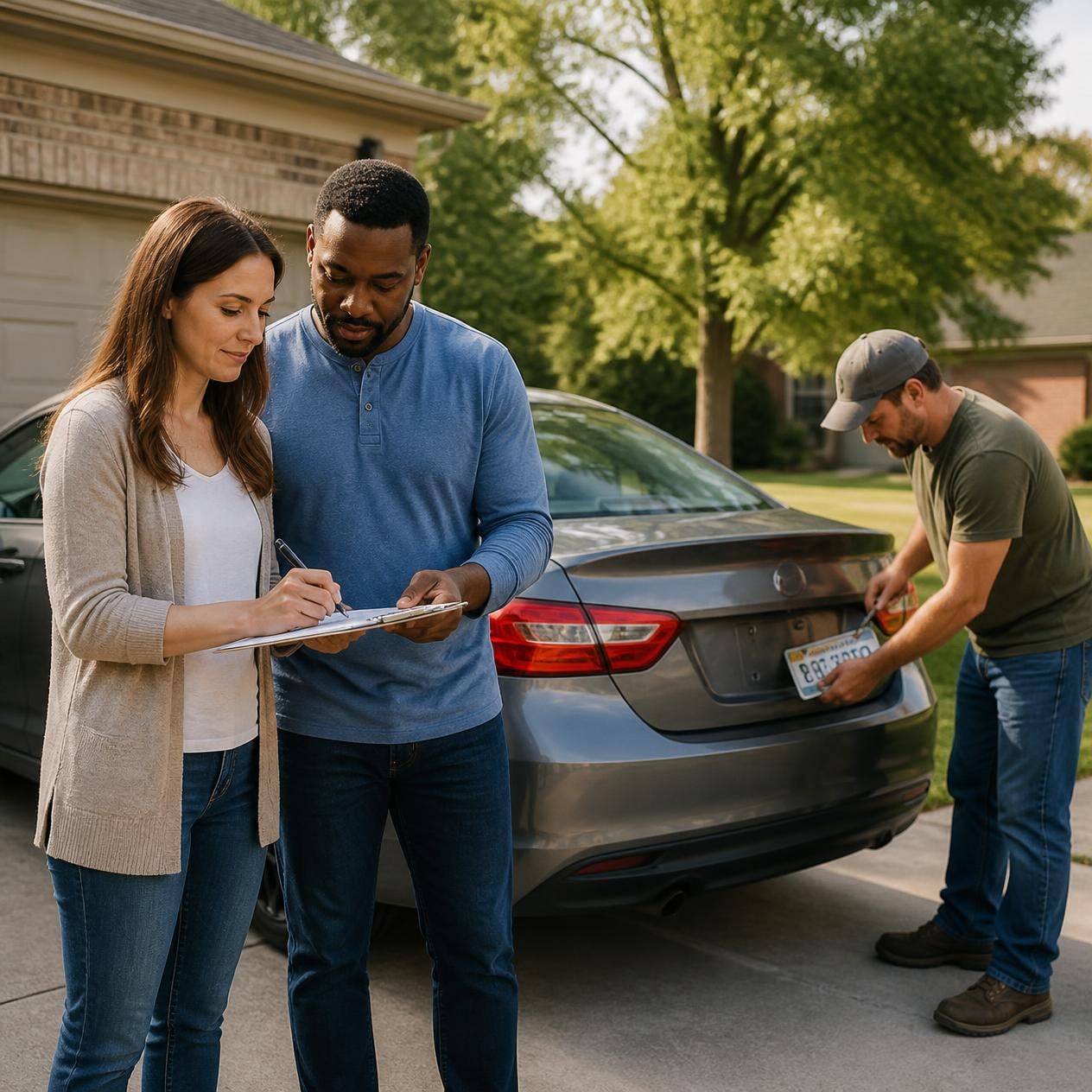
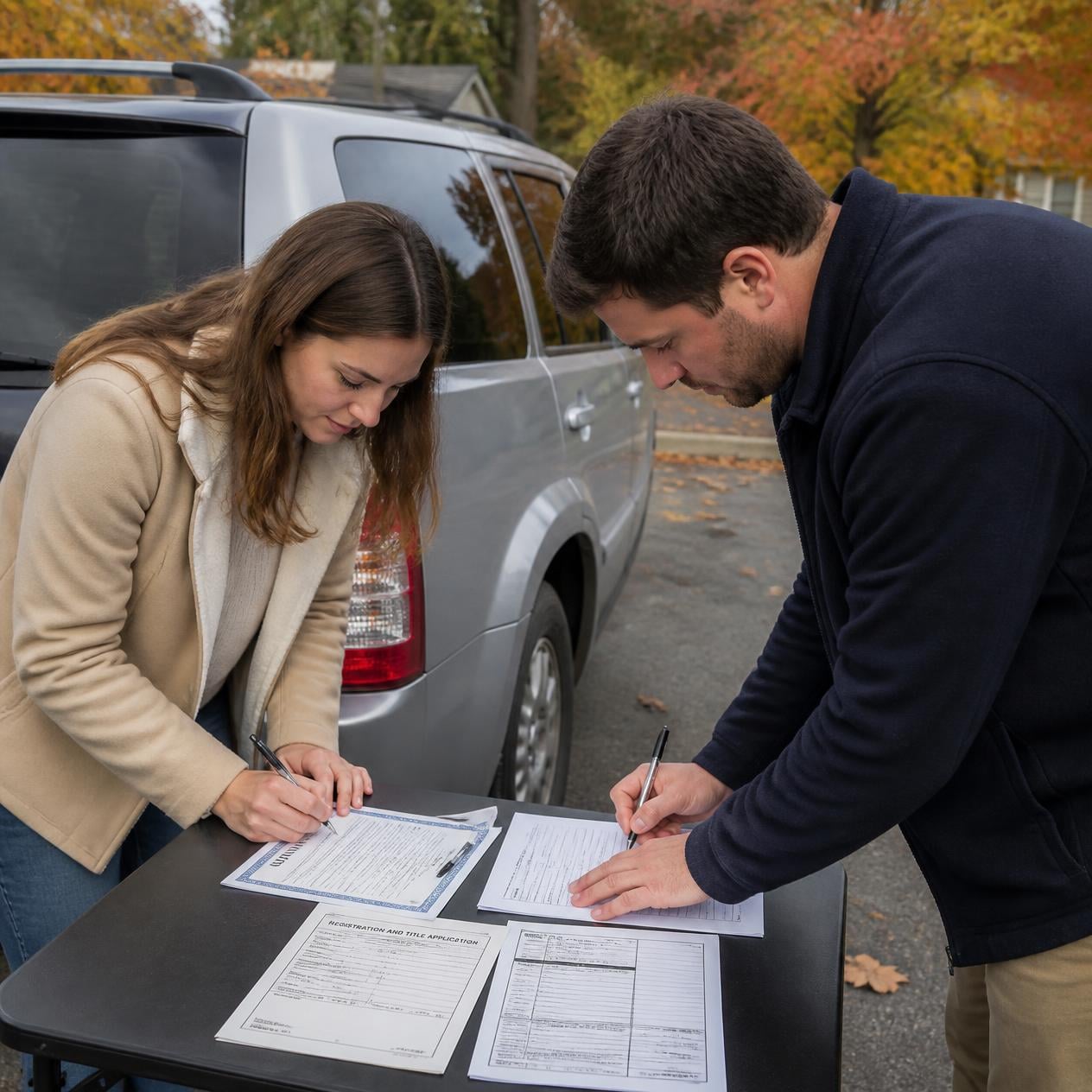
Virginia DMV Forms | You will need to complete the "Application for Title and Registration" (VSA 17A) form. This is required to transfer the title into your name and register the vehicle in Virginia. |

Be Cautious When Making Purchases
There are many honest private sellers that sell automobiles to individuals, however, for your own security you may want to do a few things to ensure the transaction is safe for yourself.
Meet in a Public Space: When you set up a meeting with the individual, always do this in a safe and busy area. You can find out where police departments allow individuals to meet for safe transactions. A bank parking lot is another good option if you are using a verified method of payment such as a cashier's check.
Don't Carry Cash for Large Purchases: If you are carrying large amounts of cash, this is a risk. It is wise to use a secure payment method like a cashier's check or a money order. If you use a wire transfer or any other form of payment that cannot be reversed to pay for a car from someone you do not know, you are putting yourself at risk.
Bring a Friend When You Meet the Seller: Having another person with you is always better than being alone. They can help you with inspecting the car and will serve as a witness to the sale. A witness will ensure that you have proof in the event of issues arising from the sale.
Verify the Seller's Identification: Before you buy a car from a private seller, always ask to see the seller's driver's license. Confirm that the person has the same name as what is written on the title of the vehicle. This will give you peace of mind that you are buying the vehicle from the legal owner.

Be Confident When Driving Away
Purchasing a secondhand vehicle from a private party in Virginia will likely be one of the most fulfilling experiences you can have. You'll have the opportunity to locate an excellent automobile at a reasonable price without the stress of dealing with an auto dealership.
When you perform deep inspections of the automobile and make sure the necessary documents are accurate, you will have the utmost confidence in your purchase.
Are you ready to search for your next car? Start now, and explore the large selection of automobiles available now in Virginia.