
Bill of Sale Aug 31, 2026
Shopping for a used car is exciting, but it can also feel overwhelming once you realize how many small details separate a smart purchase from a costly mistake. If you have spent any time browsing listings on KarKiosk, you already know that buying directly from a private seller usually means a better price than a dealership lot. What you may not know is that the fine print changes depending on where you live. Titles, bills of sale, emissions rules, and sales tax all work a little differently from state to state.
This guide pulls those pieces together. Think of it as the map before the road trip. We will walk through why private sales make sense, what stays the same everywhere in the country, and how the details shift once you cross a state line. At the end, you will find links to every state-specific buyer guide we have published, so you can jump straight to the exact rules that apply to you.
Why Buy From a Private Seller in the First Place
Dealerships have overhead. Rent, salaries, showroom lighting, and advertising all get baked into the sticker price of every car on the lot. A private seller does not carry any of that. The price you see is usually much closer to the car's real market value, which means more room to negotiate and less pressure from a sales team working on commission.
There is also the matter of honesty. A private seller who has driven the car every day for years can tell you things a dealership sales rep simply cannot, like how it handles in snow or why there is a small dent on the rear bumper. That kind of firsthand knowledge is hard to put a price on, but it matters when you are deciding whether a car is right for you.
Of course, buying private does shift more of the responsibility onto you. There is no finance manager walking you through paperwork and no dealership warranty cushioning a surprise repair. That is exactly why a platform like KarKiosk exists. It gives you the tools, the vehicle history reports, and the message center you need to buy with confidence, no matter which state you live in.
What Stays the Same in Every State
Before we get into the differences, it helps to know what does not change. A few fundamentals apply whether you are buying a pickup truck in rural Montana or a sedan in downtown Chicago.
First, you always need a clean title. The seller must be able to sign it over to you, and it should be free of liens. If a bank still holds a lien on the vehicle, the seller needs to clear that up before the sale closes, or you risk inheriting someone else's debt.
Second, an inspection is always worth the small upfront cost. Whether you hire a mobile mechanic or bring the car to a shop you trust, a pre-purchase inspection can catch problems that are invisible during a test drive, from worn brake lines to a transmission that is starting to slip.
Third, payment safety matters everywhere. Cash, cashier's checks, and verified electronic transfers are the norm. Wiring money to a stranger before you have seen the car in person, or accepting a personal check for a large purchase, opens the door to scams that show up again and again across every region of the country.
Finally, insurance has to be in place before you drive off. Every state requires some form of coverage before a vehicle can legally be on the road, so call your insurer or set up a policy before you finalize the deal.

Where the Rules Start to Differ
This is where things get interesting, and where a general checklist stops being enough. States take very different approaches to several parts of the buying process.
Sales tax is one of the biggest variables. Some states charge tax based on the purchase price you report, others tax the higher of your price or a standard book value, and a small handful charge no state sales tax on vehicles at all. This alone can shift your total budget by hundreds or even thousands of dollars.
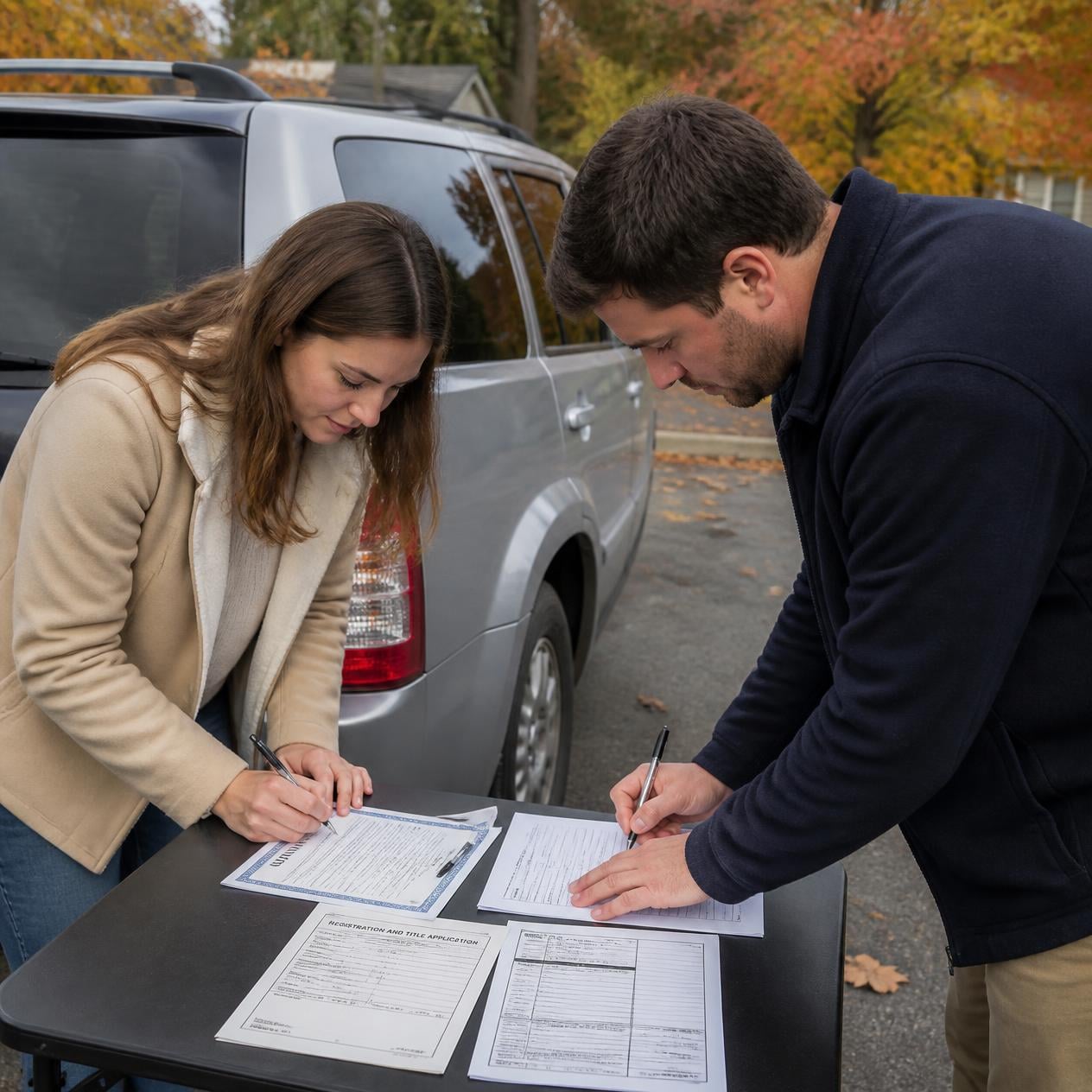
Notarization is another point of divergence. A number of states require the seller's signature on the title to be notarized before the transfer is valid, while others do not ask for this extra step at all. Skipping a required notarization can hold up your registration appointment, so it pays to know your state's rule before the day of the sale.
Emissions and safety inspections follow the same pattern. Certain states, and often specific counties within those states, require a passing emissions test before you can register a used vehicle. Rural counties are frequently exempt even in states that require testing in major metro areas, so location within the state can matter as much as the state itself.
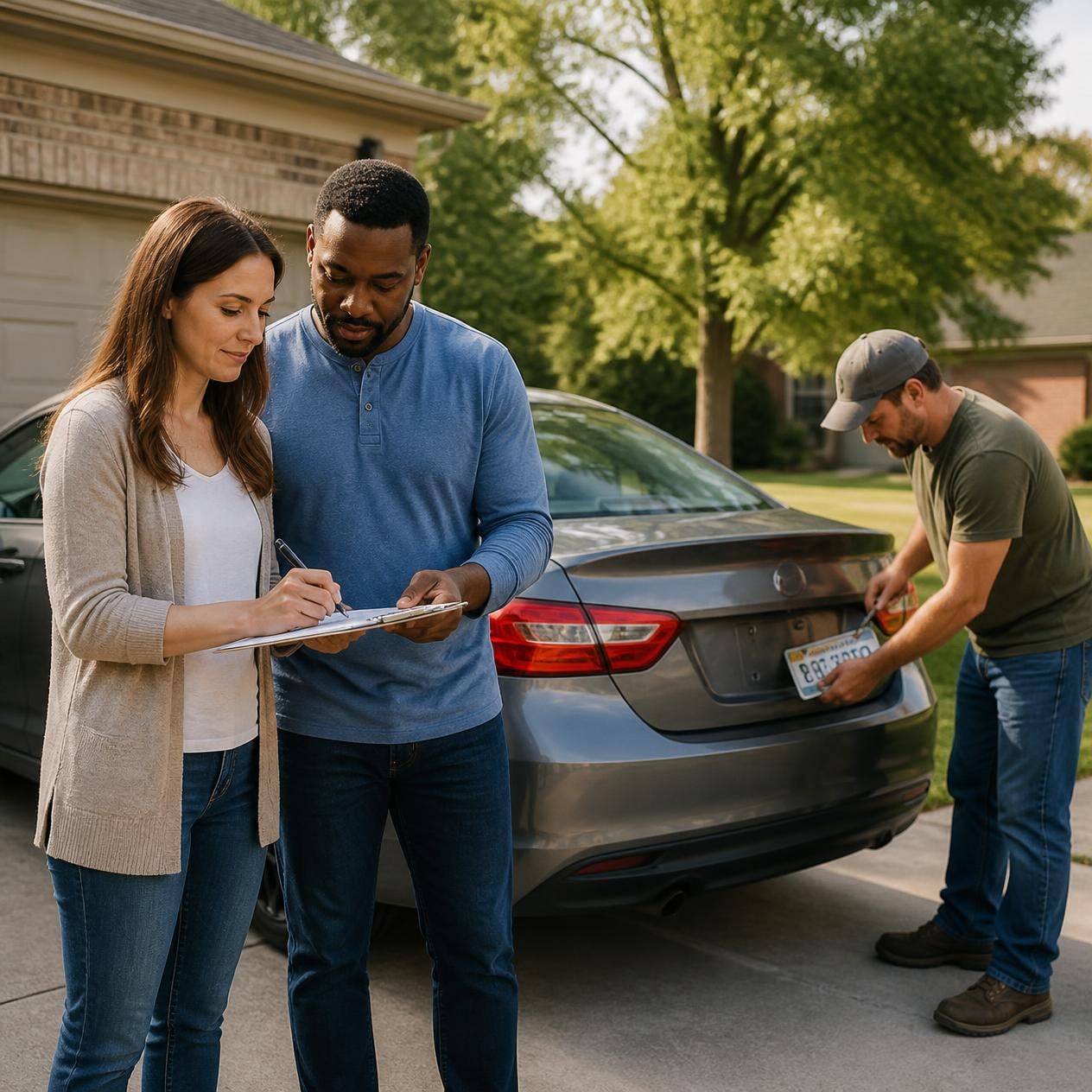
License plates are handled differently too. In some states, plates stay with the seller and the car cannot legally be driven without new plates. In others, plates transfer with the vehicle, at least temporarily, until you complete registration. Odometer disclosure rules, the number of days you have to register a newly purchased vehicle, and even what counts as a valid bill of sale can all vary from one state line to the next.
A Simple Way to Compare States at a Glance
Because these differences can be a lot to track, here is a general snapshot of the categories buyers should research for their specific state before finalizing a private purchase.
| Category | Why It Matters | Where to Confirm It |
|---|---|---|
| Sales tax method | Determines your true out-the-door cost | State DMV or Department of Revenue |
| Notarization requirement | Affects how you schedule the sale day | State DMV title transfer rules |
| Emissions or safety inspection | Can block registration if skipped | County or state environmental agency |
| License plate transfer rule | Determines if you can drive home immediately | State DMV registration page |
| Registration deadline | Late registration often carries penalties | State DMV title transfer rules |
Because these details are specific and change periodically, always confirm them with your state DMV or the relevant local agency. KarKiosk's individual state buyer guides, linked at the end of this article, break down the current requirements for each state in detail.

Buying a used car from a private seller becomes much simpler when you follow a clear process. Taking each step in order helps you avoid costly mistakes, verify the vehicle's condition, and complete the ownership transfer with confidence.
Begin by deciding how much you can comfortably spend, including costs beyond the purchase price such as sales tax, registration fees, insurance, and a pre-purchase inspection if needed.
Narrow your search to vehicles that fit your lifestyle and driving needs, whether you need an economical commuter car, a family SUV, or a truck for towing and hauling.
Browse listings on KarKiosk and use filters such as price, mileage, model year, and location to find vehicles that match your requirements. This helps you focus on the most suitable options without wasting time.
Use the KarKiosk Message Center to communicate with sellers instead of sharing your personal phone number immediately. Keeping conversations within the platform helps protect your privacy and keeps your discussions organized.
Request a vehicle history report before arranging a meeting. KarKiosk provides a KarReport with listings, allowing you to review accident history, title status, and previous ownership details before making a decision.
Meet the seller in a safe, public location whenever possible, and consider bringing a friend or family member. Inspect the vehicle carefully in daylight, look for signs of previous repairs, and take a thorough test drive that includes both city and highway driving.
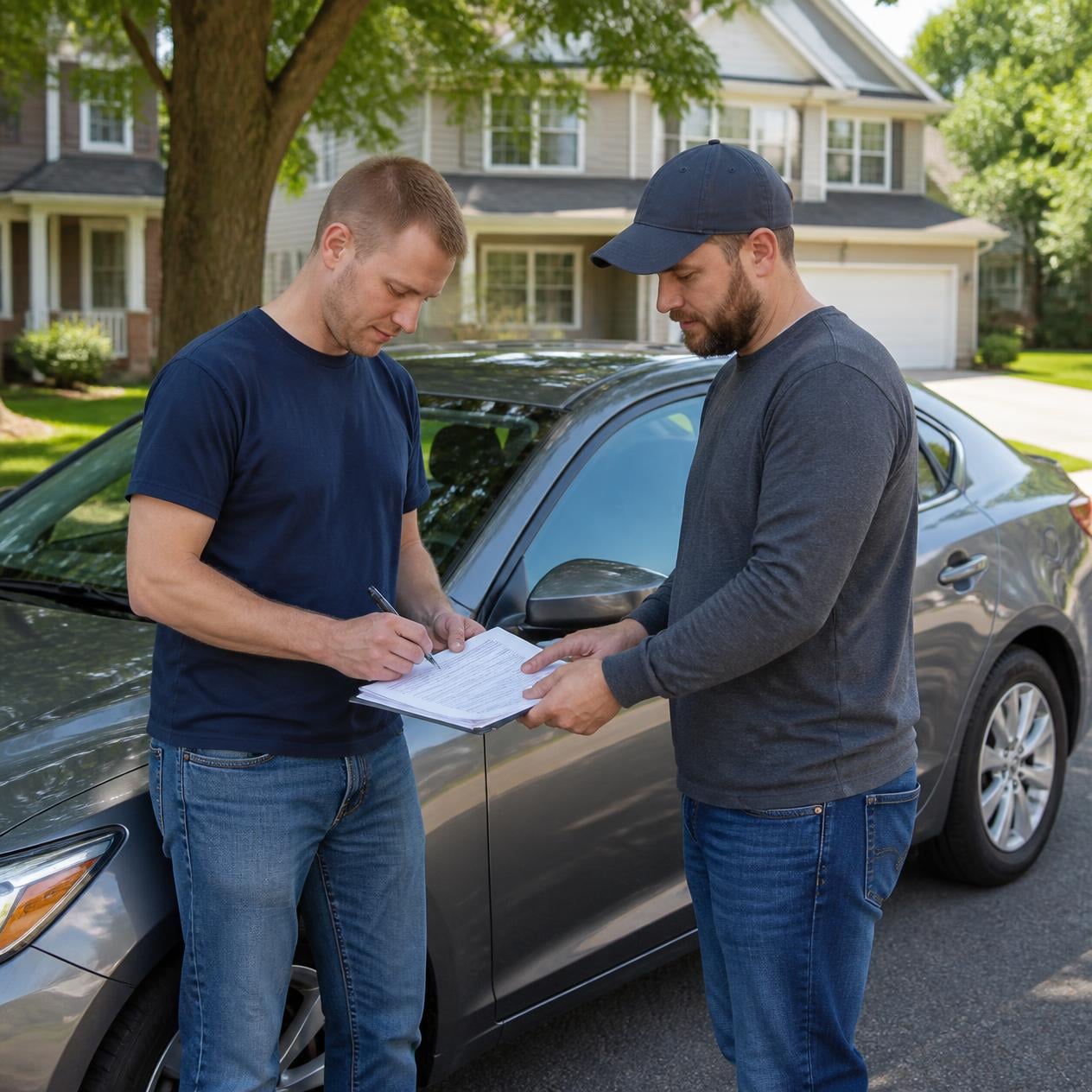
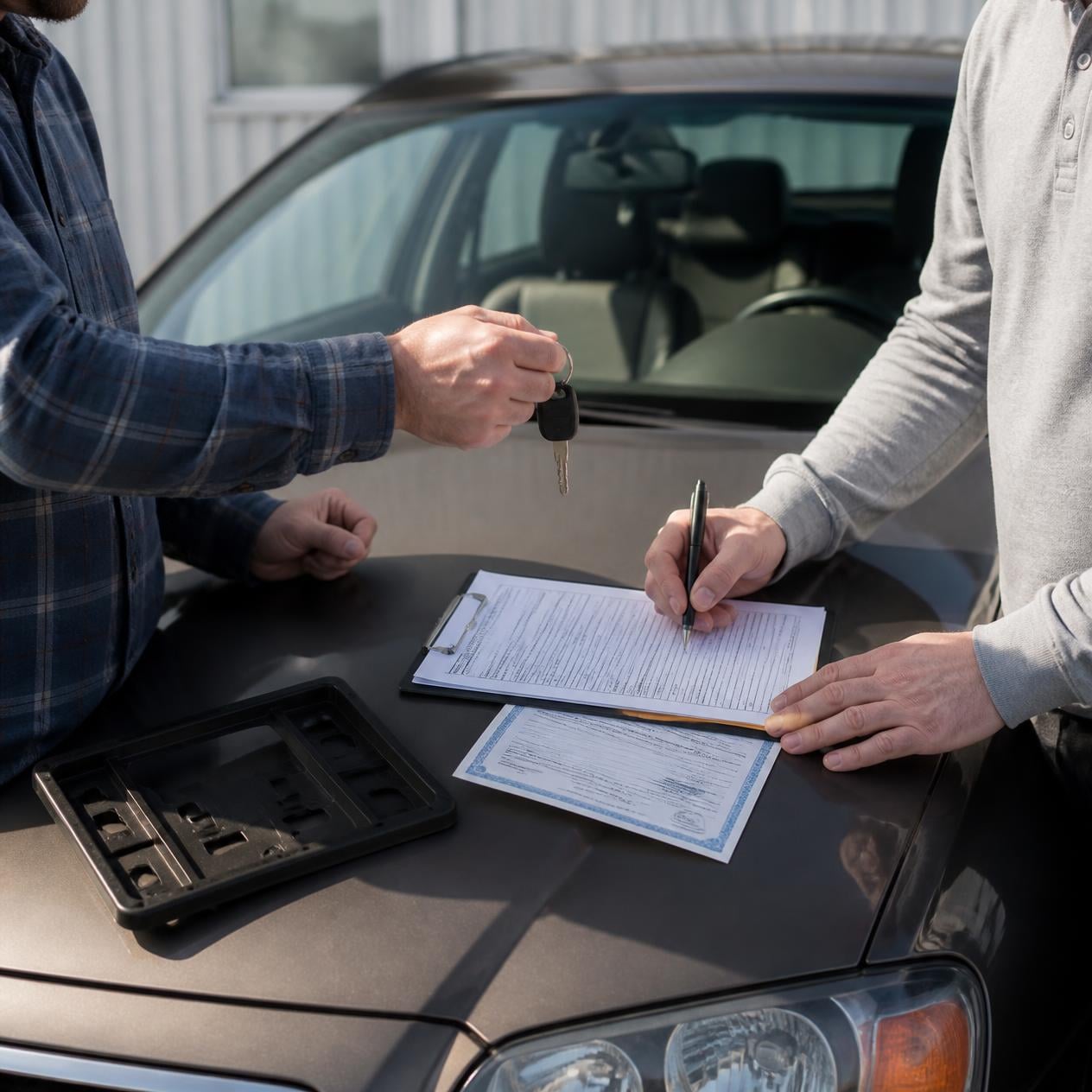
Once you are satisfied with the vehicle, verify that the title is clear, complete the bill of sale, meet any state-specific notarization requirements, and exchange payment using a secure method. Finally, visit your state's DMV or equivalent agency to transfer the title and register the vehicle within the required timeframe.
The Buying Process, Step by Step
1
Set Your Budget
2
Choose the Right Vehicle
3
Search for Listings
4
Contact the Seller Safely
5
Review the Vehicle History
6
Inspect and Test Drive the Vehicle
7
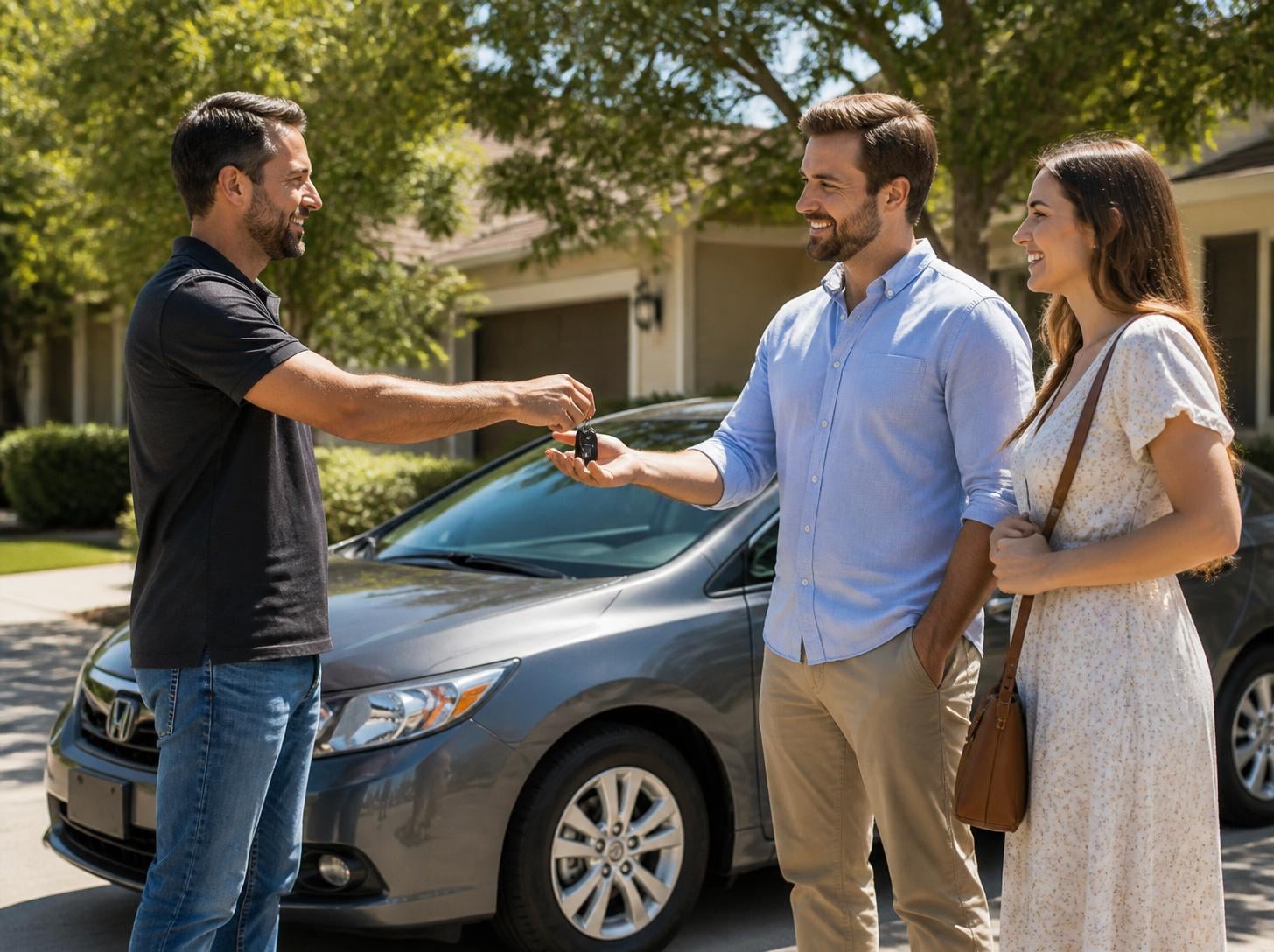
Complete the Purchase
Negotiating With a Private Seller
One advantage of buying private is that the price on the listing is rarely the final word. Most sellers expect some back and forth, especially if you have done your homework and can point to specific reasons for a lower offer.
Start by researching what similar vehicles are selling for in your area. KarKiosk listings make this easy, since you can filter by make, model, year, and mileage to see a realistic price range rather than guessing. If the inspection turned up a minor issue, like worn tires or a cracked windshield, mention the estimated repair cost as part of your offer. Sellers are often more willing to come down on price when the ask is backed by a specific, reasonable number rather than a vague request for a discount.
Timing can work in your favor too. Listings that have been active for several weeks without an offer often belong to sellers who are more motivated to close a deal. That said, respect matters as much as strategy. A lowball offer with no explanation tends to end conversations quickly, while a fair, well-reasoned counteroffer keeps the seller engaged and often leads to a better outcome for both sides.

Common Mistakes First-Time Private Buyers Make
A few mistakes come up again and again, no matter which state a buyer lives in. Skipping the vehicle history report is a big one, since it is one of the easiest ways to spot a salvage title or a flood-damaged vehicle before you waste time on an in-person visit. Rushing the test drive is another. Five minutes around the block will not reveal much; a longer drive covering different road conditions tells you far more.
Buyers also sometimes forget to confirm sales tax and registration costs before they agree to a price, only to be surprised at the DMV counter. Building those numbers into your budget from the start avoids that unpleasant shock. Finally, meeting a stranger in an isolated location, or agreeing to unusual payment requests like wiring money before an in-person viewing, remains one of the most common ways private buyers run into trouble. KarKiosk's Message Center and safety guidance exist specifically to help you avoid these situations.
Another overlooked step is failing to read the fine print on the title itself. Some titles are branded as salvage, rebuilt, or flood damaged, and this status carries forward no matter how good the car looks after repairs. A branded title can affect resale value, insurance costs, and even your ability to register the vehicle in some states, so always check the title status section of the vehicle history report line by line rather than skimming past it.
Browse Every State Buyer Guide
We have published a dedicated buyer guide for private car sales in states across the country, covering the specific paperwork, tax rules, and local tips you need. Below is the full directory of states covered. Click through to your state for the complete details.
Alabama | Alaska | Arizona | Arkansas | California | Colorado | Connecticut | Delaware | Florida | Georgia | Hawaii | Idaho | Illinois | Indiana | Iowa | Kansas | Kentucky | Louisiana | Maine | Maryland | Massachusetts | Michigan | Minnesota | Mississippi | Missouri | Montana | Nebraska | Nevada | New Hampshire | New Jersey | New Mexico | New York | North Carolina | North Dakota | Ohio | Oklahoma | Oregon | Pennsylvania | Rhode Island | South Carolina | South Dakota | Tennessee | Texas | Utah | Vermont | Virginia | Washington | West Virginia | Wisconsin | Wyoming
Final Thoughts
Buying a used car from a private seller rewards buyers who do their homework. The national fundamentals, a clear title, a solid inspection, and safe payment methods, protect you no matter where you live. The state-specific details, from sales tax to notarization, are what turn a good general plan into a smooth, no-surprises transaction. Use this overview as your starting point, then dive into your state's dedicated buyer guide for the specifics that apply to your purchase. When you are ready to start browsing, KarKiosk connects you directly with private sellers nationwide, along with the tools to buy with confidence.