

Bill of Sale Aug 31, 2026
Savvy drivers can find a lot of money to be made in the used car market in Tennessee, which is full of private sellers who have cars sitting in their driveways, just waiting to be sold. If you've been shopping around at dealerships throughout the state, like in Memphis, for instance, you may have noticed something: prices are high and dealerships will put huge amounts of pressure on you to buy the car.
But there is a little-known secret that many Tennessee residents are waking up to that allows them the opportunity to save hundreds, if not thousands, of dollars on their next used car purchase. Instead of buying from a dealership, why not purchase directly from someone who is selling their car?
You can save potentially thousands of dollars, obtain a more reliable vehicle history, and avoid the additional markup that most dealerships add onto their used car prices. However, the state of Tennessee also has its own unique laws regarding purchasing and registering vehicles. Did you know that in Tennessee, once you purchase a vehicle, you cannot drive it off the lot without plates?
Did you know that the state sales tax on used vehicles is 7% for everyone regardless of whether you purchased from a private seller or dealership? With this guide, we will show you how to bypass dealerships altogether and help you find an incredible deal on your used vehicle in Tennessee.
Why Tennessee Drivers Are Leaving Used Car Dealerships
The way we buy cars is changing. In places like Chattanooga and Clarksville, many buyers are coming to the realization that buying cars from dealers is not always a convenient fit due to their added cost. When buying from a dealer you are paying for much more than just the vehicle. You also are helping to pay for the dealer's overhead, commissions to their sales staff, marketing costs, and coffee.
The advantage of buying privately is that the seller does not have to account for overhead. They simply want to sell their vehicle.
The Price Savings
The most obvious advantage to buying privately is the cost. A 2013 Ford F-150 may be listed at a much higher price on the dealer lot in Seymour than on a private seller's driveway. Dealers price vehicles based on what they need to make profit, while private sellers price vehicles based on what they feel is reasonable.
Negotiation Leverage
Have you ever tried to negotiate with a car salesperson who "needs to check with his supervisor"? It's frustrating. When you deal with a private seller in Lawrenceburg or Columbia, you speak with the owner of the vehicle and decision-maker. If the purchase of the vehicle must happen quickly, or they just want to see it gone from their driveway, you can use this to your advantage during negotiations.

Pros and Cons: Is Buying Privately Right for You?
Before we discuss how to buy privately, let's first look at the facts. Buying privately isn't always right for everyone. It takes more time to research, but the rewards can be well worth it.
Feature | Buying from a Private Seller | Buying from a Dealership |
Price | Typically 15-20% lower | Market retail value (higher) |
Fees | Minimal (Title transfer, registration) | High (Doc fees, dealer prep, admin fees) |
Negotiation | High flexibility; dealing with owner | Low flexibility; scripted sales tactics |
Vehicle History | Direct info from the person who drove it | Relying on reports; impersonal history |
Financing | Buyer must secure own loan/cash | Dealer handles financing (often at a cost) |
Warranty | Sold "As-Is" (usually) | Often includes limited warranty or CPO |
Safety | Meeting a stranger (requires caution) | Established business location |
Step 1: Finding the Right Price on Cars in Tennessee
We will use the internet to find the best deals. Finding a specific website that has cars listed for Tennessee only will help you not waste time looking into logistics for out-of-state cars. One good source of TN listings is Karkiosk, which allows you to refine your search by city.
What Types of Cars Are Popular in Tennessee?
As of right now, current listings show that Tennessee has a wide range of cars to choose from. You can find a high number of rugged utility vehicles as well as dependable commuter vehicles.
Workhorse Vehicles: Ford F150s and Chevy Silverados are both considered a staple of the rural communities surrounding Union City.
Family Hauler Vehicles: Chevy Suburbans and Nissan Rogues are commonly found as family vehicles in the suburban areas around Brentwood.
Commuter Vehicles: Fuel-efficient sedans such as the Nissan Sentra and Toyota Corolla are common commuter vehicles in areas that are near universities and major metropolitan areas.
Search Tip: Be specific with your search; searching for "Tennessee" will return a lot of results across the entire state but searching for "Johnson City" will show you only the cars that are available there and possibly reduce your overall costs.

Step 2: The Tennessee Prepurchase Test Drive and Inspection
Once you have located a suitable 2015 Acura RDX in Marietta or a suitable 2017 Ram 2500, it is time to physically inspect the vehicle. Leave your feelings and emotions out of this step!
"Volunteer State" Vehicle Inspection Checklist
Exterior: The weather in Tennessee can change quickly! Search for signs of hail damage (common in some parts of Tennessee). Examine the condition of the tires—are they appearing to be bald on uneven sides? This may indicate an alignment issue due to potholes.
Interior: Verify the condition of all electronic accessories; for example, is the AC operating correctly? If the AC is not blowing cool air, the vehicle probably will not suit you during the hot summer months in Memphis.
Under the Hood: You do not need to be a mechanical expert to identify leakages; look for wet spots on the engine block and puddles of oil underneath the vehicle.
The Drive: Take the vehicle for a ride on a variety of different roadways. If you are in the Hendersonville area, try going up a hill and assessing the performance of the transmission—does it lag and hesitate?
Tip: If you don't feel confident in evaluating the vehicle on your own, take a trusted friend to provide support. Spending approximately $100 for a pre-purchase inspection can save you $5,000 or more in repairs.

Step 3: Understanding Tennessee's Paperwork (IMPORTANT!)
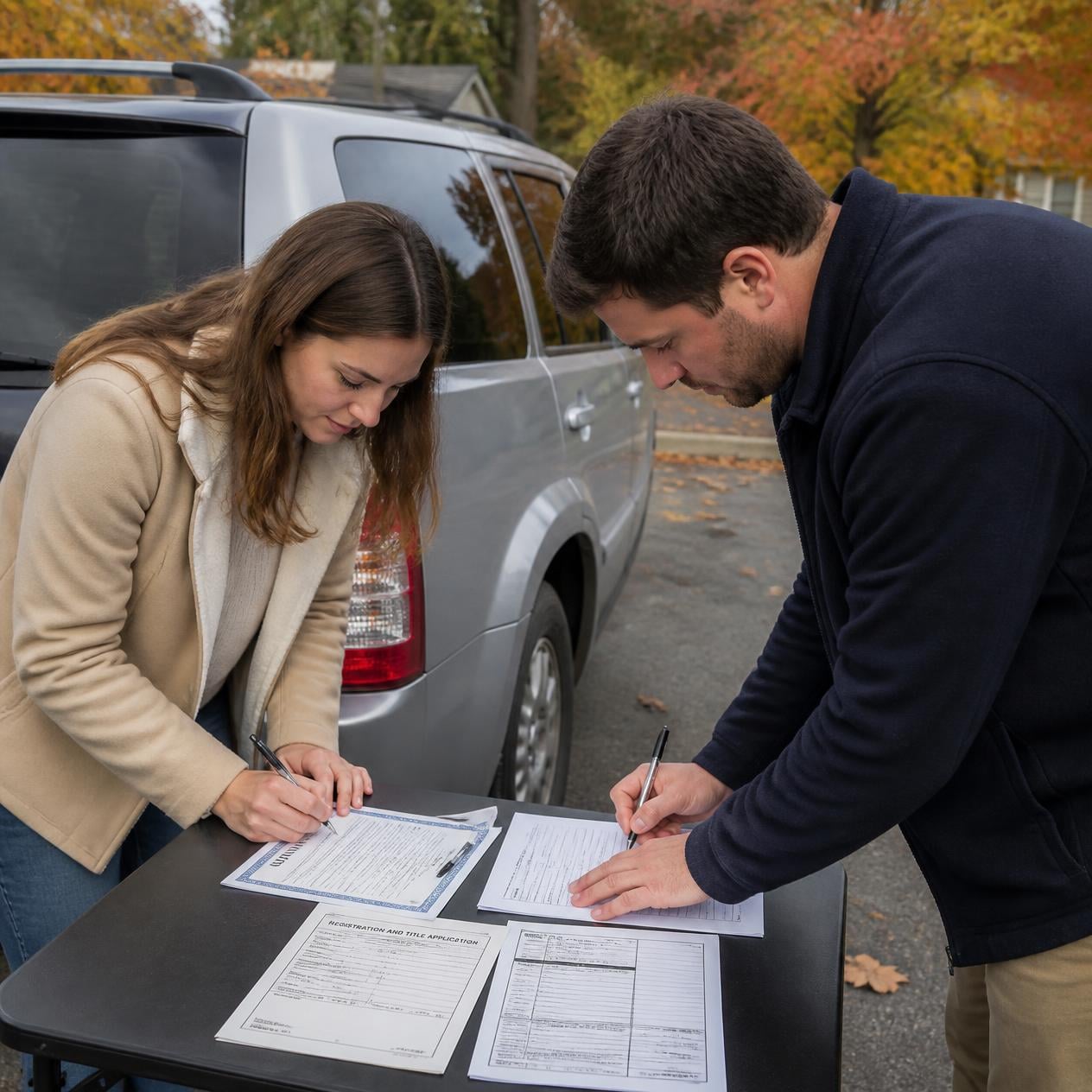
Many new car buyers become apprehensive about paperwork, but it's quite easy to navigate with a basic knowledge of what is needed. There are specific Tennessee laws that govern private sales; therefore, you must have a plan before you just hand over the money and drive off.
What do I need to do to complete a car sale legally?
The Title is the most important document
In Tennessee, the "Certificate of Title" is the most crucial document because without it you cannot register the vehicle in your name.
Responsibility of Seller: To confer Title to Buyer via Assignment for Registered Owner must have been signed on the reverse.
Responsibility of Buyer: Buyer must also sign as the new owner of the vehicle.
Important: Confirm odometer readings match. If either the date or price is scratched out, it could be rejected by some counties, including the Office of County Clerk.
The Odometer Statement
If the vehicle is ten years old or newer, federal law and Tennessee require the seller to complete a separate Odometer Disclosure Statement to eliminate the possibility of odometer fraud (rolling back the miles). For instance, if you purchase a 2019 Jeep Cherokee, you will definitely need the Odometer Disclosure Statement.
Also, if you purchase a 1999 Ford F-250, the vehicle is exempt from needing an Odometer Disclosure Statement, although it is good practice to keep documentation of this information.
Bill of Sale
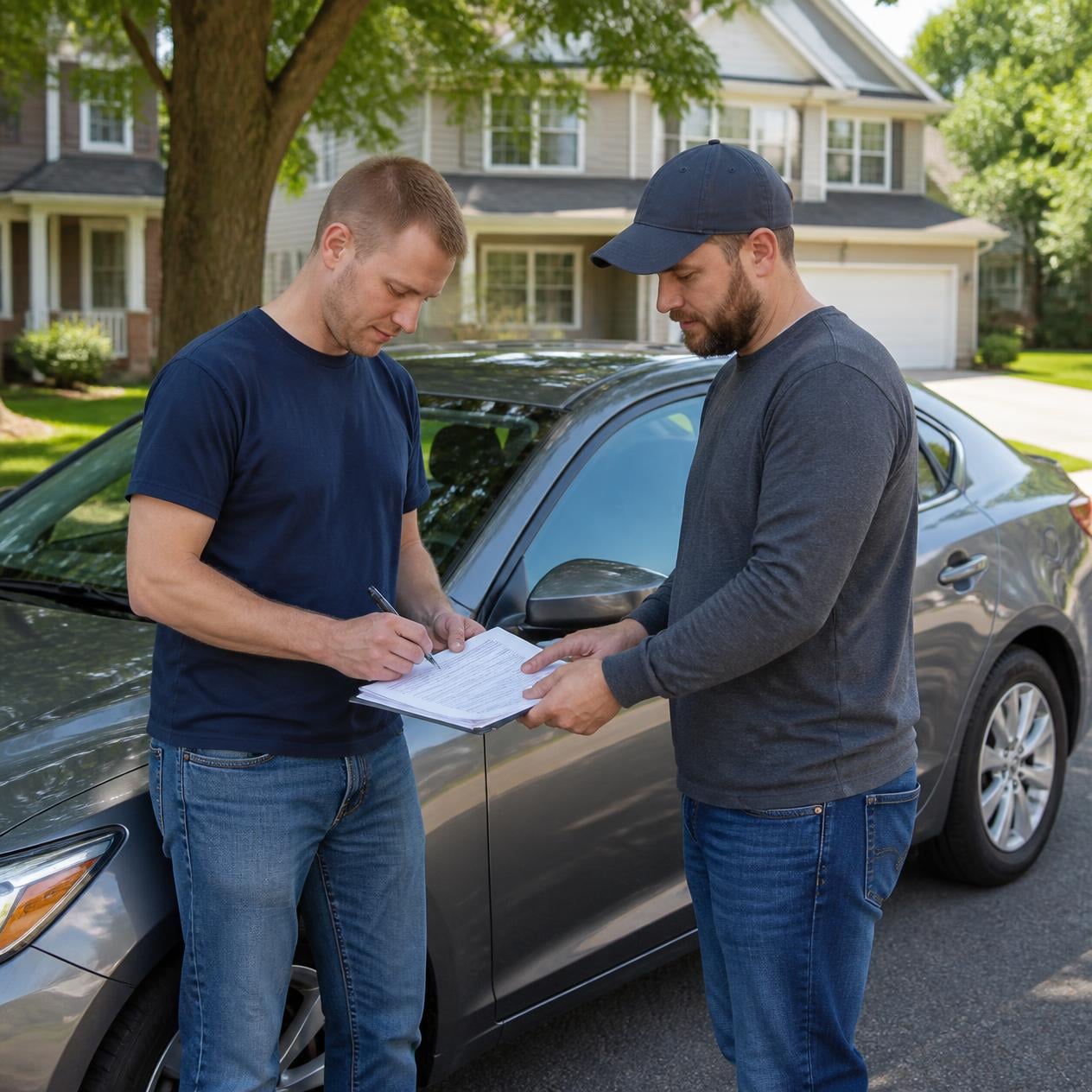
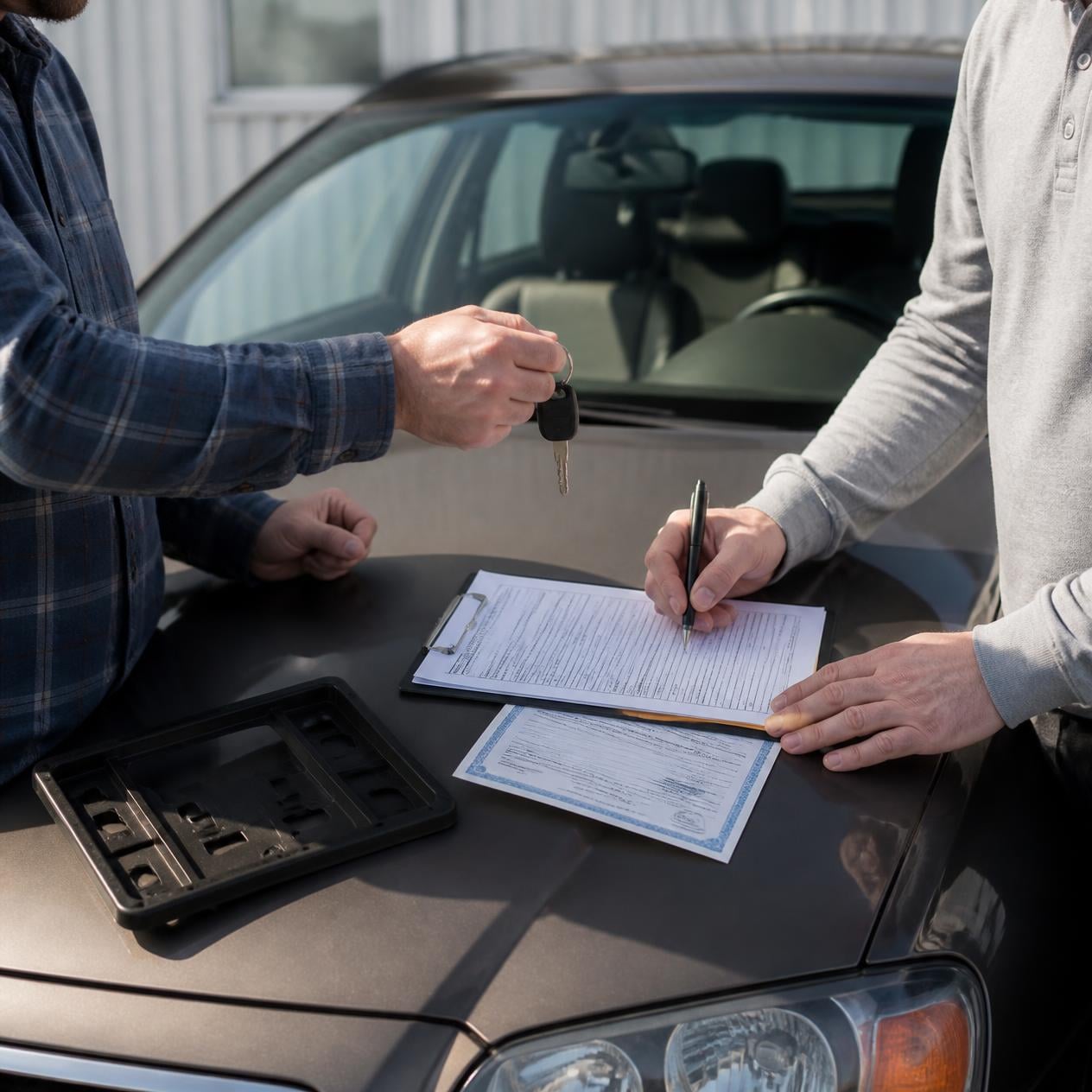
Even though the Title is the most important legal document for the purchase of a vehicle in Tennessee, it is recommended that you obtain a Bill of Sale as well. The Bill of Sale acts as proof of your purchase and ownership of the vehicle, which is important if the seller later claims the vehicle was stolen or if there are any disputes regarding the condition of the vehicle.
Tennessee Private Sale Document Checklist
Document Name | Required? | Who Signs? | Purpose |
Certificate of Title | YES | Buyer & Seller | Transfers legal ownership. Must include odometer reading. |
Odometer Disclosure | YES (if <10 yrs old) | Buyer & Seller | Verifies mileage to prevent fraud. |
Bill of Sale | Recommended | Buyer & Seller | Proof of purchase price and transaction date. |
Lien Release | YES (if applicable) | Bank/Lender | Proves the seller paid off their loan. |
Emissions Pass | Varies by County | Inspector | Required for registration in certain TN counties. |

Step 4: The Money Talk – Taxes and Fees
In Tennessee, there is a myth that when you buy a car through a private sale, you do not have to pay sales tax. This is not true.
State Sales Tax
When you go to your local County Clerk’s office to register the car you bought from the seller, you will pay sales taxes to the state. The sales tax is 7% of the purchase price of your car, and it is not paid to the seller; it is paid to the state.
Local Tax
Most counties also charge a local sales tax that is in addition to the state sales tax, which is often capped at a certain dollar amount. When you purchase a vehicle, you will need to pay the local sales tax as well as the state sales tax.
Low Ball Risk
Some buyers will attempt to reduce their taxes by writing a lower purchase price on their Bill of Sale. Be cautious when doing this. County Clerks in Tennessee know the book value of vehicles very well. If you purchased a 2022 Porsche Panamera and claimed you paid $5,000 for it, your Bill of Sale may be flagged, and your taxes may be based on what they believe to be a fair market value.
Registration Fees
In addition to paying for the sales tax on your car, you will also need to pay for your title transfer and license plates. These fees vary slightly from county to county, but the total fees for both will generally be less than $100, which is significantly less than what most car dealers charge for "Doc Fees." Some car dealers charge Doc Fees that can exceed $500.
Step 5: The Drive Home Dilemma
One of the most frequently asked questions by buyers in Tennessee is: "Can I drive my vehicle home with the seller's plates on it?"
The answer is an absolute no.
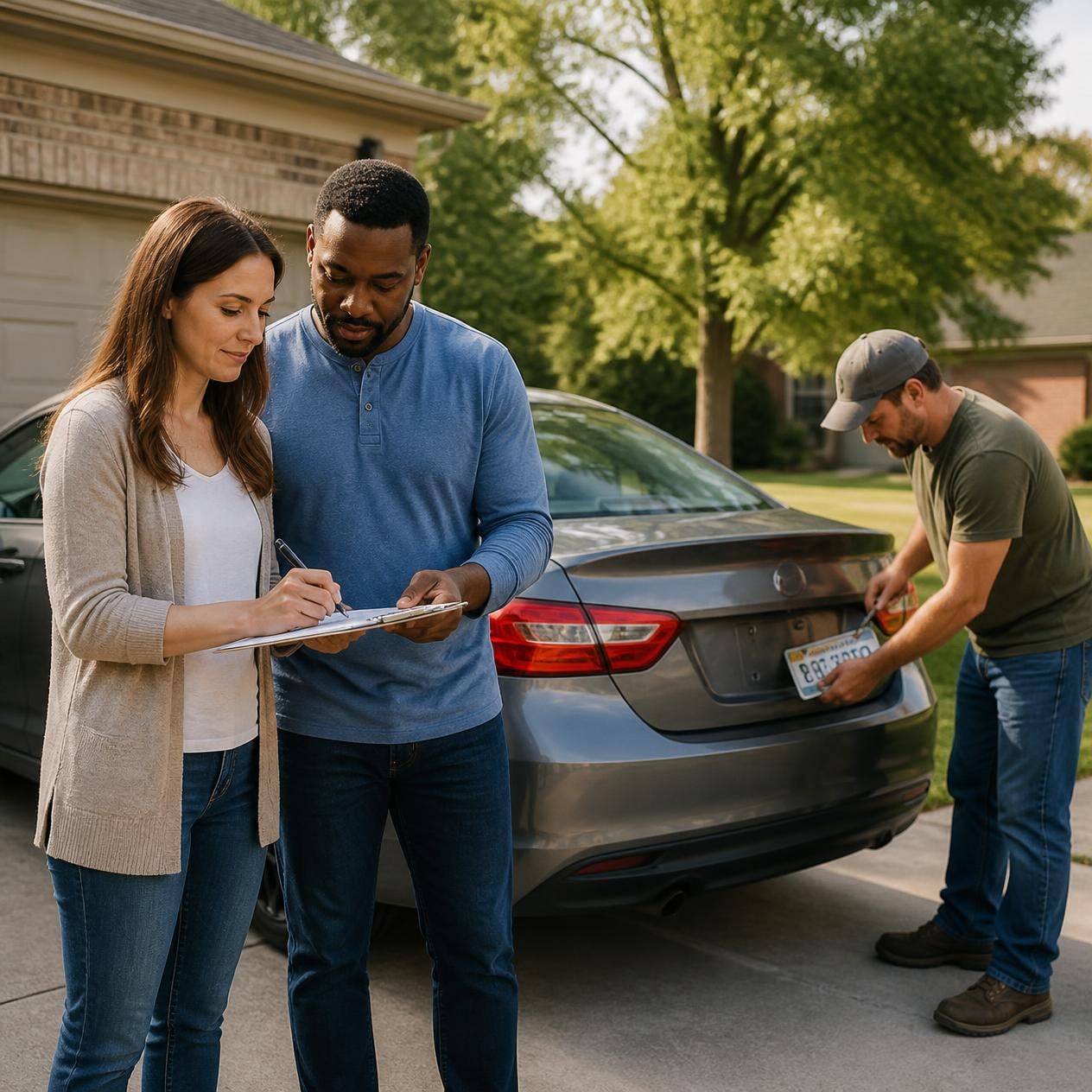
In Tennessee, a license plate is actually owned by the person, not the vehicle. When a seller hands over the keys to a buyer, he/she must remove his/her plate(s) from the vehicle.
So how does a buyer get his/her newly purchased vehicle to their new home?
Driving a vehicle without plates is technically illegal, however if you are pulled over by law enforcement, if you have the Bill of Sale and signed title in hand dated on that day of purchase will usually satisfy the officers that you have just purchased this vehicle.
The best way to avoid this is to meet the seller at the County Clerk's office so that you can complete the transfer immediately, otherwise if you cannot register the vehicle the same day, you must tow the vehicle home.
Safety Before Everything Else: Preventing Scams in the Volunteer State
Although many sellers in areas such as Murfreesboro or Franklin are honest, there are unfortunately dishonest sellers.
The "Invisible" Vehicle: Never purchase a vehicle without physically inspecting it first. If a seller states that their vehicle is located in a storage unit in Memphis, but they are currently overseas, it is best to just walk away.
Lien Traps: Always examine the title's front portion before purchasing. If a bank appears under "Lienholder," the seller must also provide you with a formal lien release letter. If the seller cannot provide that letter, then they do not actually own the car and therefore you will not be able to register the vehicle.
Title Washing: Obtain a Vehicle History Report (for example Carfax) to ensure that the vehicle you wish to buy has not been in a flood from a hurricane in another area of the country and then brought into Tennessee for sale with a clear title.
Conclusion
Purchasing a secondhand vehicle from someone in Tennessee is an exciting way to make money. With local classified listings in cities like Jackson to Bristol, buyers can locate high-quality pre-owned vehicles such as a 2008 Mercedes-Benz E-Class for significantly less than buying one at a dealership.
As a buyer, you’re in control. You have available funds, and you are informed.
You won't be intimidated by the documents and forms that must be signed because buying a used car is easy; it boils down to a simple checklist. Once your money is handed to the seller and you receive the keys, the vehicle is now yours to drive freely. You may be cruising through Tennessee's mountains or driving to work in downtown Nashville.
Either way, you can feel good knowing that you got the best price for your vehicle, and you have beaten the corporate car dealership system!
Happy shopping!