

Bill of Sale Aug 31, 2026
Do you feel frustrated when you walk into dealerships in either Baltimore or Silver Spring where you are bombarded by the many hidden fees, aggressive sales techniques, and prices that keep going up? You’re not alone; the drivers of Maryland are starting to turn their backs on the harsh fluorescent glare of the dealership lot and look for vehicle options that provide a more individualized approach at a lower cost, by purchasing vehicles directly from private sellers.
Buying a car directly from a private seller in the Old Line State not only saves you money, but it also provides you with a vehicle that has a history, the ability to negotiate face-to-face with a fellow community member, and glare-free avoidance of a dealer’s markup. Whether you are looking for a tough Ford F-150 in Ocean City or a Honda Civic in Rockville to commute to work, you’ll find a landscape filled with private vehicle options in Maryland.
This guide will provide you with everything that you will need to successfully navigate the private used vehicle marketplace in Maryland, including all necessary paperwork required by the MVA and the best locations to meet potential sellers. Let’s get started and find that perfect car for you—while avoiding the dealership markups!
Why Are Maryland Drivers Moving Away from Dealerships
Buying a used vehicle from a dealer involves additional costs associated with the dealer's overhead — rent, employees, and advertising. By purchasing from a private seller in Frederick or Annapolis, your entire purchase price will be identified as simply the price of the vehicle.
Performing a Financial Comparison
Private sellers frequently sell their vehicles much lower than dealers do. Dealers must cover their costs by earning a profit margin on each sale, and although a private seller wants a fair price for their vehicle, they have no real need to earn a profit margin in order to be able to keep their lights on. As a result, these differences can easily add up to thousands of dollars in savings.
Fact And Historic Transparency
Communicating directly to the present owner of the automobile gives you a level of information that a dealer can not offer.
Oil Changes: Have oil changes occurred every 3 months or 3,000 miles and kept receipts?
Usage History: Has it been used as a daily commute from D.C. or just used on weekends to buy groceries?
Reason for Sale: Is the individual looking to upgrade to a newer vehicle, are they relocating due to work, and is the vehicle becoming a liability for repair costs?
When you are looking directly at the seller, you can get a better sense of the truth than you will from looking at the report history of the vehicle. (You should also obtain this report.)
Considering Options: Is Private Buying Right for You?
It’s important to weigh the pros and cons before you begin to check out listings. Private purchases require more work than just going to a dealership – however, they can often be very worthwhile.
Table 1: The Pros and Cons of Buying Privately
Feature | Pros | Cons |
Price | Generally lower prices; no dealership fees or markups. | Financing is usually up to you to arrange beforehand. |
Negotiation | easier to negotiate directly with the decision-maker. | No "trade-in" convenience; you have to sell your old car separately. |
History | Direct access to the previous owner for questions. | No Certified Pre-Owned (CPO) warranties or dealer guarantees. |
Inventory | Access to unique, older, or modified cars not found on lots. | You must handle the paperwork (title, registration) yourself. |
Process | Low pressure; no professional sales tactics. | Higher risk of scams; requires diligence and safety precautions. |
What’s Trendy Right Now in Maryland? An Analysis on the Car Industry’s Current Status
The Maryland car industry is reflective of Maryland’s diverse geography. The two main types of cars represented in Maryland are those used for long commutes along I-95 and in more desert rural areas (which have an influx of larger trucks).
In examining what vehicles are on the current private listing websites, we can see that there are a number of popular car manufacturers who dominate the Maryland car market. This information gives us the means to develop appropriate expectations concerning available/realistic options.
Table 2: Popular Car Manufacturers Available in Maryland
Car Make | Best Suited For | Popular Models Seen |
Ford | Work trucks & daily commuters | F-150, Focus |
Chevrolet | Family hauling & utility | Malibu, Silverado, Cruze |
Toyota | Long-term reliability | Camry, Corolla |
Mercedes-Benz | Luxury at a lower entry price | C-Class, E-Class, M-Class |
Nissan | Budget-friendly sedans & SUVs | Rogue, Altima |
Honda | Fuel efficiency & longevity | CR-V, Civic |
Maryland's Buyer Checklist: Step-by-Step
Purchasing a vehicle is a process rather than an occasion; therefore, it is critical to follow this detailed guideline so that you do not purchase a lemon.
1. The Online Screening
Begin your research on trustworthy websites such as Karkiosk and filter through your designated city (i.e., Bowie, Gaithersburg, or Hyattsville).
Look for a thorough description of the item.
There should be several high-quality images of the item.
Be cautious of items with an extremely low price.
2. The Physical Inspection
Now that you have found a car you like, it is time to go see the car in person, and do not let the shine of the paint affect your decision because it may appear shiny, but you need to check for other things before deciding on purchasing this vehicle.
Tires - The condition of the tires should be checked for uneven tire wear which can be an indication of improper alignment.
Fluids - The oil and transmission fluid should be checked to make sure they are clean and free from dirt and bad smells.
Body - Looking for mismatched paint, or gaps between body panels here can indicate a sign of prior accidents.
Interior - The interior of the vehicle should be checked for mold or excessive use of air freshener (which has been used frequently to mask odors).

3. Professional Opinion
If you're comfortable working on your own vehicle, the best way to protect yourself is to have a certified mechanic inspect the vehicle prior to finalizing the deal. For a nominal fee, they'll help you identify problems, such as a bad transmission or leaking head gasket, that could cost you thousands of dollars in repairs.
How to Get All Your Documents in Order for a Private Sale in Maryland
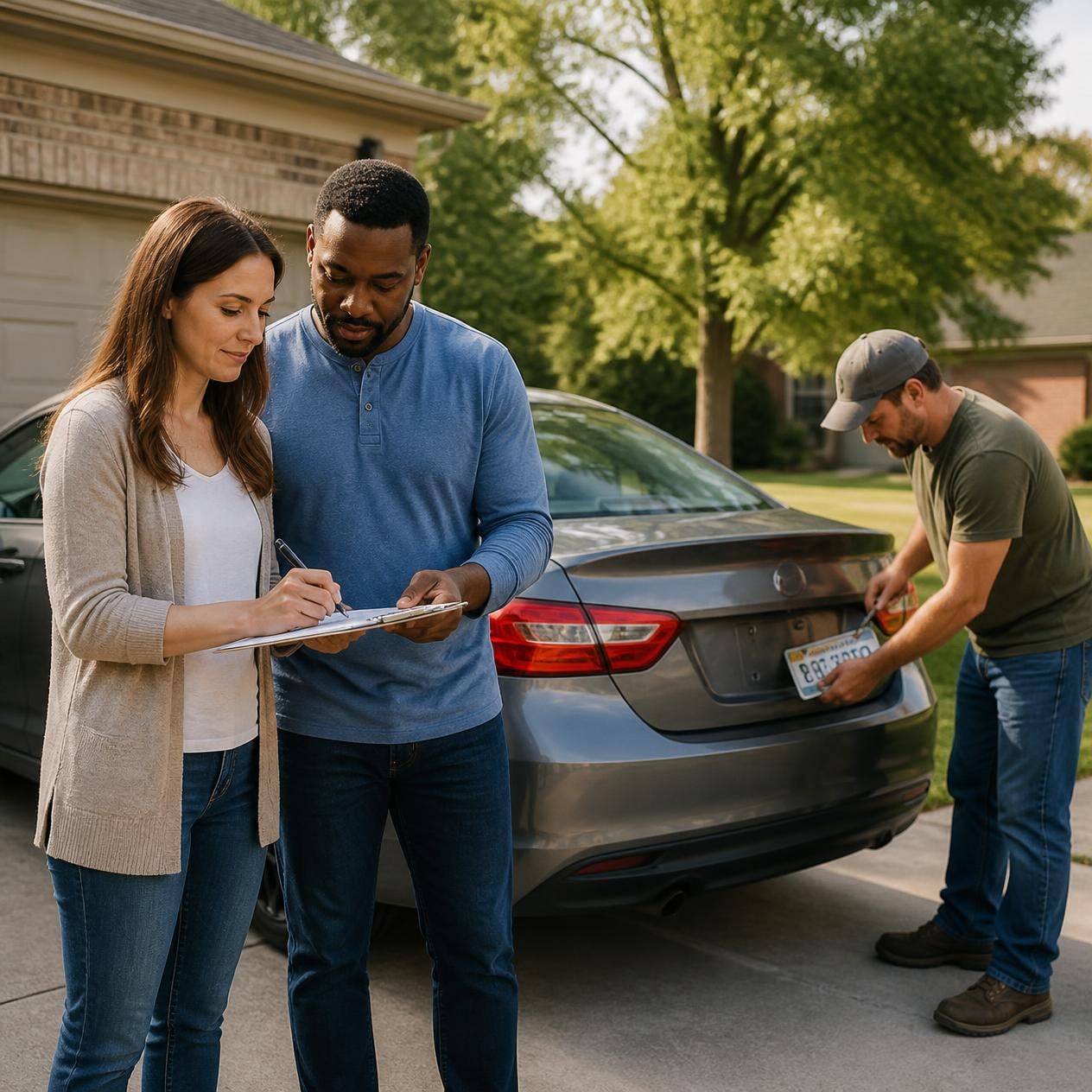
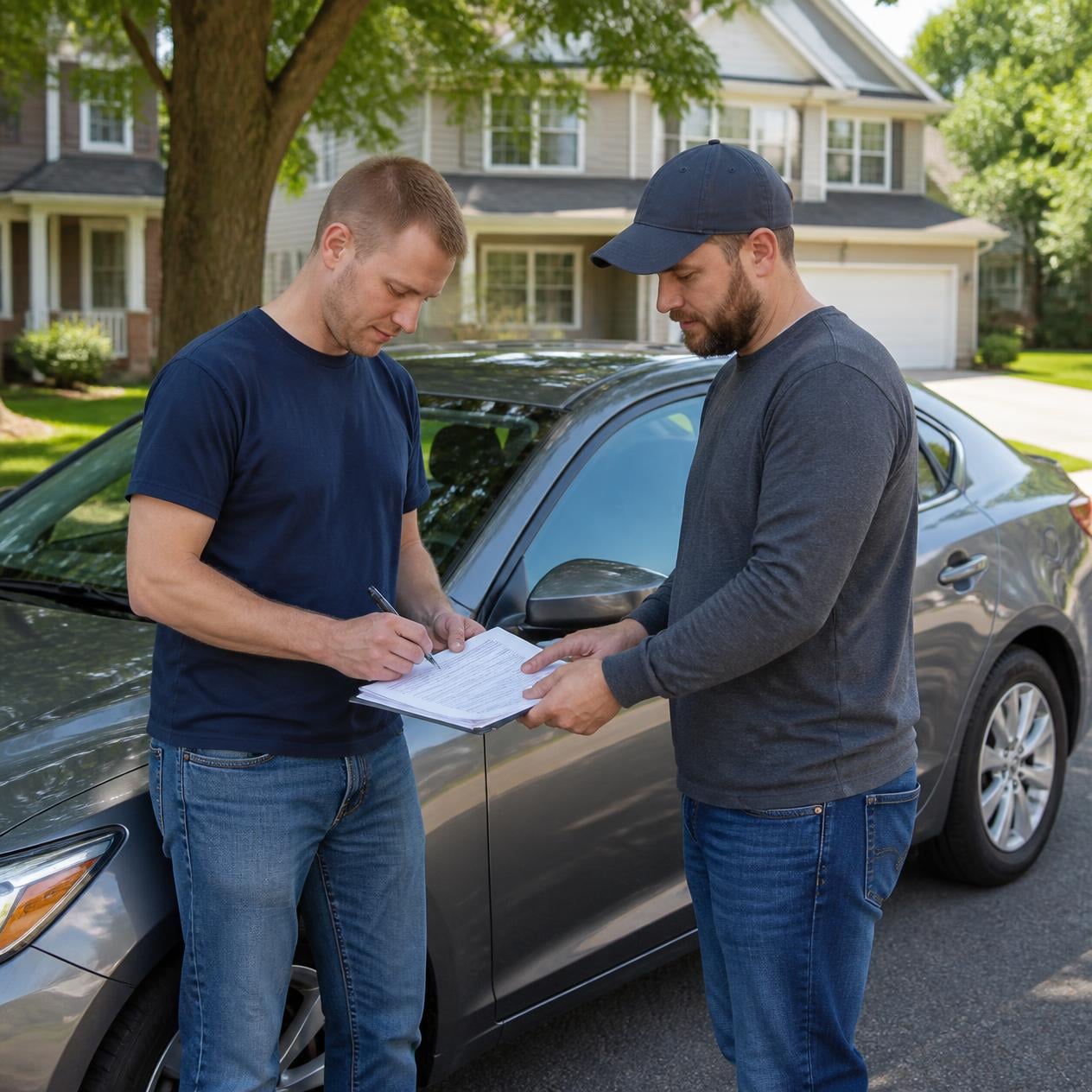
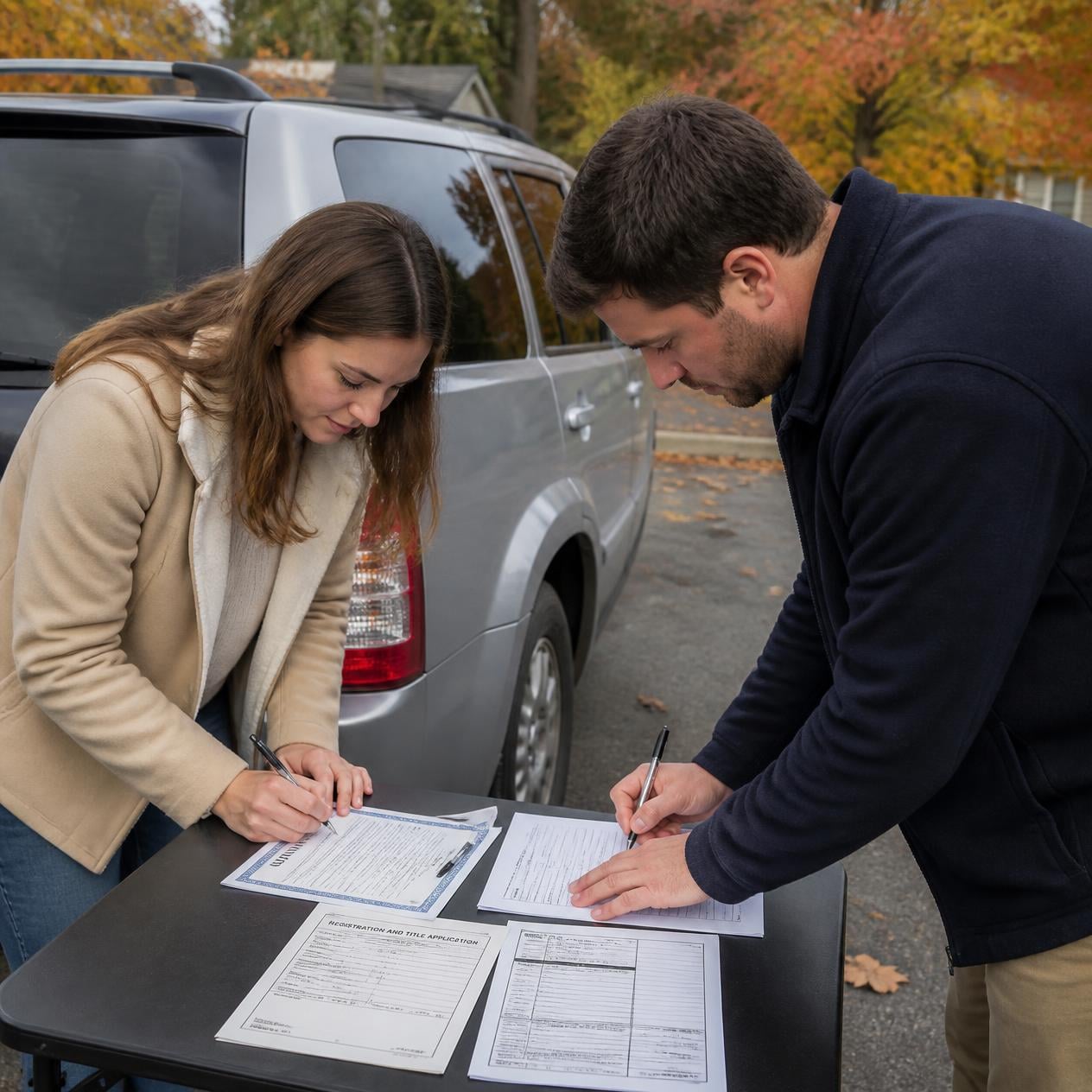
If paperwork is keeping you from making a private purchase, rest assured that it is fairly easy to complete; however, you need to know what the Maryland Motor Vehicle Administration (MVA) requires.
Essential Documents to Provide:
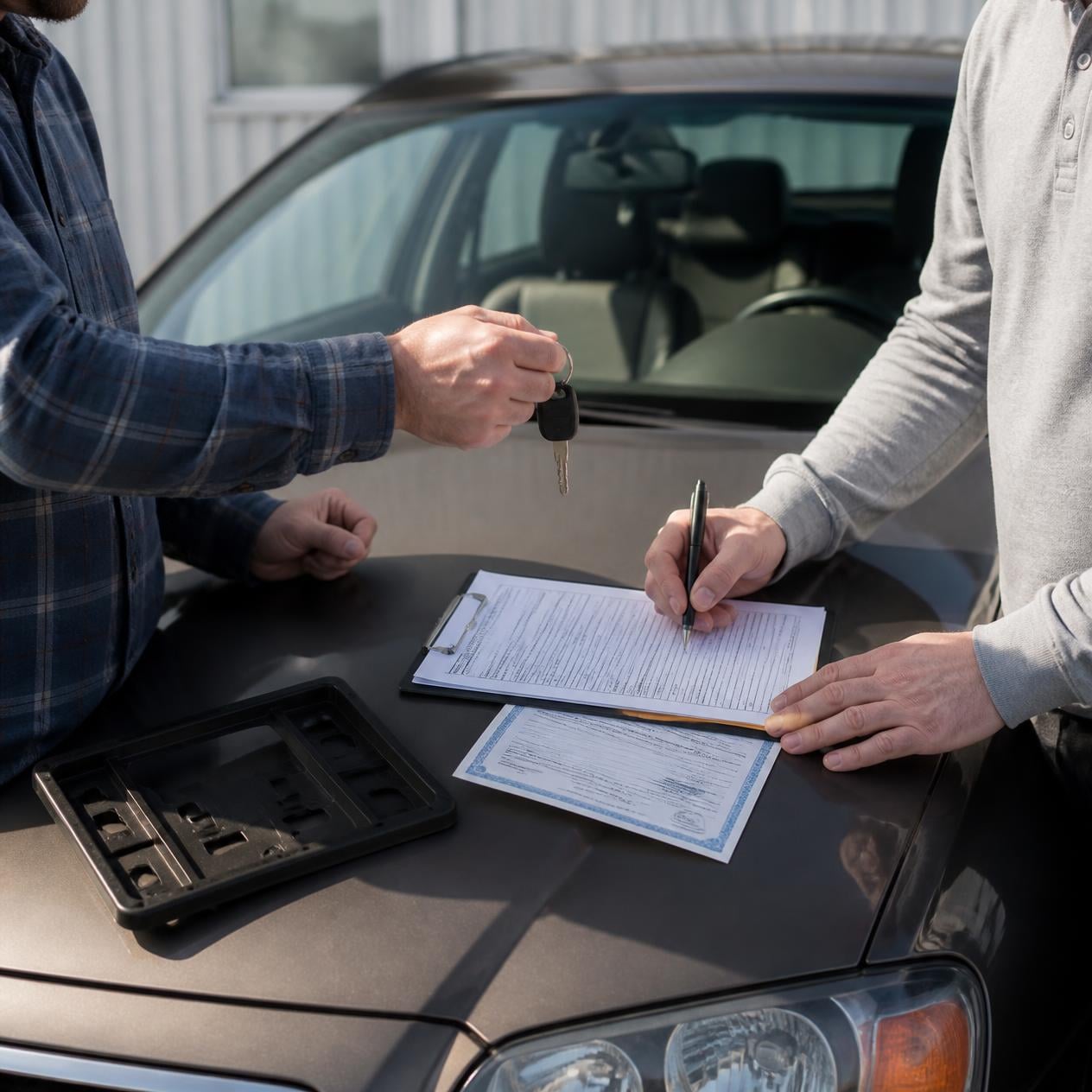
Title Certificate: You need this signed over by the seller and the VIN should match the vehicle, and there shouldn't be any liens on it.
Bill of Sale: A notarized document that will show how much you paid for the car and when, as well as the buyer's and seller's names and the VIN.
Maryland Vehicle Safety Inspection Certificate: This is necessary for registering your vehicle; however, although the seller is generally responsible for providing this, sometimes it can be negotiated to have the buyer be responsible for obtaining it (could be risky if it's not passed!).
Proof of Insurance: Required to register your vehicle.
Application for Title Certificate (VR-005): This is the application form you complete to obtain a title for your vehicle at an MVA (Motor Vehicle Administration).

How to Stay Safe and Avoid Scams
The internet can be very helpful if you use it wisely; however, when you buy a vehicle, your safety should be your main concern.
Meet in a Public Place: Never go to someone's home or invite them to yours for the initial meeting. You should always meet at a busy public location like a mall, police station, or bank parking lot.
Bring Someone with You: Never go alone to meet a stranger. If you have a friend or family member with you at your meeting, they will discourage the other person from acting inappropriately, and you will have a second set of eyes on the vehicle during your inspection.
Avoid Carrying Cash: Do not carry a large amount of cash when meeting for the first time. If you do decide to purchase the car, go to your bank to conduct the financial transaction.
Do Not Share Personal Information: Do not give the seller your Social Security Number or any other unnecessary personal information.

Figuring Out What You Get for Your Money
The Maryland secondary market has something for almost everyone. Below is a table of examples of what one should be able to find in the marketplace.
Table 3: Examples of the Purchases Made using Maryland's Secondary Market
Budget Range | Typical Mileage | Common Condition | Examples Seen Recently |
Under $5,000 | 100k - 180k+ | "Beater" or older reliability | 2011 Ford Focus, 2010 Chevy Malibu, 1995 Ford F-150 |
$5,000 - $10,000 | 80k - 130k | Decent daily driver | 2014 Chevy Cruze, 2016 Chrysler 200, 2008 Audi Q7 |
$10,000 - $20,000 | 40k - 100k | Good condition, newer tech | 2020 Nissan Rogue, 2018 Mercedes E-Class, 2012 Honda CR-V |
$20,000+ | Under 50k | Like-new, premium features | 2019 Cadillac CTS, 2020 Subaru Ascent, 2021 Chevy Suburban |
Conclusion: You Are Ready To Get Your Keys
Purchasing a pre-owned vehicle in Maryland does not have to be a strenuous process. By using the private would you like to suggest this page as a source?, it gives you the possibility of discovering superior prices as well as undergoing a more transparent transaction process.
The potential additional work of checking fluids, verifying the vehicular history, and meeting safely with the seller, is going to yield an automobile that is going to help stay within your budget as opposed to paying a dealer markup.
So, if you're in Baltimore, Silver Spring, or Upper Marlborough, you will find your ideal vehicle sitting at somebody's home just waiting for you! To aid you in finding your ideal vehicle, follow the tips provided in this guide, listen to your instinct, and definitely carry out an inspection prior to completing your purchase. Good luck in your search!