

Bill of Sale Aug 31, 2026
Selling your own vehicle can be like trying to find your way through a maze while blindfolded. The good news is that by skipping the dealership trade-in, you will be able to keep more money in your pocket. If you live in Maryland, the process can be particularly confusing due to the state’s unique circumstances, such as that well-known safety inspection. If you get the process wrong, you could cause yourself a lot of headaches later.
Whether you live in Annapolis, Baltimore, or out in Frederick, this guide will simplify everything for you by providing you with step-by-step instructions on how to create your listing, prepare your vehicle for the sale, and actually sell it privately in Maryland. After reading this article, you can walk away from this deal with the maximum amount of cash in your pocket.
Why Private Sales are on the Rise in Maryland
Let’s be honest for a minute: Yes, it’s nice and convenient to trade your vehicle in at the dealership, however, you’re paying for that convenience from your wallet. The dealership must make money, therefore they must sell you the vehicle for what is referred to as the ‘wholesale price’.
When you sell your vehicle privately, you have complete control over the sale process, including how much it costs you. You will set your vehicle’s price based on the actual market value of your vehicle, rather than what the dealership wants to give you.
With Maryland having such a vibrant used vehicle market (from the busy streets of Silver Spring to the suburbs of Rockville), there is an abundance of potential buyers looking to buy privately for the sake of avoiding dealer markup pricing.
Pros & Cons of Doing a Private Sale
Before you begin the selling process, it’s important to assess how much effort is required to obtain the benefits from a private sale vs. how much money you will actually save in the end.
Feature | Selling Privately | Trading In at a Dealer |
Sale Price | Higher. You keep all the profit and sell at market retail value. | Lower. You get wholesale value; the dealer keeps the margin. |
Control | High. You decide who buys it and for how much. | Low. You take the dealer's offer or walk away. |
Effort Required | Medium/High. You handle listings, meetups, and paperwork. | Low. You sign papers and hand over the keys. |
Time to Sell | Variable. Can take days or weeks depending on demand. | Instant. The transaction happens immediately. |
Paperwork | Your Responsibility. You must handle titles and bills of sale. | Dealer's Responsibility. They handle all DMV processing. |
Step 1: Organize Your Paperwork for Selling Your Car in Maryland
To legally sell your vehicle, you must have paperwork prepared in advance for the sale of your vehicle. The state of Maryland has very strict regulations regarding this documentation, so before you list your vehicle for sale, ensure that you have collected the following documents.
Title Certificate
The title certificate is the most important piece of documentation. If you cannot locate your title certificate, do not continue with this process. You will need to apply for a duplicate title certificate through the Motor Vehicle Administration (MVA).
If you currently owe money on your vehicle loan, the financial institution holds the title certificate; therefore, you'll need to pay off your loan in order to receive an official lien release document.
Action Item: Prior to selling your car, review your title certificate and check for any outstanding liens. If you find a lien, obtain your lien release form (counterpart to Form VR-217).
Maryland Safety Inspection Certificate
This is probably the most overlooked portion of selling a car in Maryland. In Maryland, it is the seller’s responsibility to obtain a safety inspection, and you must obtain that inspection from a licensed inspection facility.
Once you have completed the safety inspection and provided a signed safety inspection certificate to your prospective buyer, the buyer will be able to register the car in their name.
Important: You must give your prospective buyer an official, valid certificate when completing the sale of the vehicle, and the prospective buyer will not be able to register the vehicle without this certificate.

Step 2: Prepare the Condition of Your Vehicle for Sale
Just like you wouldn’t wear sweatpants to a job interview, you should not list your vehicle for sale until it is cleaned. An extremely clean vehicle communicates to buyers that the vehicle has been well-maintained.
Exterior: Clean exterior thoroughly. Wash, dry, and wax paint; clean foggy headlights.
Interior: Clean all passenger compartments, clean and dry dashboard, remove all personal or trash items from the car.
Under the Hood: Detail isn't needed for the engine, but a cleanout of grease and dead leaves makes a difference.
Step 3: Listing Your Vehicle Online
You want to get your vehicle in front of as many people as possible. Leverage sites like KarKiosk to list your vehicle based on your VIN or License Plate and automatically populate your specifications.
Creating the Ideal Listing
Instead of saying “Car For Sale," tell your story.
Be Truthful: If there is a scratch on your bumper, say something. Building transparency equals building trust.
Feature Promotion: Does your car have low mileage, new tires, and apple Carplay? List it in your headline.
Use Photos: KarKiosk allows up to 25 photos, plus a 30-second video, so use them.

Step 4: Determining a Pricing Strategy for the Maryland Market
Pricing is an art form. Pricing too high leads to prolonged sitting; pricing too low results in losing money.
Use pricing tools to compare the sale price of similar vehicles in your area. A Ford Focus in the Baltimore area will not necessarily have the same pricing as one in the Hagerstown area.
Two Common Pricing Mistakes
Emotion Based Pricing: "I've loved this car; therefore it is worth more than I have priced it" (any buyer does not value your emotions at that level).
Not Identifying Vehicle Condition: Be honest; e.g. If you need to replace brakes, reduce your pricing to account for the repair required if sold at the top price levels.
Set It and Forget It: You can always reduce the price of your vehicle after no response in two weeks from potential buyers.

Step 5: Moving Forward After Listing (Listing is Now Live)
How to handle the phone calls from interested buyers.
Pre-Qualify: Ask the interested buyer qualifying questions prior to meeting, such as, "Have you pre-qualified for financing?" or "Are you from the area?"
Test Driving (When possible): Always meet in a public place and never meet at your vehicle for the first-time. There are Safe Exchange Zones provided by the Maryland State Police for test drives.
Be Safe: Always meet potential buyers with another person and verify their driver's license before allowing them to drive your vehicle during the test drive.
Communication Tip:
Use the messaging system provided by Your Listing Platform (like the KarKiosk Message Center) to communicate and not your cellphone number, until you are ready to allow the buyer to have your number. This will help you avoid being messaged about vehicles that you may not want to sell.
Step 6: Closing the Sale
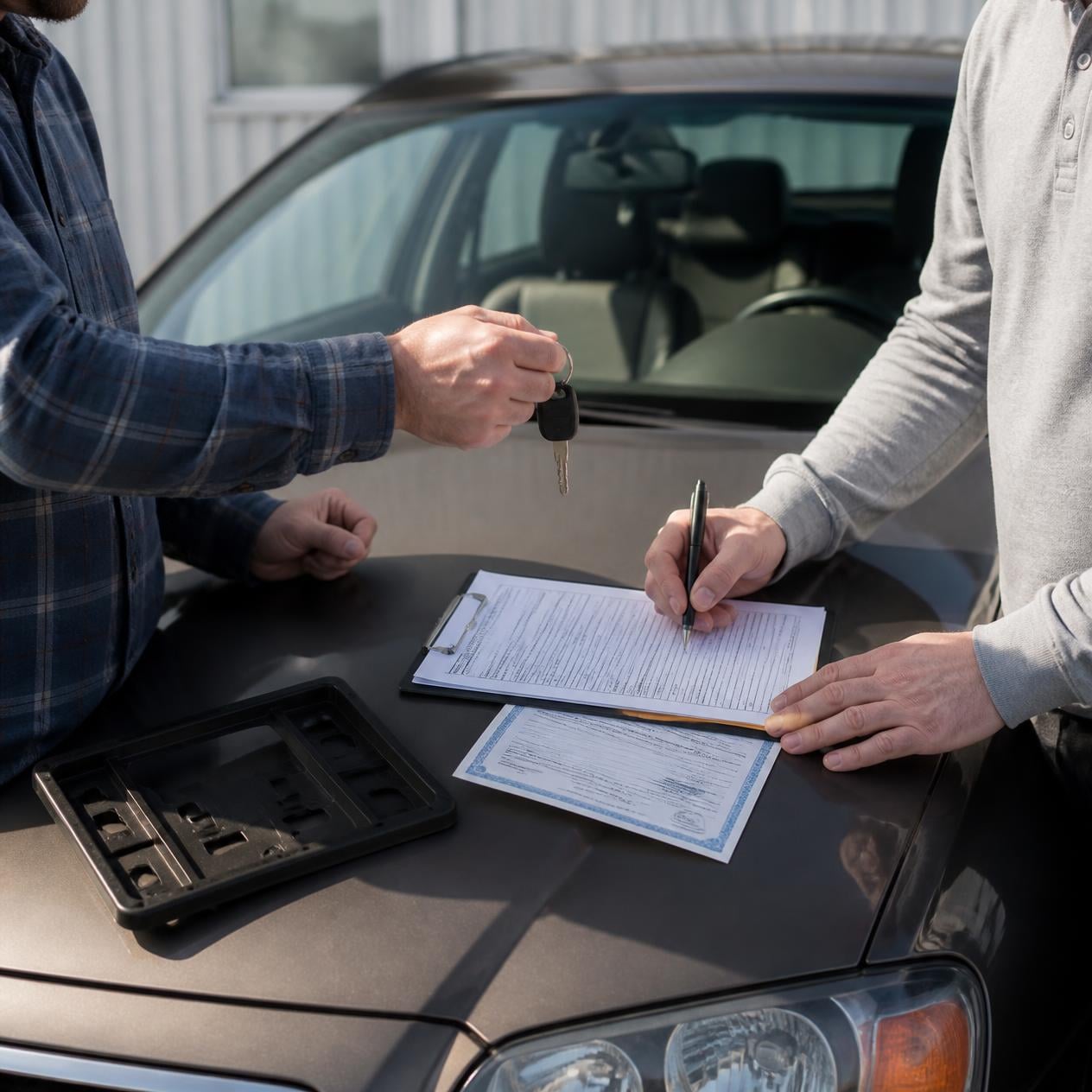
You have sold your vehicle! Now it is time to make it official without error!
Bill of Sale
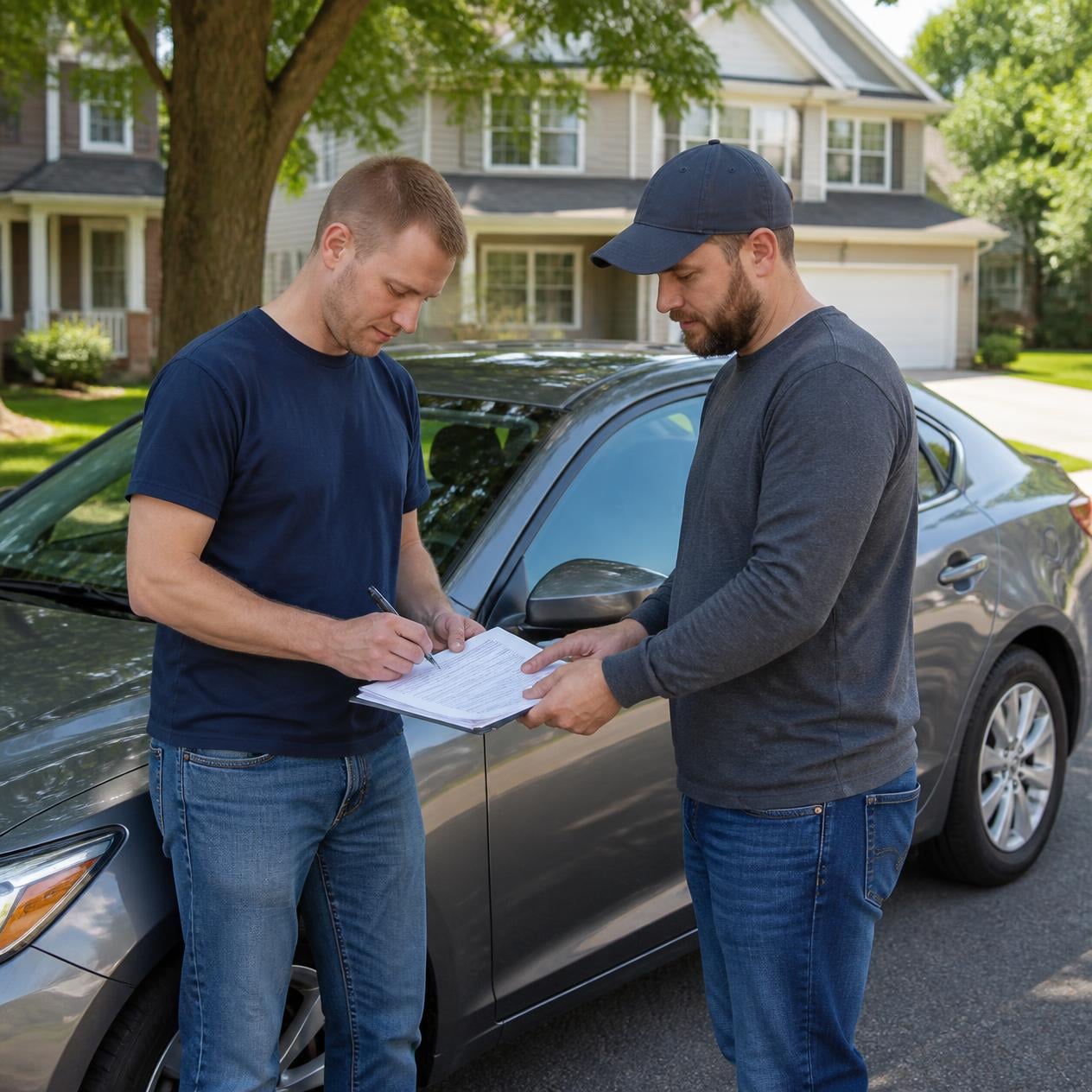
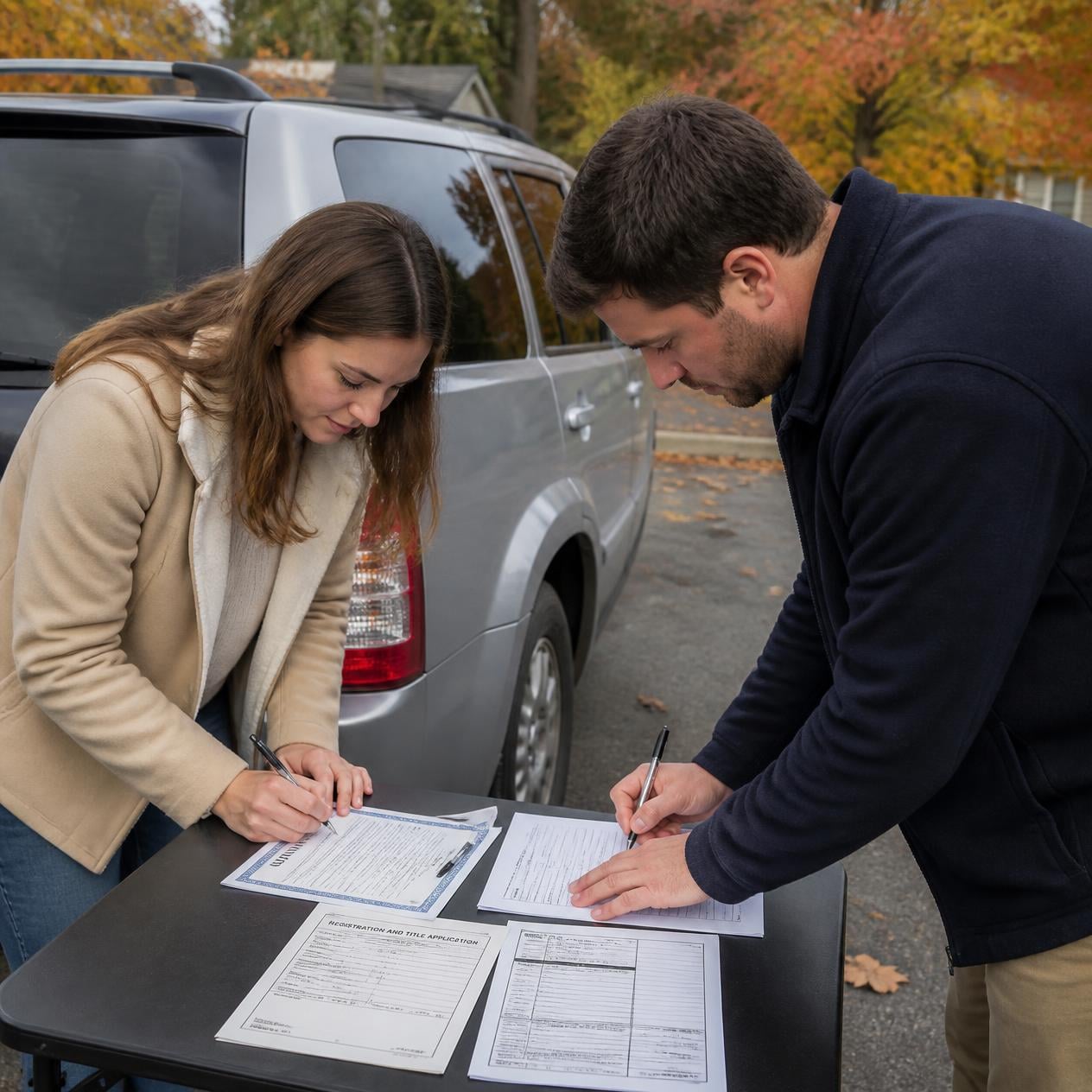
You are required to have a Bill of Sale marked VR-181 of your sale in Maryland. The Bill of Sale protects both the seller and the buyer.
Notary Requirement: If the vehicle being sold is less than or equal to 7 years old and the sale price is at or below the Normal/Add value, you are required to have the Bill of Sale notarized.
Signing the Title
Look for the Assignment of Ownership on the rear of the Maryland title.
Complete the "Buyer" and "Buyer Address."
Complete the Odometer Reading.
Complete the Sale Price and Sale Date.
Print your name as it appears on the front (of the title).
Do not use White-out! If a mistake is made, you will not be able to make the adjustment with a proper title, you would be required to get a duplicate title. This would delay you and the buyer from completing the sale.
License Plate
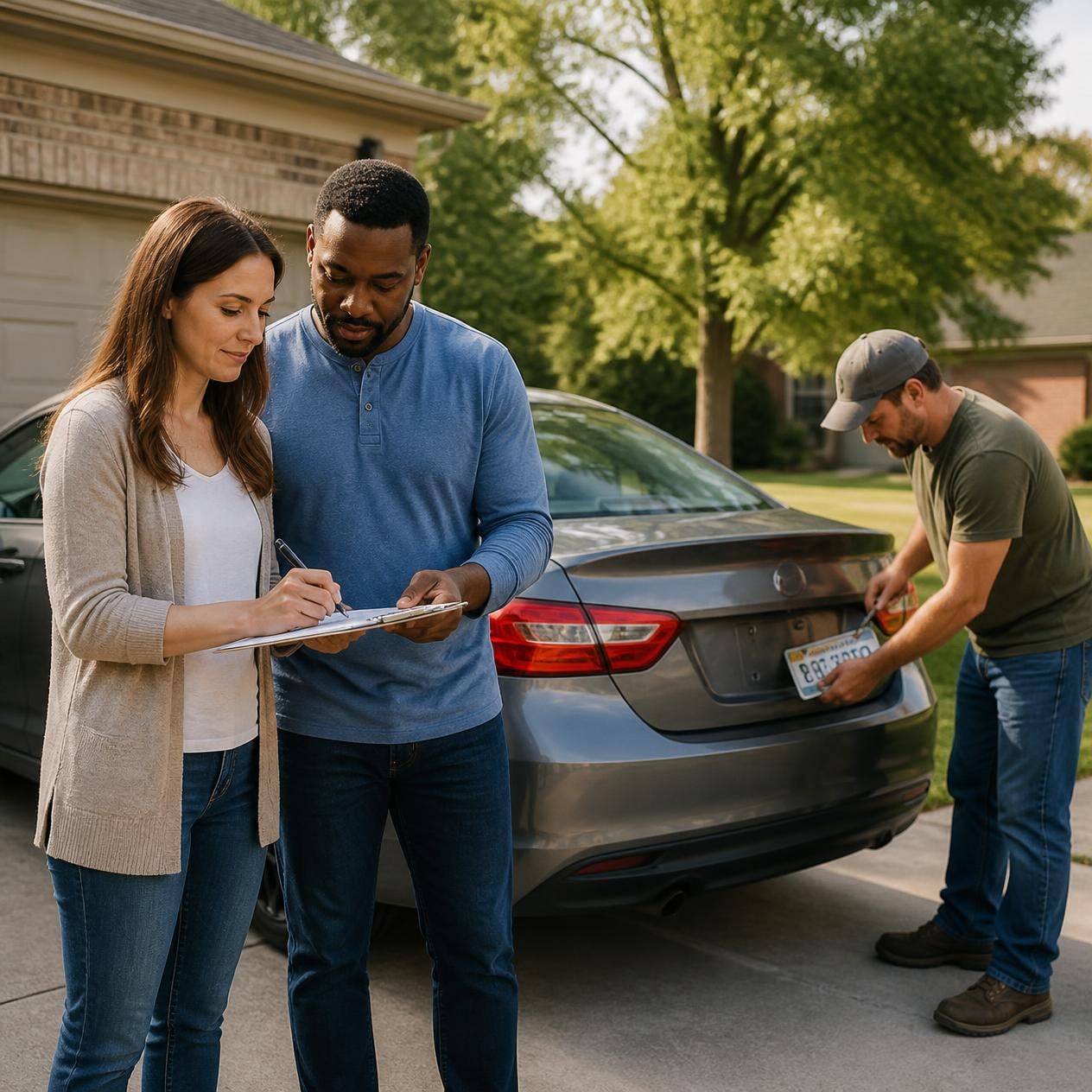
Remove the plates! (In Maryland, the license plate belongs to the individual, not the vehicle). If you allow a buyer to leave with your license plates, you are liable for all tolls, tickets, and accidents incurred. After selling the vehicle you need to return the license plates to the MVA or transfer them to your new vehicle.
Document | Who Provides It? | Notes |
Certificate of Title | Seller | Must be free of liens (or have lien release). |
Safety Inspection Cert. | Seller | Valid for 90 days. Mandatory for registration. |
Bill of Sale (VR-181) | Seller/Buyer | Needs notary if price is below book value. |
Lien Release | Seller's Bank | Required if the title shows a loan that is paid off. |
Overview: You Can Do This
It is entirely possible and financially beneficial to sell your car privately in Maryland. Handling the inspection early, pricing it competitively, and having your paperwork correctly prepared will enable you to potentially make thousands of dollars more than what the dealer would pay for your vehicle.

Are you ready to sell your vehicle? Get your VIN, take some pictures of it, and then list it for sale. The ideal buyer seeking a particular model vehicle is likely purchasing from you.