

Bill of Sale Aug 31, 2026
Are you looking to purchase a used vehicle in Minnesota? Although the process may be difficult, one of the best ways to find a good deal on a used vehicle is by buying it directly from a private seller. By purchasing from a private seller, you avoid paying dealership markup and have a more intimate selling experience and transaction than if you purchased from a dealer.
Through the guidance contained in this article, the purchasing process of a used vehicle from a Minnesota private seller will be broken down into steps that will help you understand how to find the best vehicle for you, what questions to ask the seller, and how to handle any applicable Minnesota laws.
Why Should You Buy from a Private Seller Instead of a Dealership?
While there are convenience factors associated with buying from a dealership, the benefits of going to a private seller are many, especially for the price-sensitive buyer in Minnesota. Cost is one of the main reasons for buying from a private seller; they do not have to pay the overhead costs of running a dealership—staff salaries, rent/mortgage, utilities, advertising—and therefore can typically sell their vehicles at a much more reasonable price than a dealer.
The additional benefit of purchasing from an individual seller is that you have direct access to the person who knows the vehicle best. You can have a candid discussion about the history of the vehicle, its performance in the Minnesota winters, and any unusual issues. The degree of candor you receive from a private seller is often not available with the traditional dealership sales experience, where the salesperson may have little knowledge about the used vehicle you are interested in buying.

Evaluating the Pros and Cons of a Private Sale in Minnesota
When considering whether to purchase a used vehicle from a private seller in Minnesota, weigh the advantages against the disadvantages. The following will help you evaluate the pros and cons of purchasing from a private seller.
Pros | Cons |
Lower Prices | No Warranties |
You can avoid dealership fees and markups. | Sales are "as-is," meaning no guarantees after purchase. |
Direct Communication | More Personal Risk |
Get a detailed history directly from the owner. | Potential for scams or misrepresented vehicles. |
Simpler Negotiation | More Legwork Required |
Deal with one person, making the process faster. | You must handle inspections and paperwork yourself. |
Less Pressure | Financing is Your Responsibility |
Avoid high-pressure sales tactics. | You need to secure a loan from a bank or credit union. |
A Complete Purchase Plan for Private Automobiles
Purchasing a vehicle from an individual has its own unique set of procedures. To complete the process in an uncomplicated and safe manner, be sure to observe these fundamental steps throughout the entire transaction.
Step 1: Research and Locate Potential Vehicles
Begin your research using a reputable online marketplace that specializes in private seller listings. KarKiosk is a great source for available listings throughout the state of Minnesota, from the city of Minneapolis to Duluth along the northern border.
Use advanced filters to help narrow down your selection of potential vehicles. Consider the following when searching:
Manufacturer/Model: Will you require a Subaru to navigate Minnesota's snowy conditions or a Ford F-150 to transport your belongings?
Price: After determining a realistic budget, remain within it.
Mileage: Generally speaking, lower mileage will be a greater indicator of the overall quality of the vehicle. Higher mileages can provide excellent bargains, provided proper maintenance was performed over its lifetime.
Location: Determine where the seller is located. You may find listings that cover the southern region of the state in cities such as Rochester or St. Cloud, or in smaller communities such as Lindstrom.
Once you have a couple of options, review the average selling price of the same vehicle in similar years to compare pricing between sellers and confirm that the asking price is consistent with other listings.
Step 2: Contact the Seller and Ask Questions
If you see a car you are interested in, it is time to contact the seller! This conversation is your chance to get to know the seller and the car. Be sure to be courteous and have prepared questions to ask.
Questions to ask:
Are you the original owner?
Why are you selling the vehicle?
Has the vehicle ever been in an accident?
Do you have the vehicle's service and maintenance records?
Is the title in your name and clean? (A clean title means it has not been branded as salvage, rebuilt, etc.)
How well did the vehicle handle during the last winter?
A legitimate seller will be able to easily answer any questions asked. If the seller avoids a question or is unwilling to provide information, this is a huge red flag.
Step 3: Vehicle Inspection and Test Drive
Do not purchase a vehicle without seeing it first. It is best to meet the seller in a secure, public location with proper lighting, for example, the front parking area of a police department or a large, busy shopping center.
When checking out a vehicle, examine the following areas:
Exterior (Body): Look for any signs of rust (common in Minnesota because of road salt), dents, or mismatched paint indicating a repair history.
Tires: Are they evenly worn across all four tires? Unequal tire wear indicates possible alignment issues.
Interior: Check and test all electronic devices, from the radio to the power windows. Also, make sure there are no strange odors.
Under the Hood: Look for signs of fluid leaks or corrosion on the battery cables.
The test drive is extremely important. Use various road types, such as city streets and highways at different speeds, to assess how well the vehicle performs and to detect any abnormal engine or brake noises. During the test drive, observe whether the steering wheel pulls to one side and if the vehicle shifts smoothly.

Step 4: Secure a Pre-Purchase Inspection (PPI)
Even if you have a certain amount of mechanical knowledge, you should have a professional inspect the vehicle before making a purchase. For $100-$200, an honest, independent mechanic will place the car on a lift and find hidden problems that you may have missed.
A PPI can uncover potential future repair costs that could total thousands of dollars, such as issues with the car's frame, engine, or transmission. The PPI is an investment in your peace of mind. If the seller refuses to permit a PPI, it would be wise to walk away from the transaction.
Step 5: Confirm the Vehicle History Report (VHR)
A Vehicle History Report (VHR) from a company such as CarFax or AutoCheck is essential. The report presents the history of the vehicle through its unique Vehicle Identification Number (VIN). It will contain information such as:
Accident history
Title status (identifying Salvage/Flood Damage brands)
Mileage records
Number of prior owners
The VIN is typically located on the driver's side dashboard, visible through the windshield, or on the door jamb sticker. Always compare the VHR against what the seller has stated. Missing or incorrect information can be a warning sign.
Get Minnesota's Legal Paperwork Ready
Once you are satisfied with the condition of the car and agree on a purchase price, the next step is to fill out the forms. In Minnesota, there are specific rules to follow for the sale of a privately owned vehicle.
Certificate of Title - The Most Important Paper
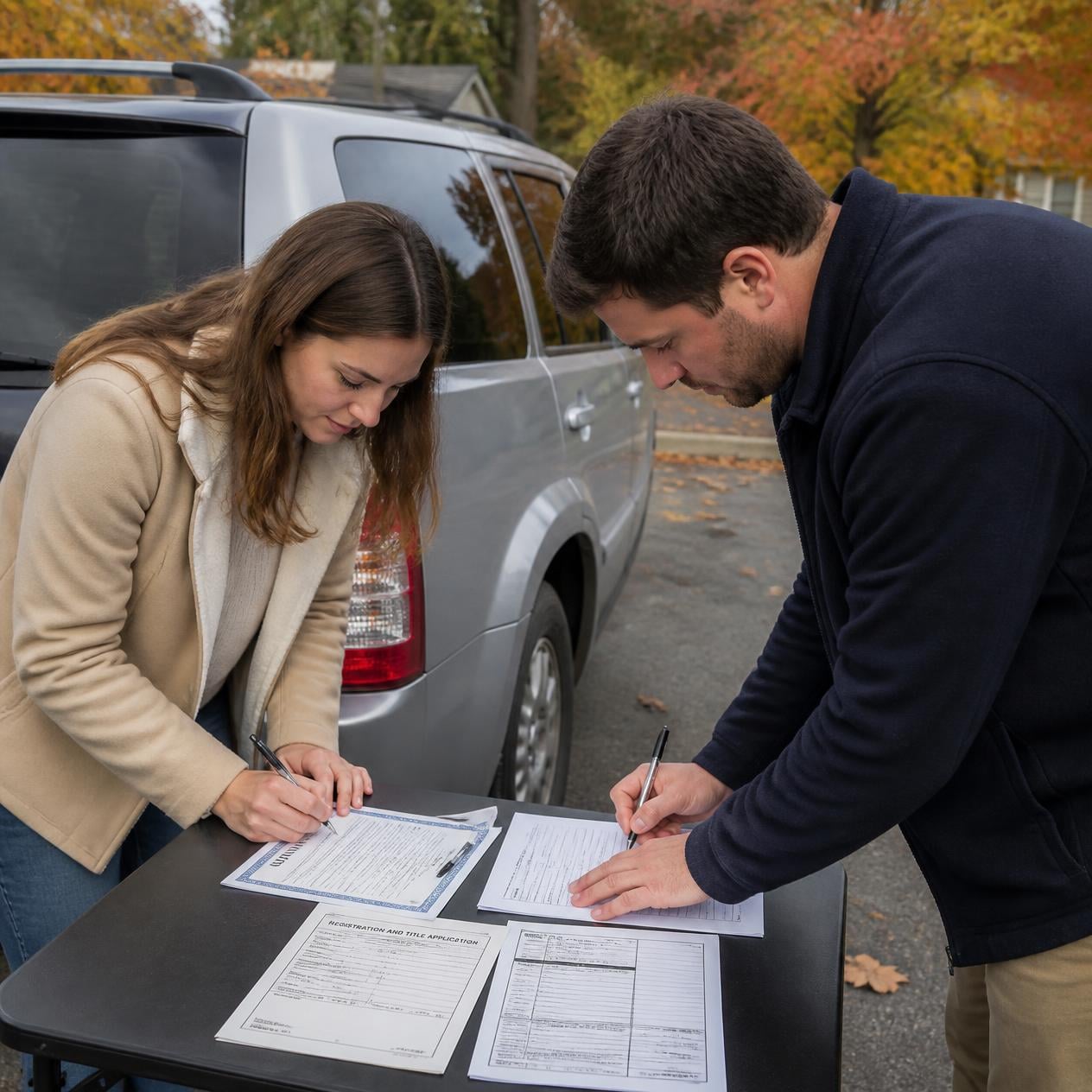
The Certificate of Title is the most important document when buying or selling in Minnesota. You must complete it correctly for the transaction to be valid.
Seller's Responsibility: The seller must sign the "seller's signature" section of the title and complete the "Sales Tax Declaration" section. This includes writing the exact purchase price.
Buyer's Responsibility: Fill out your section of the Certificate of Title. Be sure to enter your full name, address, and date of birth, then sign as the buyer.
Odometer Disclosure: For vehicles 10 years old or less, the odometer disclosure section on the title must be completed with the current mileage and signed by both you and the seller.
Be Aware: If the title is not in the seller's name, do not accept it.
Minnesota's Motor Vehicle Sales Tax (MVST)
In Minnesota, Motor Vehicle Sales Tax (MVST) is a 6.875% tax on the purchase price of your vehicle, and it differs from the normal sales tax.
Item | Details |
Tax Rate | 6.875% of the purchase price. |
Payment | Due when you transfer the title at a Deputy Registrar office. |
Fair Market Value Rule | If the price seems too low, the state may tax you on the car's average book value. |
Exemptions | Some exemptions exist, such as gifts between family members. |
You will pay this tax, along with title and registration fees, when you go to the DVS to transfer ownership of the vehicle.

Complete the Sale with Final Steps
You’ve inspected the car, agreed on a price, and verified the paperwork. Now you need to take the final steps to make it officially yours.
Bill of Sale: Although not legally necessary if you are filling out the title, a Bill of Sale is highly recommended. It serves as proof of purchase and provides additional legal protection. It should include the car's details (year, make, model, VIN), price, date of purchase, and the signatures of both buyer and seller.
Proof of Insurance: You must have proof of insurance in your name for your new vehicle before driving it.
Transferring Title: You have 10 days from the date of purchase to transfer the title into your name at your local Deputy Registrar's Office. If you miss this deadline, you will incur a late transfer fee. You will need to bring the signed title, proof of insurance, your driver's license, and payment for the MVST and any other associated fees.

Final Thoughts
Buying a used car from an individual will almost always yield a better experience than purchasing from a dealership. When researching potential purchases, use reliable websites, have the vehicle properly inspected, and fill out the state-required documents correctly to ensure a smooth and successful purchasing experience.
Look for a reliable online source to find used cars in Minnesota. Trust your gut and walk away from a deal if it does not feel right. By following these tips, you will have no trouble finding your new car and enjoying all that Minnesota has to offer.