
Bill of Sale Aug 31, 2026
A separate Minnesota bill of sale is not normally required for a standard private sale when the vehicle has a properly assigned certificate of title. A bill of sale can be used as ownership evidence for certain vehicles that are not titled, while the seller has 10 days to report the sale and the buyer has 20 calendar days to apply for a new title. (DPS Assets)
Minnesota Bill of Sale Quick Facts
Question | Minnesota Rule |
Is a separate bill of sale always required? | No |
Main ownership document | Properly assigned title |
Bill of sale use | Certain non-titled vehicles and transaction records |
Seller’s sale-notice deadline | 10 days |
Buyer’s title deadline | 20 calendar days |
Motor Vehicle Sales Tax | 6.875% |
Standard title fee | $8.25 |
Title-assignment notarization | Not generally required |
License plates | Generally remain assigned to the vehicle and new owner |
Routine transfer inspection | Not listed for a standard passenger-vehicle transfer |
The main requirements are published by Minnesota Driver and Vehicle Services, the Minnesota Legislature, and the Minnesota Department of Revenue. (DPS Assets)
When Is a Minnesota Bill of Sale Needed?
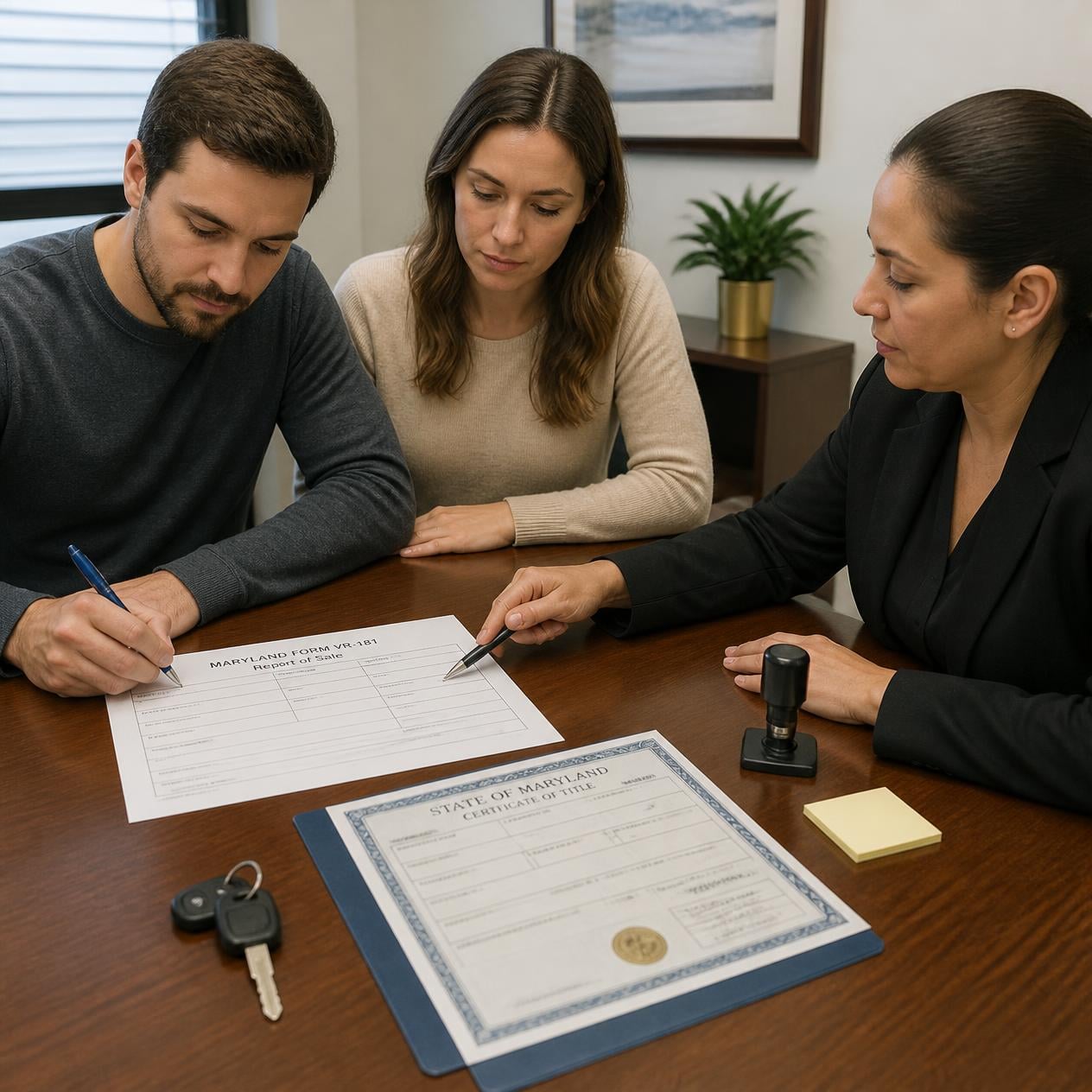
For a titled vehicle, the seller transfers ownership by completing the assignment section on the certificate of title. The title should show the buyer, seller, sale price, sale date, mileage, required disclosures, and signatures.
A separate bill of sale is useful for recording additional terms, but it does not replace the title.
Minnesota may accept a bill of sale as ownership evidence for a vehicle that is not required to be titled. For example, trailers with a gross weight of 4,000 pounds or less are generally not titled unless a lien exists or a title was previously issued. Ownership of a non-titled vehicle may be supported by the registration card, the appropriate application, or a bill of sale identifying the vehicle, buyer, and sale date. (DPS Assets)
What Should a Minnesota Bill of Sale Include?
A complete bill of sale should identify:
Buyer’s and seller’s full legal names.
Buyer’s and seller’s current addresses.
Vehicle year, make, model, body style, and color.
Full VIN.
License plate number when applicable.
Exact sale date.
Actual purchase price.
Odometer reading and mileage status.
Known vehicle damage or title brands.
Buyer’s and seller’s signatures.
Use the same buyer and seller names that appear on the title and identification documents.
What Documents Does the Buyer Need?
Document | Purpose |
Properly assigned title | Transfers ownership of a titled vehicle |
Vehicle title and registration application | Requests title and registration |
Bill of sale | Supports a non-titled transfer or records additional terms |
Lien release | Removes a satisfied security interest |
Odometer disclosure | Records mileage for a covered vehicle |
Damage disclosure | Records applicable vehicle damage |
Identification and payment | Completes the deputy registrar transaction |
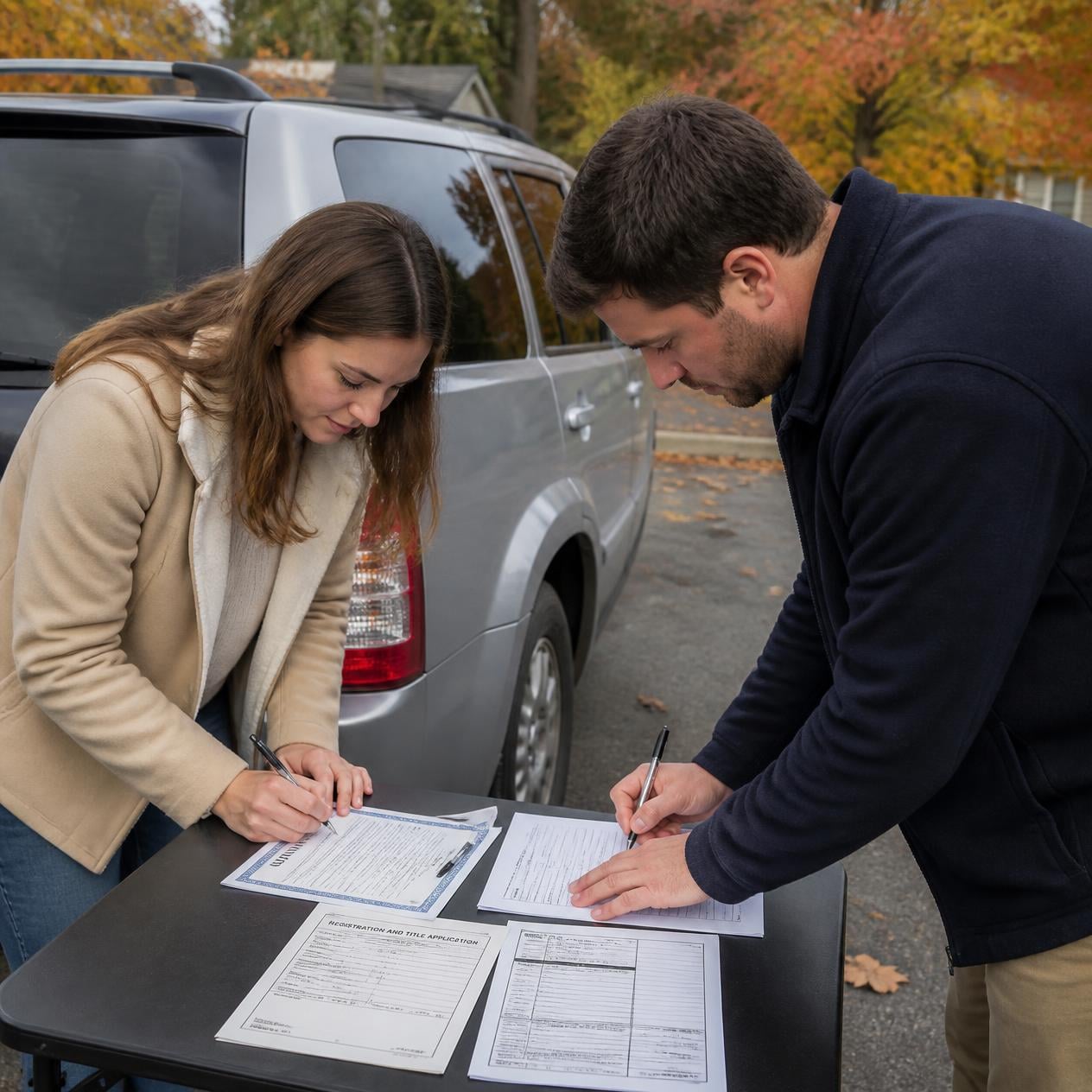
Minnesota’s title and registration application is commonly completed through a deputy registrar. The official Application to Title and Register a Motor Vehicle records the owners, vehicle, security interest, registration, and tax information.

Does a Minnesota Title Need to Be Notarized?
Minnesota does not impose a general notarization requirement on the ordinary buyer and seller signatures used to assign a vehicle title.
A lien release is different. When a lien is printed on the title, Minnesota DVS instructs the buyer to obtain either:
A signed lien-release card; or
A notarized lien-release form.
The buyer should not rely only on a verbal statement that a loan has been paid. (DPS Assets)

What Odometer and Damage Disclosures Are Required?
Minnesota applies the updated 20-year odometer-disclosure period to model-year 2011 and newer vehicles.
Odometer disclosure is generally required for covered vehicles unless an exemption applies, such as:
Vehicles with a gross vehicle weight rating over 16,000 pounds.
Vehicles that are not self-propelled.
Vehicles that have reached the applicable exemption age.
The seller must also complete the damage disclosure that applies to the vehicle. Minnesota DVS states that damage disclosure is required for all vehicles, although the exact information entered depends on the title and vehicle history. (DPS Assets)
What Minnesota Taxes and Fees Apply?
Minnesota Motor Vehicle Sales Tax is 6.875% of the taxable vehicle price. It applies to most title transfers, including qualifying private sales, unless an exemption applies. The tax is normally paid when the title is transferred. (revenue.state.mn.us)
Charge | Typical Amount |
Title fee | $8.25 |
Transfer tax | $10 |
Each recorded lien | $2 |
Public Safety Vehicle Fee | $3.50 |
Technology surcharge | $2.25 |
Filing fee | $12 |
Motor Vehicle Sales Tax | 6.875% |
Registration tax | Varies |
Minnesota does not apply ordinary local sales tax to motor vehicle sales. A separate local vehicle excise tax may apply in a participating jurisdiction. (DPS Assets)
What Are Minnesota’s Transfer Deadlines?
Seller: 10 Days
The seller must report the transfer within 10 days of the sale.
The seller can complete the Notice of Sale section attached to the title, when provided, or report the transaction electronically. Required information includes the buyer’s name, address, driver’s license number when available, and the sale date. (revisor.mn.gov)
Buyer: 20 Calendar Days
The buyer must apply for a new certificate of title within 20 calendar days after the title is assigned.
Failure to comply can result in suspension of the vehicle’s registration. (revisor.mn.gov)

What Happens to Minnesota License Plates?
Ordinary Minnesota plates and remaining registration taxes generally transfer with the vehicle rather than staying with the seller.
“When you sell your vehicle, the license plate and registration taxes are assigned to the new owner.”
— Minnesota Driver and Vehicle Services
Exceptions can apply to personalized, special, disability, commercial, or other restricted plates. The seller should check with a deputy registrar before removing a plate that may be retained. (DPS Assets)
Are Safety or Emissions Inspections Required?
Minnesota’s standard private-sale title-transfer checklist does not list a routine passenger-vehicle safety or emissions certificate.
That does not mean every vehicle transaction is inspection-free. Rebuilt, specially constructed, commercial, imported, or ownership-document cases may require additional review.
A buyer should still arrange an independent mechanical inspection before payment.
How to Complete a Minnesota Private Vehicle Sale
Compare the VIN on the vehicle with the certificate of title.
Confirm that the seller is the owner printed on the title.
Obtain a proper release for every recorded lien.
Enter the buyer, price, date, mileage, and disclosures on the title.
Complete a separate bill of sale for transaction records.
Have the seller report the sale within 10 days.
Have the buyer apply for title within 20 calendar days.
Pay the 6.875% tax and applicable title, filing, and registration charges.
Compare the VIN on the vehicle with the certificate of title.
Confirm that the seller is the owner printed on the title.
Obtain a proper release for every recorded lien.
Enter the buyer, price, date, mileage, and disclosures on the title.
Complete a separate bill of sale for transaction records.
Have the seller report the sale within 10 days.
Have the buyer apply for title within 20 calendar days.
Pay the 6.875% tax and applicable title, filing, and registration charges.
What If the Vehicle Has No Minnesota Title?
A non-titled vehicle may be transferred using acceptable ownership documentation such as a Minnesota registration card or bill of sale.
When no clear ownership record can be established, Minnesota may require a separate no-proof-of-ownership process. The buyer should not complete payment until DVS or a deputy registrar confirms which documents will be accepted. (DPS Assets)
Common Minnesota Bill of Sale Mistakes
Treating the bill of sale as a replacement for a valid title.
Failing to obtain a lien release.
Omitting the actual purchase price.
Missing the seller’s 10-day sale-notice deadline.
Missing the buyer’s 20-calendar-day title deadline.
Removing plates that normally remain with the vehicle.
Leaving the odometer or damage disclosure incomplete.