

Bill of Sale Aug 31, 2026
Are you searching for your next vehicle in Illinois? Many take advantage of skipping the dealership and purchasing a pre-owned automobile from an individual private party. The advantages of this method include lower selling prices, added flexibility when negotiating prices, and provided transparency in transactions. However, there is a specific set of rules involved for individuals wanting to utilize private sales.
This guide aims to teach Illinois residents about purchasing used vehicles from private sellers. We will help you through all aspects involved with the entire process, from finding a quality vehicle on the internet and finalizing your papers once you’ve purchased it.

What are the Benefits of Buying from a Private Seller in Illinois?
Buying from a private seller instead of a large fiduciary organization is a no-brainer for many savvy buyers residing in IL. Eliminating the necessity for a middleman typically leads to reduced costs and improved efficiency, as the buyer will typically incur less than if they were to purchase through a dealership.
Lower Price: For that reason the price you pay for your used car will generally be lower than if you bought from a traditional dealer since the dealer's profit margin is built into the price of the car; whereas the private seller's price will reflect the true market value of the car without the dealer's profit built into it.
More Ability to Negotiate Price - The majority of private sellers will sell their only vehicle within a specific timeframe, versus the dealership sales managers who must maintain a fixed price referral amount on every sale. Therefore, many private sellers will be far more flexible concerning the ability to negotiate for an agreed-upon final selling price.
Direct and Clear Consistent Communication: The direct and clear method is the most effective. You will speak with the individual who has "owned and operated" the vehicle, and give you a better understanding of the "life" it has had and any "quirks" regarding its service and maintenance history, as well as any specific questions you might want to ask regarding the vehicle.
No Hidden Fees from a Dealer: One of the biggest frustrations in purchasing from a dealer is the amount of money you end up paying due to hidden fees such as documentation fees, preparation fees and other administrative expenses. A private sale allows you to pay the negotiated amount and any additional costs that were negotiated.
However, if you are adequately prepared, you can complete this process without difficulty and receive a great deal on your next vehicle purchase. The Next
Starting Out: Locate the Ideal Car
In the digital age, the start of the search for one’s next automobile can be conducted from home. Buyers may check local communities in Illinois via KarKiosk to access all available private and retail opportunities.
Step 1 - Budget / What do you need? -
Before you begin looking, first identify your budget. When you make this decision, remember, it is not only for the initial purchase price but also all associated costs with a vehicle including;
Illinois Sales Tax
Title & Registration Fees $1600
Minor Repairs
Auto Insurance
Now that you have a budget, consider the type of vehicle you want. Do you want an economical sedan so you can commute to work along I-90? A large SUV for weekend trips with your family to Starved Rock State Park? A heavy-duty truck for use while working in rural areas of Illinois? Look up models with a reputation for reliability and low cost of ownership.
Step 2: Use Online Vehicle Listing Sites to Find Available Vehicles
There are a large number of private sellers using the internet to list their vehicles for sale in Illinois. One such site is KarKiosk, which allows users to create custom searches to locate their ideal vehicle.
Location: The results can be narrowed by searching for a specific city in Illinois (e.g., Chicago, Aurora, Naperville); or you can broaden your criteria by searching for vehicles located in any region of Illinois.
Price: Determine your maximum price range for purchasing a vehicle.
Make/Model: If you're already set on which make/model of vehicle you want to purchase, you can search directly by that make/model.
Mileage: If you focus your search on vehicles with lower mileage, they typically will have a longer lifespan before needing repairs.
Once you identify an advertisement for a vehicle that interests you, be sure to read the complete description carefully. A high-quality listing typically correlates with a trustworthy seller who will be honest throughout the buying process.
Inspecting a Vehicle: What to Check While You Inspect When Buying a Vehicle in Illinois
After locating a well-suited vehicle, the next part is to have the car inspected. It is now time to confirm the vehicle’s condition and possibly eliminate unwelcome surprises after the purchase. A day inspection is preferable to a night inspection.

Visual Walkaround
Conducting a complete inspection of both the exterior and interior of the vehicle.
Exterior: Check for any exterior rust, particularly near the wheel wells and bottom areas of the vehicle, because Illinois winters can create harsh conditions that lead to corrosion due to road salt. Dents, deep scratches, and poorly matching paint may indicate that the vehicle was previously involved in an accident. Unevenly worn tires may also indicate that the vehicle has an alignment issue.
Interior: Examine each interior seat of the vehicle and test all electronic features, such as: air conditioning, heating, power windows, power locks, audio systems, and interior lighting. Check the upholstery for any tears or stains, and determine if there is any mustiness, which may indicate water leaks within the vehicle.
Underneath the hood: Look for any obvious fluid leaks, cracks in hoses and or any frayed belts. Check both the oil levels (and the color of it) and the level/condition of the transmission fluid. Oil should appear as honey, not dirt/sludgy.
The Road Test:
The road test is the best way to see how the car drives. Take the car on various types of roads to see how it handles. Drive on city streets and take it onto a freeway, if possible.
Listen for Sounds: Turn off your audio system, if you can, to listen for anything weird with the engine, the brakes and the suspension (clacking, squeaking, grinding).
Brake Testing: When you are ready to check the brakes, be sure to find a safe place to do so. The brakes should feel very firm when you press them, bringing the vehicle to a smooth, straight stop.
Steering and Suspension Testing: Steering should feel immediate and responsive without a lot of play in the steering wheel. As you drive over bumps, the car should ride smoothly; it shouldn't bounce around or shake.
Engine Performance: The vehicle should accelerate smoothly; it shouldn't lag behind or take a long time to get up to speed, and it should not overheat. To keep an eye on this, watch the temperature gauge.
Get a Mechanic's Professional Opinion:
If you want to be absolutely sure before you make the purchase, hire a certified mechanic (PPI). If you're reasonable, the price of getting the mechanic to inspect the vehicle will be worth the peace of mind. If a mechanic has the opportunity to lift the vehicle, they can look for any potential issues that you may not have noticed, including frame damage, hidden rust, and any expensive work that is being required.
The report that the mechanic gives you can be a very powerful negotiating tool, and can also help you decide whether to buy or walk away.
Pros vs. Cons of Buying From Private Sellers
Pros | Cons |
Lower Purchase Price: No dealership overhead means better deals. | No Warranty: Sales are "as-is," so you are responsible for all repairs after purchase. |
More Room for Negotiation: Sellers are often more flexible on price. | More Effort Required: You must handle inspections, paperwork, and title transfer yourself. |
Full Vehicle History from the Source: Ask the owner directly about maintenance and use. | Risk of Scams: You need to be cautious and verify seller identity and vehicle ownership. |
No Dealer or Hidden Fees: The negotiated price is the final price. | Limited Financing Options: You'll likely need a pre-approved loan from a bank or cash. |
Access to Unique Vehicles: Find modified or rare cars not available at dealerships. | No Trade-in Option: You must sell your current car separately. |
Getting a contract and making payment in Illinois.
You have checked the vehicle over and you are confident about agreeing on a reasonable amount for the purchase. There are still a few steps that should be taken before you sign on the dotted line and it's also important to handle the whole purchasing process appropriately so that everything is completed correctly according to Illinois law.
Illinois Required Documents
Document | Purpose and Key Details |
Vehicle Title | This is the most important document. The seller must sign the title over to you. Verify the seller's ID matches the name on the title. Check for any liens listed. If there is a lien, it must be officially released before the sale. |
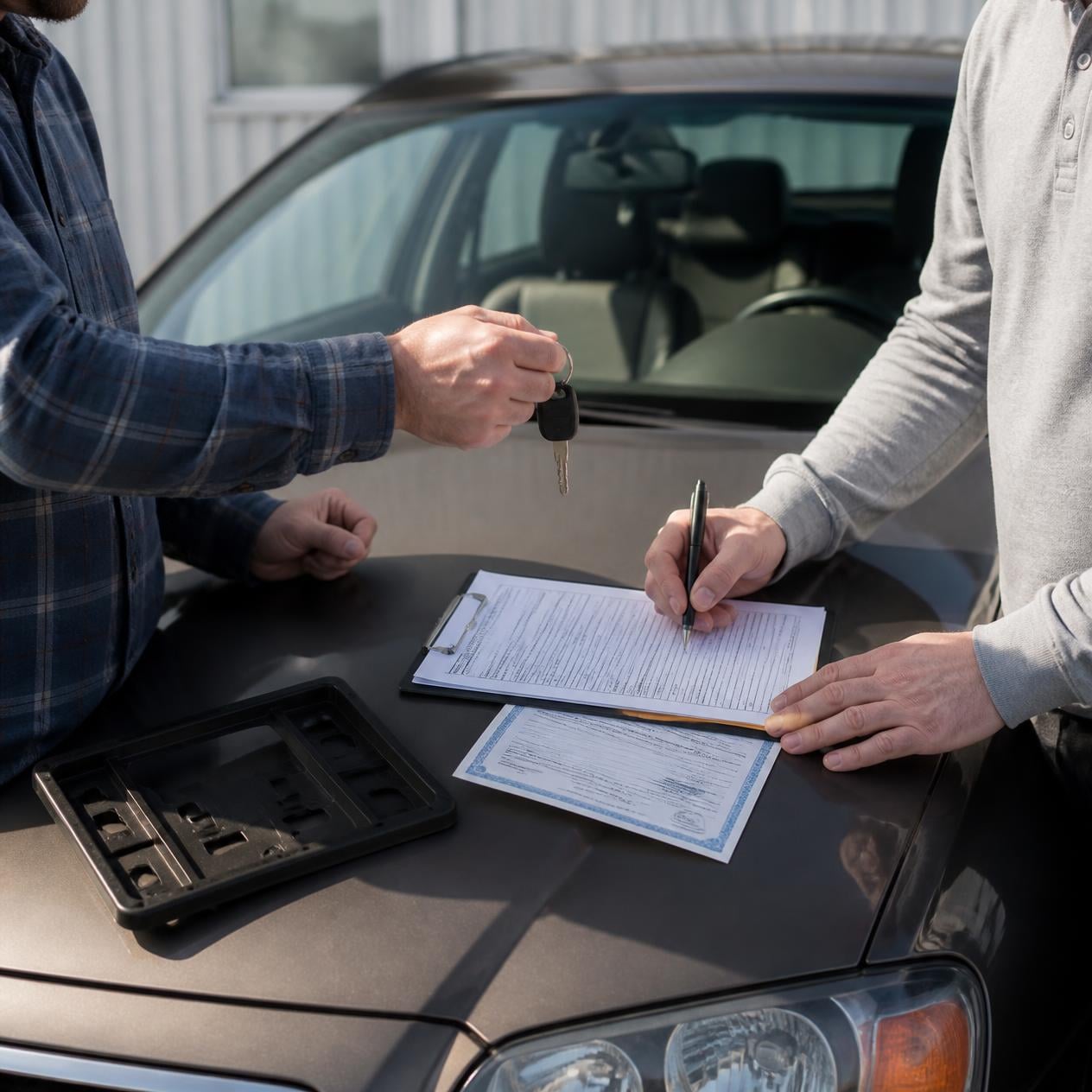
Bill of Sale | While not legally required in Illinois, a Bill of Sale is highly recommended. It serves as a receipt and documents the sale price, date, vehicle information (VIN, make, model), and the names and signatures of both buyer and seller. |
Odometer Disclosure Statement | For vehicles less than ten years old, the seller must disclose the mileage. This is typically done on the back of the Illinois title. Ensure the mileage matches what's on the car's odometer. |
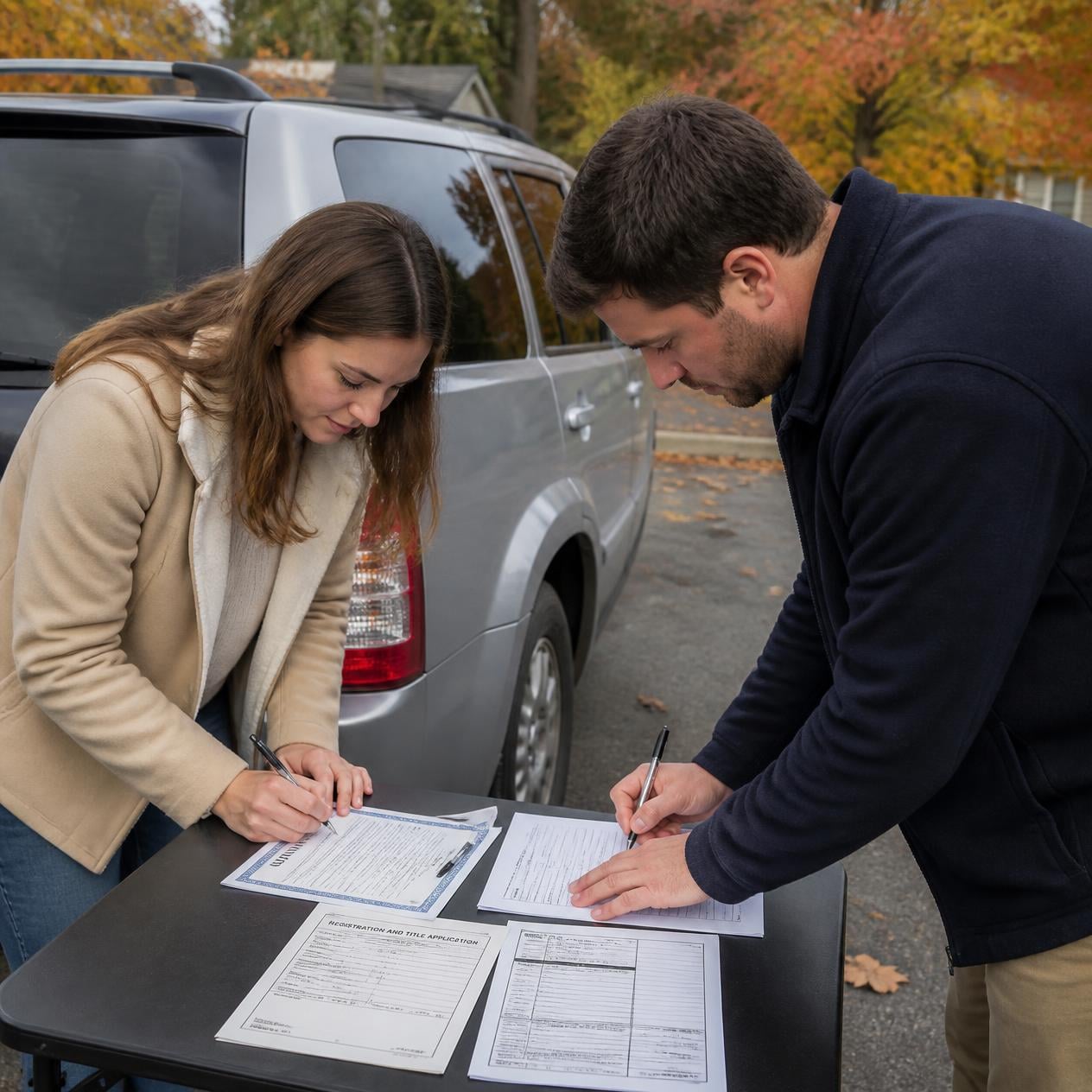
Application for Vehicle Transaction (Form VSD 190) | You will need to complete this form from the Illinois Secretary of State's office to apply for your new title and register the vehicle in your name. |
Title Transfer and Payment Safekeeping
To help protect both the seller and the purchaser, please follow these guidelines when completing your transaction:
Meet in Safe Public Areas: When completing your purchase, please meet at the seller's bank, or at a Secretary of State location, where there is a safe area to do so.
Use a Secure Payment Method: Avoid bringing large amounts of cash with you when making payments to the seller. Using a cashier's check is a safer and more easily backed up method of purchasing.
Check All Paperwork: Before offering the seller your payment, please ensure that you have the seller's signed title, along with the completed Bill of Sale. And be sure to verify that both the vehicle identification number and the dealer stamp on both documents match the VIN on the vehicle itself.
Obtain Insurance Proof: Before leaving with your new vehicle, you must have a valid policy in place with your insurance company. Therefore, please contact your insurance company prior to making the transaction to have the coverage in place.

Finalizing the Process at the Illinois SOS
Once you have the vehicle keys and title in hand, the next step is to visit an Illinois Secretary of State (SOS) Driver Services office near you to complete the transaction. You must take the signed title, completed VSD 190 form, proof of insurance, and payment for the tax and other fees associated with the transaction.
The private-party vehicle use tax is based on the vehicle's age and/or purchase price.Once you have submitted all documentation and remitted the required fees, you will receive your new registration and license plates as well as your new title, which you should receive in the mail in a few weeks from the day of purchase.

Buying a used vehicle from a private seller in Illinois offers a great opportunity for substantial savings through diligent research, performing thorough inspections, and carefully completing the transaction. Karkiosk is an excellent source to get started with their curated selection of vehicles available for sale by private sellers near where you live.