

Bill of Sale Aug 31, 2026
If you're considering the sale of your automobile while living in the state of Maine, the process of selling your vehicle through a private sale may seem as overwhelming as navigating through foggy coastal waters. You desire that your automobile is sold for the best price, but the necessary paperwork, concerns relating to safety, and the challenge associated with finding a reliable buyer can often be seen as insurmountable.
Now, imagine having a way to bypass all of the dealership's lowball offers so that you can put more money directly in your pocket using an uncomplicated, secure process. This guide serves as your road map to an efficient and profitable private automobile sale in the Pine Tree State.
Selling your automobile through a private party does not have to be a complicated process; with the appropriate tools and knowledge you will be well-prepared to create a quality listing that accurately reflects the value of your automobile, lure prospective buyers to your listing through quality sellers’ advertising, and ensure that you will be able to complete the transaction safely and successfully.
We will walk you through each step from preparing your automobile and necessary paperwork to ensuring safe completion of the sale transaction. Let's get you on the road to transforming your used automobile into cash through proper sales practices.
The "Why" Behind Selling Your Car Privately in Maine
When you have made the decision to sell your current automobile, you will typically choose from two available options: trading in or selling privately, while the latter enables you to take full control of the sale price, negotiate the terms and retain all of the proceeds from the sale.
In order to trade-in your automobile you would simply take your automobile into a local dealership and receive a trade-in value; however, be aware of the fact that these dealerships will typically offer you a much lower value than what your automobile is actually worth due to retail markup pricing that they must also cover.
When you sell your automobile privately, you will have the ability to set your own sale price to maximize your profit potential. There is typically thousands of dollars difference between a trade-in value and a private sale price, which is why you should consider a private sale.
Pros of Selling Privately | Cons of Selling Privately |
Higher Sale Price: You get to keep 100% of the proceeds. | More Effort Required: You handle all aspects, from listing to sale. |
Full Control: You control the asking price and negotiations. | Safety Concerns: Meeting strangers requires caution. |
Attracts Serious Buyers: Buyers looking for private sales are often well-researched. | Time-Consuming: The process can take weeks or longer. |
Transparent Process: No hidden fees or dealer markdowns. | Paperwork Responsibility: You are responsible for correct documentation. |
Flexibility: You decide when and where to show the car. | Potential for Scams: Requires vigilance to avoid fraudulent buyers. |
Stage 1: Ensuring Your Vehicle and Its Supporting Documentation
Completing all necessary steps in preparation for selling a vehicle can bolster the overall profit an individual can receive from its sale. Furthermore, preparing the vehicle carefully with smaller expense will be a way to ensure the sale is smoother and easier.
Tidy Up The Car!
Buyers are likely to judge a vehicle based on its appearance; therefore, making the appearance of your vehicle one that is presentable will be important to create a positive impression of the car.
Exterior: Drive the vehicle through a wash and wax it. Don't forget to clean the tires/rims as well! A nice, professional detailing would reflect well against the purchase price of your vehicle.
Interior: Remove all of your personal items and vacuum the floorboards, seats and trunk. Clean all surfaces (this includes the dash and window). Adding a pleasant or clean smell will add value to your vehicle.
Minor Repairs: You can resolve minor issues (i.e. burnt-out light bulbs; belts that are squeaking) in a timely manner to show potential buyers that your vehicle has been maintained. You should avoid investing large amounts of money into your car by making significant repairs as you may not receive a comparable return on your investment when you sell the vehicle.
Getting Your Maine Specific Paperwork In Order
Having all of your paperwork in order shows potential buyers that you are serious and organized with the sale of your vehicle. It helps to build rapport between you and the buyer and also helps to expedite the final sales process. If you are selling a vehicle in Maine, you will need to collect the following documents:
Document | Purpose & Details |
Certificate of Title | The most important document. If your car is model year 1995 or newer, you must have the title. For older, title-exempt vehicles (1994 and older), you'll use a Bill of Sale and the previous owner's registration. |
Lien Release | If you had a loan on the car, you need this document from your lender proving the loan has been paid off. You cannot sell a car with an active lien. |
Bill of Sale | A Bill of Sale is required in Maine. It serves as a receipt and legal record. It must include buyer/seller names, vehicle info (VIN, year, make, model), sale date, and purchase price. Both parties sign it. |
Odometer Disclosure | For vehicles less than ten years old, you must legally disclose the mileage. This is often part of the title transfer section or can be a separate form. |
Vehicle History Report | While not required, providing a free vehicle history report (like those from KarKiosk) adds immense value and transparency, making buyers more confident. |
Maintenance Records | If you have records of oil changes, tire rotations, and other services, gather them. This is a huge selling point. |
Step 2: How to Price Your Car for Sale
Finding the ideal price for your vehicle can be a tricky exercise. Price your car too high and you'll risk scaring off potential buyers; price it too low and you may be leaving money on the table.
Research the Marketplace – Take advantage of the internet's many resources to evaluate what your make and model is selling for in your area (Portland, Bangor, or Lewiston as examples) based upon the year(s) of manufacture, mileage, vehicle condition, and trim level.
Use Pricing Tools - Utilize websites like KarKiosk that have pricing tools which tap into current market data to assist you in identifying the pricing sweet spot.
Factor Condition- Be honest about your car's condition; "excellent" condition vehicles will command higher prices than those in "good" or "fair" condition.
Set a Strategic Price- You should list your vehicle at a price that allows for some negotiation. So if your goal is to receive $10,000 for your vehicle, you could set the listing price at $10,800.

Step 3: Successful Online Listing Creation
Your 24-hour online salesperson is your online ad. A strong advertisement will do the selling for you and bring in qualified buyers while filtering out casual tire-kickers.
The Importance of Photos and Videos
The most crucial aspect of your ad is the photos you take of your vehicle. Buyers want to see everything.
Take Quality Photos - Use a good quality smart phone or camera to take sparkling clean photos on an overcast day to eliminate harsh shadows and glare.
Take a Photo of Your Vehicle from Every Angle - You should be taking 20-25 photos of your vehicle. Be sure to take photos of the front, back, both sides, all four corners - at an angle to see; a photo of the dashboard, a photo of the back and front seats, a photo of the trunk and a photo of the engine.
Take Close- Up Photos of any Special Features and Flaws - Take close-up photos of any extra features (e.g., sunroof, etc.) and be frank with your potential buyer and show all close-up photos of any major scratches, dings, or dents. Doing so shows that you are honest and helps build trust.
Include a Video - A short (30 second max) walk-around video of your vehicle dramatically increases the probability of serious buyer engagement with your listing, especially if you were to start the engine for your potential buyer.

The Description That Will Sell Your Car Is Very Important
A detailed description makes it easier for buyers to read and be persuaded to purchase the car. To create a compelling description:
Include Basic Information in the Beginning of the Description (like Year, Make, Model, Trim, Mileage and VIN).
Talk About Why You Are Selling Your Vehicle (like Was It Reliable in Getting to Work Every Day? A Great Family Car/Fun to Drive?) This can be told in a story format (write about a memorable experience you had with the vehicle).
Include Features (i.e., all-wheel drive, leather seats, new tires, Bluetooth, major work done recently).
Be Honest. List Any Problems. This way the buyer won't waste their time and (your time) going on a drive only to find out there may be a big issue with the vehicle.
Finally, Conclude with What Buyers Should Do Next (always provide a way for buyers to contact you — "Please contact me through the secure message center to arrange a viewing.")
Step 4: Safely managing buyers/test drives
At this stage of the process, safety is of utmost importance. It is preferable to use a platform that has integrated communication tools to help ensure your privacy.
Screening Buyers
Use a Secure Platform: Services such as KarKiosk have secure messaging centres to protect your phone number and email address from potential buyers.
Watch for Red Flags: All buyers who offer to pay full price for a vehicle, without seeing it in person, and/or offer a certified cheque which is greater than the purchase price, and/or wish to have an unknown third-party company arrange shipping have likely fallen victim to one or more of these common scams.
Conducting the Test Drive
The actual test drive of the vehicle to be sold is an important step, and it needs to be done in a manner that ensures safety and effectiveness.
Meet them at a public location: Never allow a stranger to come to your home to test drive the vehicle. The best option is to meet the potential buyer at a well-lit public location (i.e. police station parking lot, shopping centre, bank).
Verify their driver's licence: Before the person tests your vehicle, always make sure to ask to see their current and valid driver's licence, and then consider taking a picture of it with your phone.
Test drive passenger: Make sure that you are a passenger in the vehicle during the test drive (in case of a theft) so that you can help answer their questions and point out vehicle features.
Test drive route: Plan a route which will give the public the opportunity to test drive all of the roadways (i.e. city streets, highway) in and around the local area where you will be testing the vehicle.
Step 5: Completion of the Assignment
You have found a buyer and settled on terms to finalize the selling of your property. Your only need now is to ensure you receive secure payment and transfer of ownership through proper documentation.
Receiving Secure Payment.
You want to receive cash for payments. If you are receiving large amounts of cash, then a cash or bank draft from a local bank would be your safest option.
If using either method, a meeting will be arranged at the buyer's bank, and you will take part in watching the bank process your forms. NEVER accept a personal check, money order or wire transfer unless issued from a buyer you are familiar with.
Completing the Legal Change of Ownership in Maine
Now that you have received quite payment for the vehicle being sold, you are ready to legally transfer ownership of the vehicle to the buyer. This can be done in two easy steps:
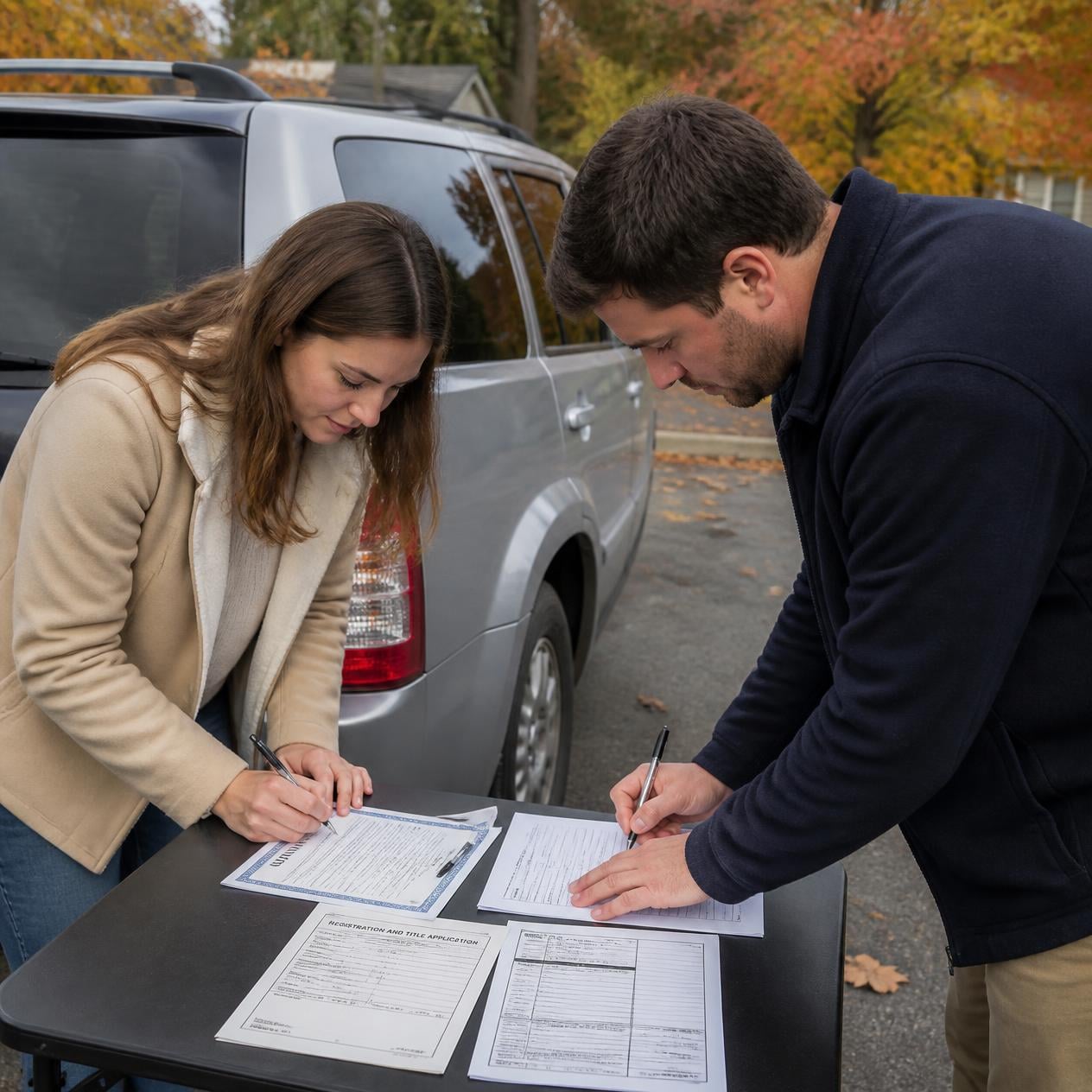
Complete the Title. Both the front and back of a Maine Certificate of Title are used to transfer ownership of a vehicle. First complete the "Assignment of Title" section on the back of the title, filling in the buyer's full name & address, the date of sale, the sale price, and the odometer reading at the time of sale. Finally, you must sign your name exactly as it appears on the front of the title. **Note: If you make a mistake on the title do not attempt to correct the mistake using correction fluid.
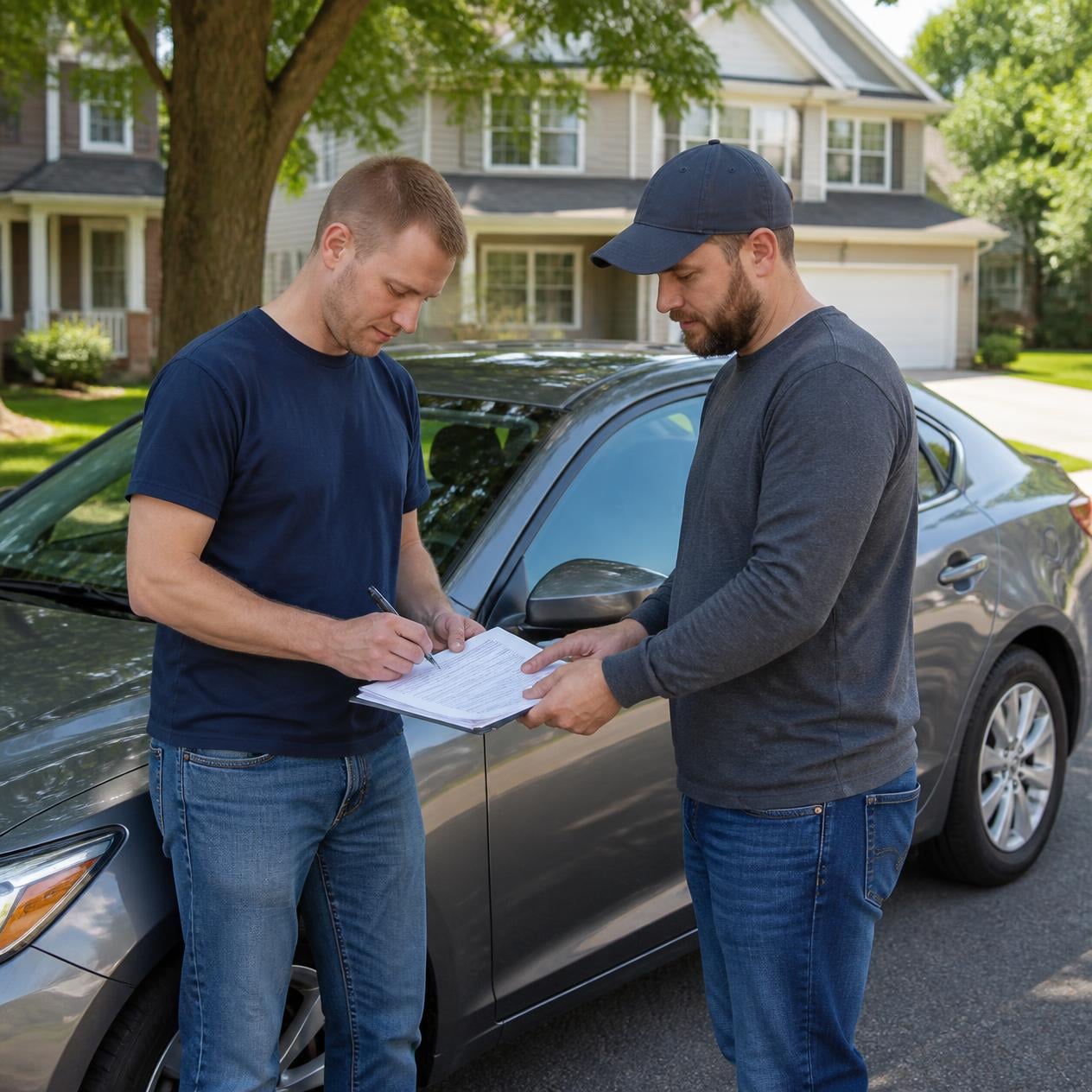
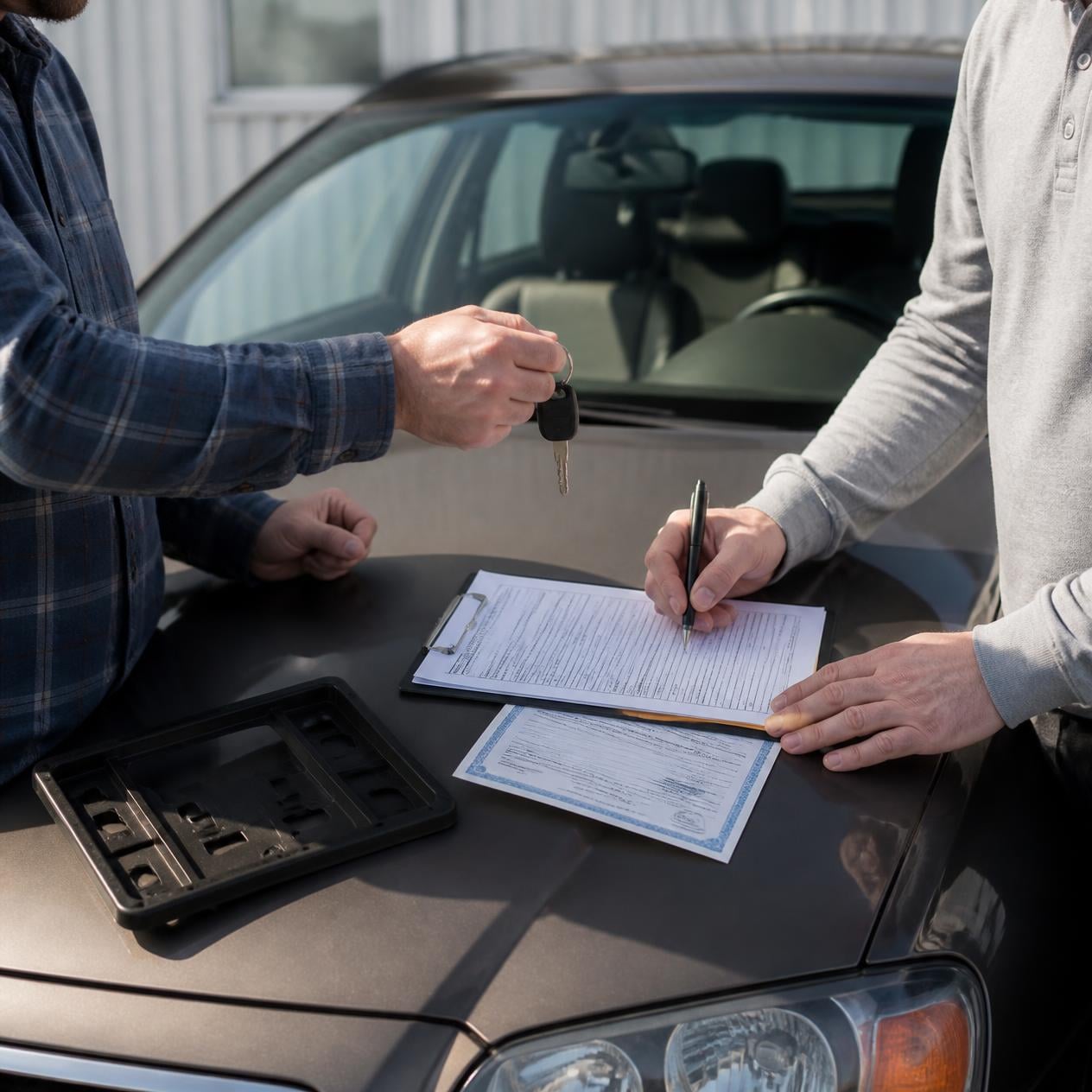
Complete a Bill of Sale in duplicate for the sale of the vehicle. You must sign both copies of the bill of sale: One copy should be given to the buyer and one copy retained by the seller. The bill of sale indicates that the seller has sold the vehicle, so it is important for both parties to sign and have a bill of sale for their records.
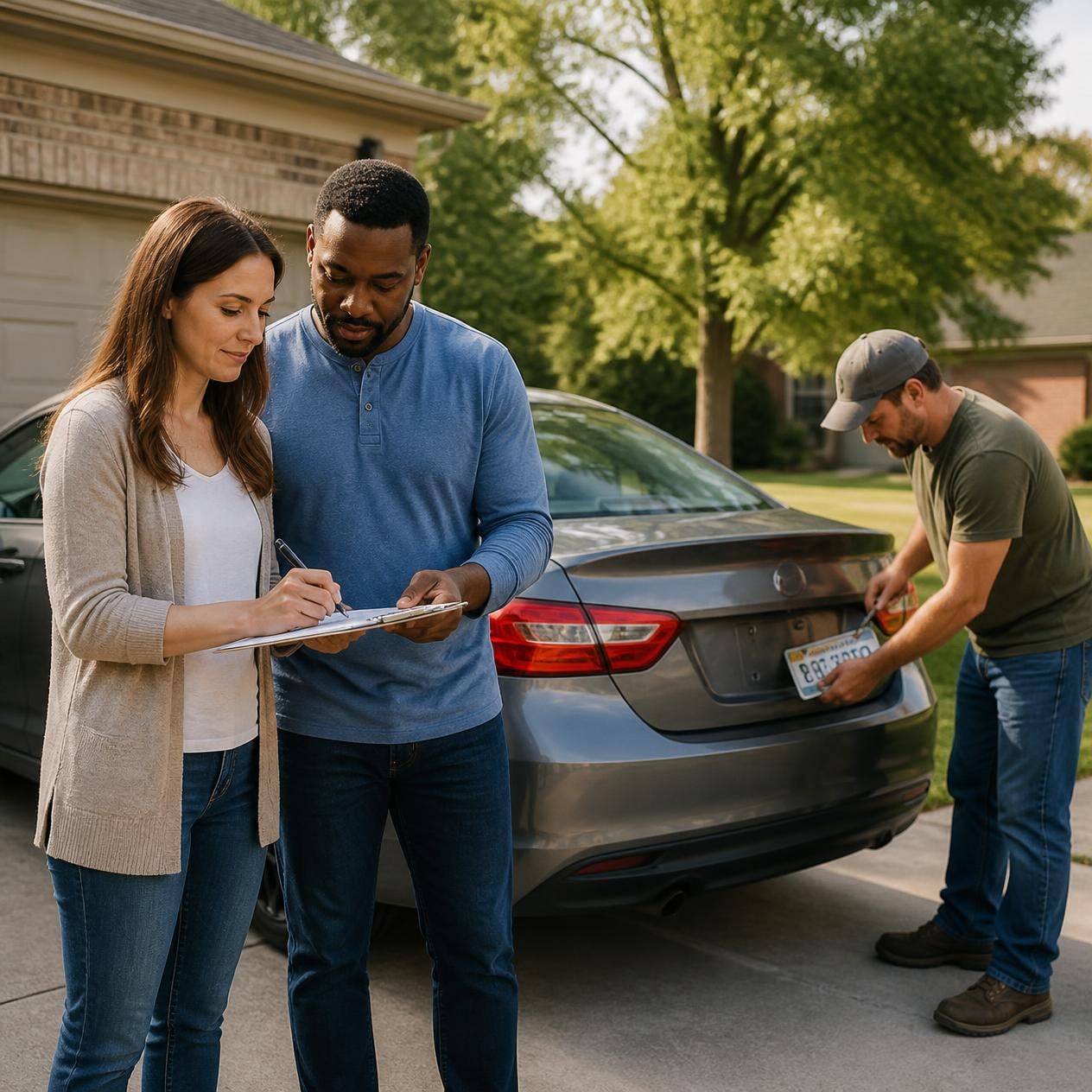
Remove Your License Plates from the Vehicle: Maine license plates are registered to the owner of the vehicle, rather than the vehicle, so a seller must remove their license plates from the vehicle they are selling prior to handing the keys over to the buyer. License plates can either be transferred to a new vehicle or surrendered to the Bureau of Motor Vehicles (BMV).
Cancel Your Insurance: You should contact your insurance company and cancel your insurance policy for the vehicle you just sold. You are possibly eligible for a refund on the unused premium for the period after selling your vehicle.

Conclusion
Selling a car in the state of Maine ensures that you are receiving a greater return on investment than if you sold it to a dealership, as well as will be the one to make the sales process decisions. Prior to selling your car, it is imperative to prepare the vehicle to make it more appealing to potential buyers.
To successfully sell your car privately, be sure to gather any documentation necessary, create a great online listing and follow all safety guidelines throughout the process. Utilizing KarKiosk and other resources can allow you to attempt to reach more people and remain organized throughout your sale.
Following all of the proper steps will allow you to comfortably and safely hand the keys over to the next driver on Maine's roads; thus, showing you made the right decision when selling your car privately.