

Bill of Sale Aug 31, 2026
If you're a resident of Michigan, where nature and urban life are intertwined, you probably rely heavily on your automobile for transportation. It's a real pain in the neck to navigate the congested streets of Detroit or ride up north for a vacation without having a dependable automobile. And let's face it! There are so many variables to consider when purchasing an automobile—overwhelming dealer lots, pushy sales representatives, and hidden costs that can put you way over budget.
However, did you know that there is a better alternative?
The private sale of used vehicles represents a significant and often underutilized marketplace. All around Michigan, from Ann Arbor to the Upper Peninsula, there are literally thousands of automobiles sitting idle in driveways ready for their next owners. Purchasing directly from a private party usually saves money, provides a better history of the automobile, and is just more of a personal relationship to conduct business.
In this guide, we will cover everything you need to have a successful transaction when purchasing an automobile in Michigan through the private used-car-sales marketplace. We will provide you with reasons why it is financially beneficial, precautions to be taken during the transaction, and what the Michigan Secretary of State requires when finalizing paperwork so you do not encounter delays caused by bureaucracy.
Why Private Sellers Are Michigan's Best-Kept Secret
When you visit a dealership, you are paying for more than the vehicle; you are paying for coffee makers, showrooms, and sales commissions, plus the dealer’s operating expenses. When you purchase from a private seller, you are only paying for the vehicle.
Private sellers in Michigan are frequently everyday citizens—your fellow residents in Lansing, Grand Rapids, or Traverse City—who may want to replace an old SUV or sell a vehicle they no longer require for commuting.
Private sellers typically have a much greater incentive to complete a sale because they lack the resources to keep an automobile on a dealer's lot for weeks or months. Consequently, this increased incentive results in reduced prices, plus an increase in your ability to negotiate prices.
Financial Benefit
Here's a financial breakdown of the difference between a dealership and a private seller. Most dealerships increase the prices of trade in vehicles by thousands of dollars. For example, a vehicle that you would trade in for $5,000 might then be posted at a dealership for $8,500. The average private seller would list that same vehicle at roughly $6,500. By using a private seller, you would save approximately $2,500.
In addition to avoiding dealer fees, often called "doc fees" (documentation fees), which can typically cost you hundreds of dollars, you will also save money on state limits on certain dealer fees. In Michigan, you essentially avoid these fees entirely, which is a huge benefit to you.
Personal Interaction and History of the Vehicle
When you buy a vehicle from a private seller, you can meet the individual who owned the vehicle and ask questions such as:
Why are they selling the vehicle?
Has it been driven through a Michigan winter without rust protection?
Has it been used for towing to the Great Lakes like Lake Huron?
These are questions that are generally impossible to get an accurate answer to from a dealership since they do not have direct experience with the daily life of the car. The previous owner can give you many insights into the car's quirks and how the vehicle performs in heavy snow.

Consider Your Needs: Private Sellers vs. Dealerships
It is important that you enter into this type of purchase with an understanding of the differences between private sales and the dealer experience. There are obviously considerable advantages to buying a vehicle from a private party, which is summarized below to help you determine which option may work best for you.
Feature | Buying from a Private Seller | Buying from a Dealership |
Price | Typically lower; no overhead costs | Higher; includes markup and fees |
Negotiation | High flexibility; dealing with owner | Structured; dealing with sales pro |
Vehicle History | Direct info from the actual driver | Carfax report, but less personal context |
Warranties | Sold "as-is" (usually no warranty) | Often includes limited warranty |
Financing | You must arrange your own loan/cash | Dealer handles financing options |
Sales Pressure | Low; take it or leave it | High; upsells on add-ons common |
Paperwork | You handle the title transfer | Dealer handles registration/title |
Finding High Quality Private Listings in Michigan
The days of circling ads in your hometown paper have passed. Digital is now the dominant source for buying a used car, and Facebook Marketplace and Craigslist are very popular sites but they can also feel like the "wild west" with scam sellers and ghost sellers.
New sites like Karkiosk are making it easier for you to connect with private sellers in a more organized way and let you verify the seller. This helps you feel safer about buying from the site than meeting a stranger from some online forum.
Focus of Your Search
When looking for a car in Michigan, you need to consider the area where the car has driven. A car that has driven mostly stop-and-go traffic in Detroit may have something wrong with the brakes or transmission because it has been driven in that type of traffic for a long time. However, if it was a rural-area car, it may have been driven a lot of miles but it also may have a lot of highway miles which would have been easier on the vehicle’s engine.
You should also consider widening your search area. If you live in or near a high-demand area like Royal Oak or Ann Arbor, the prices will usually be higher in those areas. If you look for a car in a smaller town (like Clare, Mesick, or Vermontville), you may find some great opportunities (hidden gems) with much lower prices because they don’t have as much demand.

The Essential Paperwork Checklist for the State of Michigan
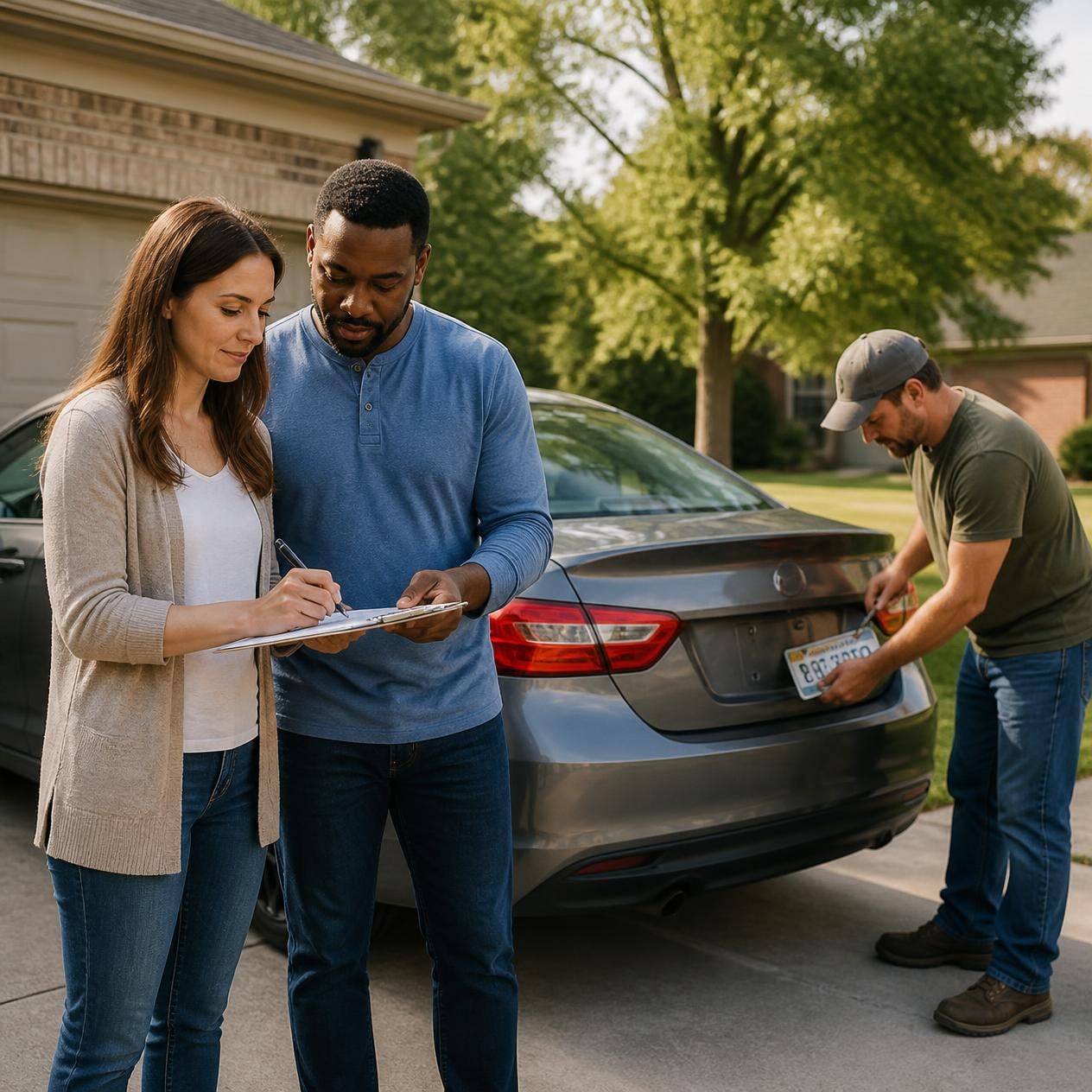
Buyers often begin to feel anxious at this point about buying a car, asking questions like: "What do I do for a title? How do I pay taxes?" Rest assured, the Secretary of State (SOS) office in Michigan has a clear-cut process. Just know that when you purchase your vehicle from a private seller, it is your responsibility to obtain the proper documentation to legally Transfer Ownership of the Vehicle to Your Name.
The following is the hierarchy of documents that you will need in order to avoid being turned away at the Michigan SOS Office.
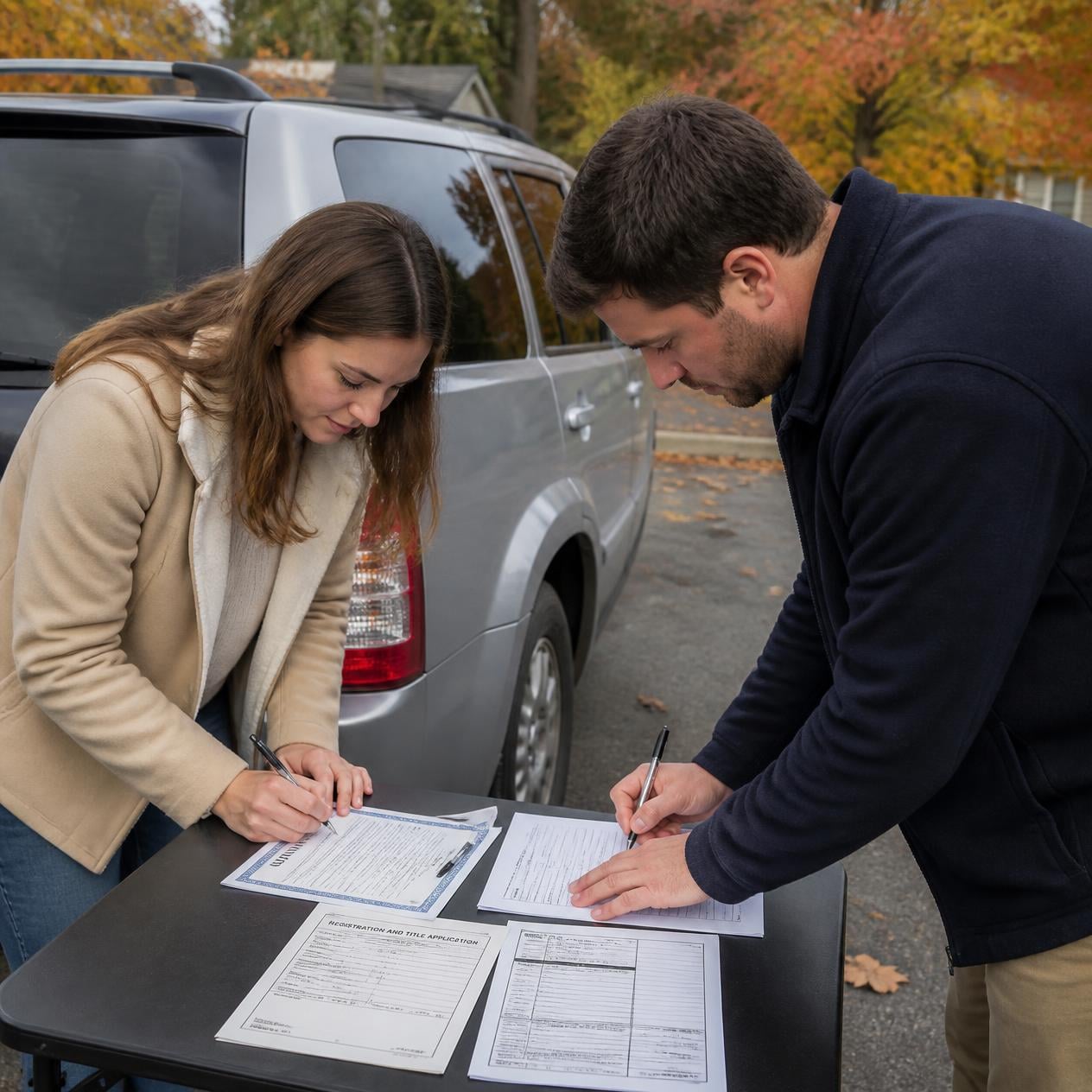
Document Name | Purpose | Who Provides It? |
Original Title | Proves ownership; must be signed over | Seller |
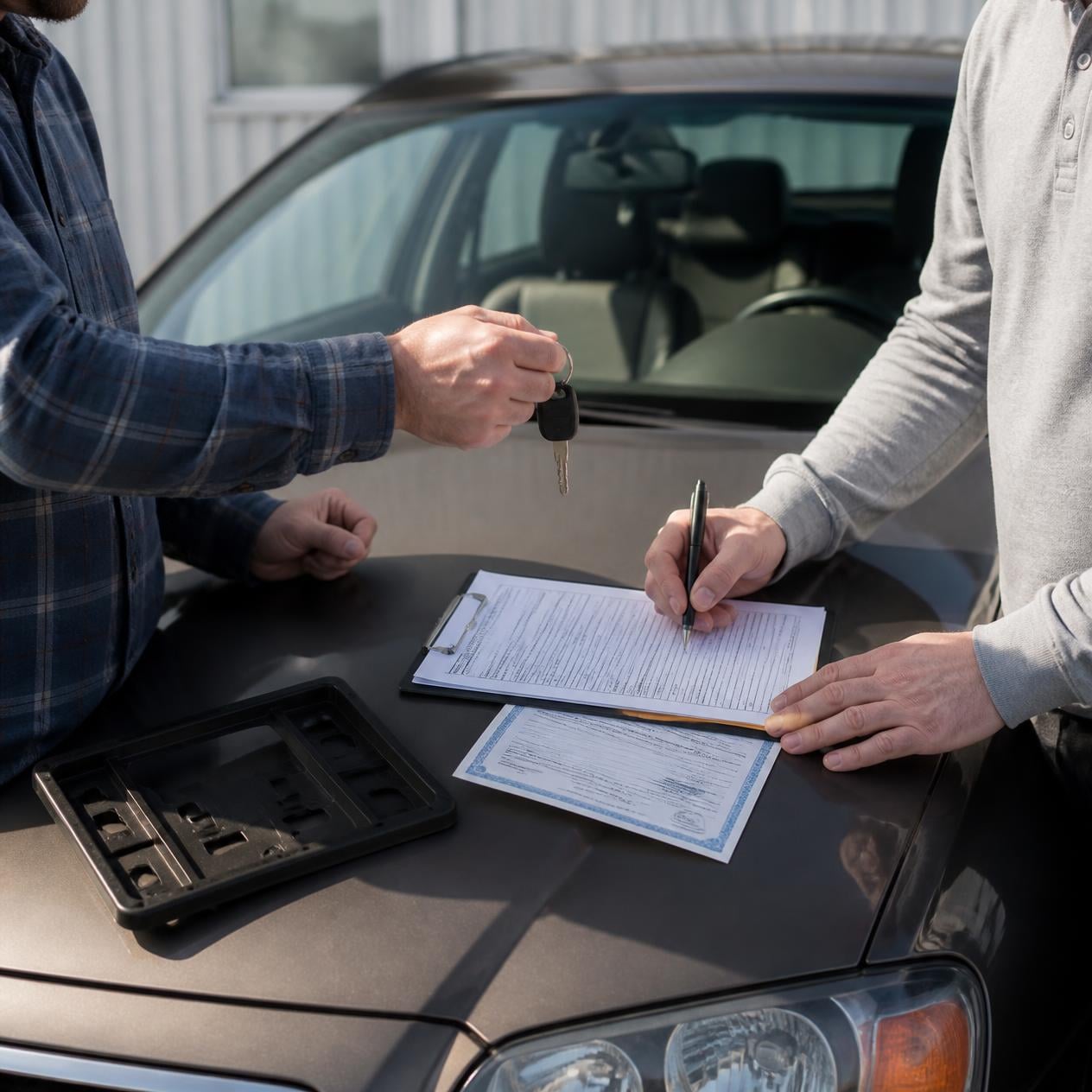
Bill of Sale | Records price, date, VIN, and parties | Seller/Buyer (Create together) |
Odometer Disclosure | Federal law requirement for cars <10 years | Seller |
Form TR-11L | Application for Title and Registration | Buyer (at SOS office) |
Proof of Insurance | Required to register the vehicle | Buyer |
The Title Transfer: Make Sure to Get It Right
The most important document is the title.
Liens: The front of the title will show if there are any lien holders (i.e. banks). If there is a lender listed, then the seller must provide you with a lien release statement from the lender in order for you to be able to transfer title.
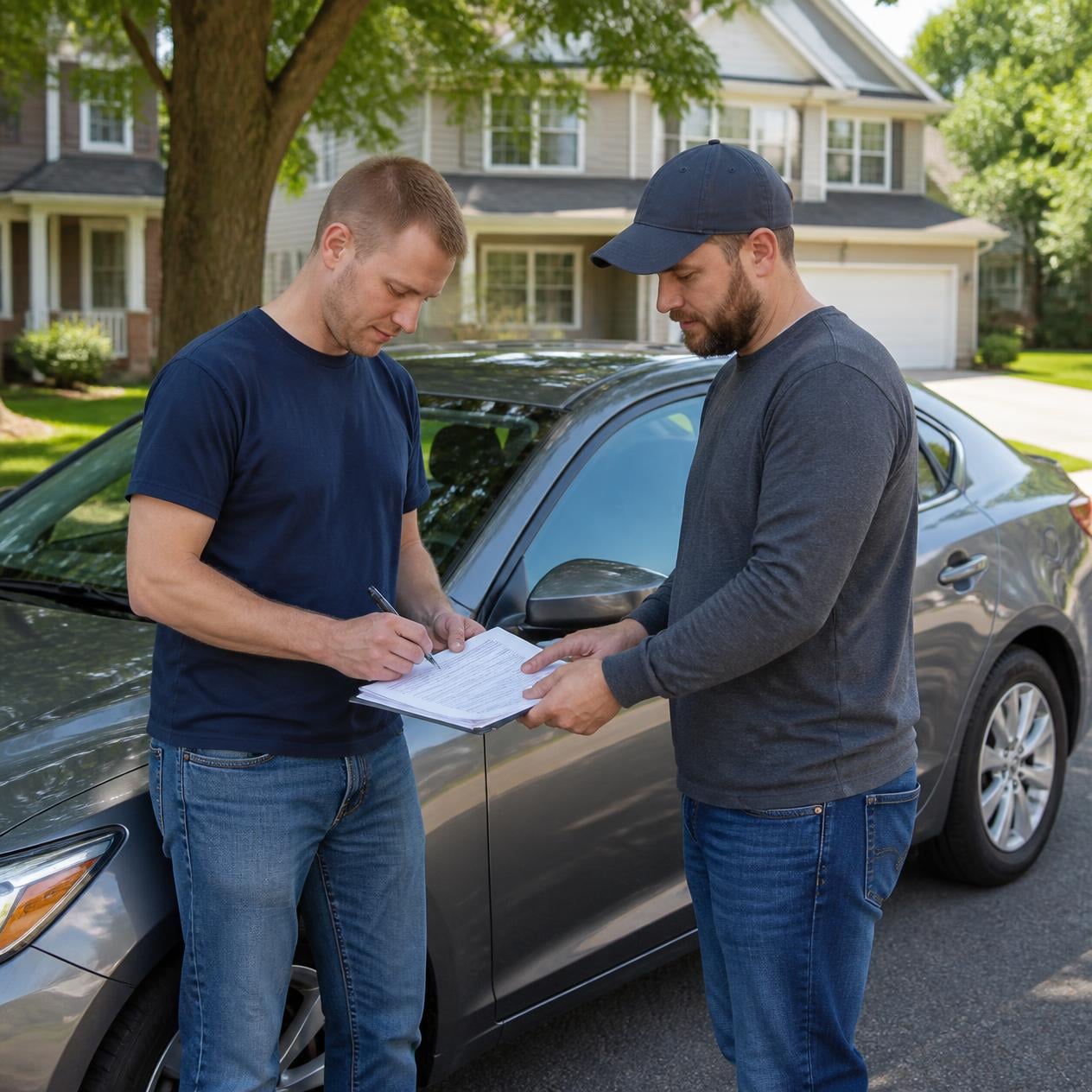
Seller Signature: The seller's signature must match exactly with what is written on the front of the title. You also need to provide your signature in the "buyer" section.
Odometer Mileage Reading: You need to make sure the odometer mile reading is on the title at time of sale.
Pro Tip: Do not use correction fluid or make any crossed out items on a title in Michigan. Doing so will void the title and add additional steps in obtaining a new title. If an error occurs, both you and the seller will need to go to an office of the Secretary of State to correct it.
Getting the Best Deal on a Car (Even if You Aren't a Mechanic)
You don't have to know anything about cars to realize that some cars have problems. In Michigan, when you meet a seller, you should take a flashlight and check for problems.
Checking for "Michigan Rust"
In wintertime, Michigan uses salt to melt the snow and ice on the roads. Salt causes metal to corrode. It's just the way it is in Michigan.
Wheel Wells - When checking wheel wells, run your hand along the inside of the fender. If there's any bubbling on the metal, it's rusted.
Rocker Panels - Look at the part of the car where the metal goes under the door. The rocker panel usually rots before anywhere else.
Frame - Get down on your hands and knees and look underneath the car. If the frame looks like it is peeling off in layers like a croissant, do not buy the car. Surface rust is normal; structural rust is dangerous.
Testing
You'll want to turn off the radio so that you can focus on the sound of the vehicle.
Observe the Transmission: Check whether or not the vehicle has smooth transitions between gears or if it feels as though it clunked into gear.
Observe the Steering: Test the steering on a straight road to see if the vehicle drifts to the left or right side.
Observe the Brakes: Listen for squeaking or grinding noises when applying the brakes. Check to see if the brake pedal feels spongy.
If you like the vehicle, but are not certain if you want the vehicle, ask the seller to allow you to take it to your trusted or local mechanic for a pre-purchase inspection. If they deny this request, that should be taken as a warning.

Safety Comes First with Private Purchases
Buying from a private person can involve meeting a stranger, and while you can usually trust people, you should always take safety precautions.
Where to Meet
Avoid meeting at a secluded place or the seller's home.
Police Stations: Many police departments throughout Michigan have designated "Safe Exchange Zones," which are set up for selling items online and have video surveillance in place.
Public Parking Lots: Busy grocery store or shopping center parking lots during daylight hours can be a good choice.
How to Pay
While cash is still the preferred method for paying for most goods, carrying $10k in cash is not a good idea.
Cashier's Checks: This is the standard payment-type for large purchases to protect both the buyer and seller (guaranteed funds, paper trail, etc.).
Meet at your Bank: If you both bank at the same bank, you can transfer funds directly at the bank teller window.
The Intangible Benefits of Michigan’s Private Market
Because Michigan is the hub for cars, we have a culture where we tend to know a lot about cars. Most people in Michigan work in the automotive industry or have a family member or friend who does, so you are much more likely to come across someone selling their vehicle that has taken good care of their vehicle.
In addition to that, Michigan has a very diverse landscape, which allows for a diversity of options in the marketplace for you to purchase.
Metro Detroit: This area has an abundance of newer model sedans, luxury vehicles, and commuter vehicles.
Northern Michigan: This is where you will find 4x4 pickup trucks, Jeeps, and heavy-duty vehicles used for rural living.
West Michigan (Grand Rapids/Holland): This area offers a combination of family-size SUVs and well-maintained vehicles used for working in suburban areas.
With Karkiosk, there are filtering mechanisms in place that allow you to search by region. For instance, if you want a particular model Ford F-150 from Cedar Springs or an Audi from Ann Arbor, you’ll be able to do so without stepping out of your home.
Closing Out and Driving Away
You've handed over the cash and signed on the dotted line, so now you are the proud new owner of that car. However, it is not completely legal for you to use it yet.
In Michigan, it is illegal to drive a vehicle without a license plate; that said, if you just bought it, you can drive it home (the quickest route) with proof of you owning the title and proof of auto insurance.
Do not drive it to work, to eat dinner, etc. Just get in, go straight home, and head straight to the Secretary of State office to pay your sales tax (6% in Michigan) and get your registration and new license plate.

Bottom Line
Purchasing a used car from a private seller (not from a dealership) in Michigan is one of the smarter purchasing choices you could make, financially. Dealers tend to have additional fees, advertising costs, etc. Here, you have a connection to the history of the vehicle, which has most likely been better taken care of than from a car dealer.
While it does take a bit more legwork to buy a car this way (inspection, negotiation, driving to the Secretary of State), all of the money you will save (thousands in savings!) make the extra effort well worth it. Whether you want a winter car to keep your sports car from being ruined by salt, or a family car for long trips with the family to Sleeping Bear Dunes, this is where you are going to find your best deals.
So, check out those listings, ask the seller the difficult questions and get your next set of wheels from the guy or gal down the street!