

Bill of Sale Aug 31, 2026
In the Silver State, having dependable wheels is vital! You will certainly need to have the proper set of wheels whether cruising up or down Las Vegas Boulevard, commuting between Reno and Sparks, or heading out into vast stretches of desert. As we all know, walking into a car dealership is often like stepping into a trap created by knowledgeable salespeople — markups, hidden fees, and high-pressure sales tactics drain enjoyment from purchasing a vehicle.
Fortunately, there is a far superior way to purchase a vehicle in the Silver State! With an abundance of vehicles being offered for sale through the private market in Nevada, there are many hidden gems available — from high-end luxury Teslas in Las Vegas to rugged, durable pickup trucks in rural counties throughout the state.
Purchasing a used vehicle from a private seller isn't just about saving money; it also gives you a chance to take control of the sales process and find vehicles that would be virtually impossible to find at a local dealership.
This guide will explain how to navigate the private automotive market in the state of Nevada by explaining all necessary documentation and inspections required, as well as detailing the specific requirements/rules related to the private automotive market in Clark and Washoe counties — all in order for you to drive home with a good deal, instead of a headache!
Private Vehicle Purchases in Nevada: Unwritten Benefits
When you purchase a vehicle at a dealership, you are not only paying for the engine and frame of the vehicle itself. You also pay for the cost of the dealership's electricity, the use of their coffee machine, the cost of advertising, and the salesperson's commission. When you deal with individual sellers, those costs are eliminated!
Cost Saving Benefits From Private Sellers
While the most obvious benefit of buying from a private seller is the price, many other factors contribute to the value of a private seller's offer. Private sellers do not have the same overhead as dealerships. Most are just regular people who want to sell to upgrade their vehicle or to raise cash.
Private Sellers are generally much more flexible in terms of their prices and are willing to negotiate. They typically list their vehicle below the base price of the same make/model being sold at a dealership. One great example is a 2015 INFINITI QX60 for sale by a private seller in Las Vegas for $7,000.
It would be nearly impossible to purchase a luxury SUV at a similar price at a dealership due to the numerous hidden financing traps involved in purchasing this vehicle from a dealer. Additionally, I saw a 2012 BMW 5 Series for only $3,350. These are just two examples of why private sellers provide great opportunities for you to get extraordinary deals.
Access To Unique Inventory
In addition to the cost savings from buying a car from a private seller, there are also many unique inventory items available in the private market as a result of Nevada's very unique automobile culture. In Reno, for example, there are many outdoor enthusiasts who have traded in a very clean looking adventure vehicle. In Las Vegas's case, high-rollers regularly trade in very high quality luxury vehicles.
Private sellers provide unique inventory that you can't find anywhere else. For example, in Fallon, there was a 1991 Dodge Spirit with 0 miles listed for $1,500 (most likely a restoration project or classic), and I also found a very low mileage 2005 Chevrolet Corvette for sale in Las Vegas. These unique vehicles, with their character and history, are not your ordinary boring fleet vehicle found at a used car lot.
Be Open and Honest
It sounds like a contradiction in terms. Most of the time, private sellers will actually be more honest and open about their vehicle than dealers. This may be due to the fact that a private seller has no monthly quota to reach. If they have any problems with their car (i.e. air conditioning takes too long to cool), they will typically tell you before the sale because they do not want you returning to their home after the purchase complaining about it. The seller will tell you the history of the vehicle from the person who drove it.
Good vs. Bad: Compare Alternatives
When looking for vehicles to purchase, you'll need to evaluate the facts about purchasing through a private seller vs. purchasing through a retailer.
Below are some advantages and disadvantages of purchasing through a private seller in Nevada.
Feature | Private Seller | Dealership |
Price | Generally lower; no overhead costs or hidden facility fees. | Higher; includes markups to cover business expenses and commissions. |
Negotiation | High flexibility; dealing directly with the decision-maker. | Rigid; often requires manager approval and follows corporate scripts. |
Inventory | Unique, rare, and vintage finds (e.g., classic Corvettes, modified Jeeps). | Standardized inventory; mostly newer trade-ins and auction buys. |
History | You meet the previous driver and can ask specific maintenance questions. | You rely on reports; the salesperson likely never drove the car extensively. |
Paperwork | You handle the DMV visit, title transfer, and tax payments yourself. | The dealer handles registration and plates for you (for a fee). |
Warranty | Usually "As-Is" with no warranty protection. | Often includes a limited warranty or certification. |
What Are the Current Listing Prices in Nevada?
A recent data overview of the overall diversity in the Nevada private market shows you can find listings within the price range from $5,000 to $50,000. Please see below for further information on some of the highlights of recently listed properties in Nevada.
Nevada Private Listings Highlights
Vehicle Year/Make/Model | Location | Mileage | Price | Ideal For |
2022 Tesla Model S | Las Vegas | 33,000 | $59,000 | Tech lovers looking for modern luxury without the full new-car price. |
2013 Audi Q7 | Las Vegas | 131,850 | $11,750 | Families needing space and German engineering on a budget. |
2023 Nissan Frontier | Las Vegas | 19,004 | $38,900 | Drivers needing a nearly-new truck for work or play. |
2008 Chevrolet Tahoe | Reno | 250 (Listed) | $5,300 | A rugged SUV perfect for Northern Nevada winters. |
1998 Subaru Legacy | Fallon | 165,837 | $3,500 | First-time drivers or a reliable winter beater car. |
The range is huge! The private market can accommodate your needs, whether you're looking to buy a $3500 Subaru from a guy in Fallon or a $60000 Tesla from someone in Las Vegas.

The second part that petrifies most purchasers is the paperwork associated with purchasing a vehicle in Nevada; however, if you follow this list, you will sail through the process.
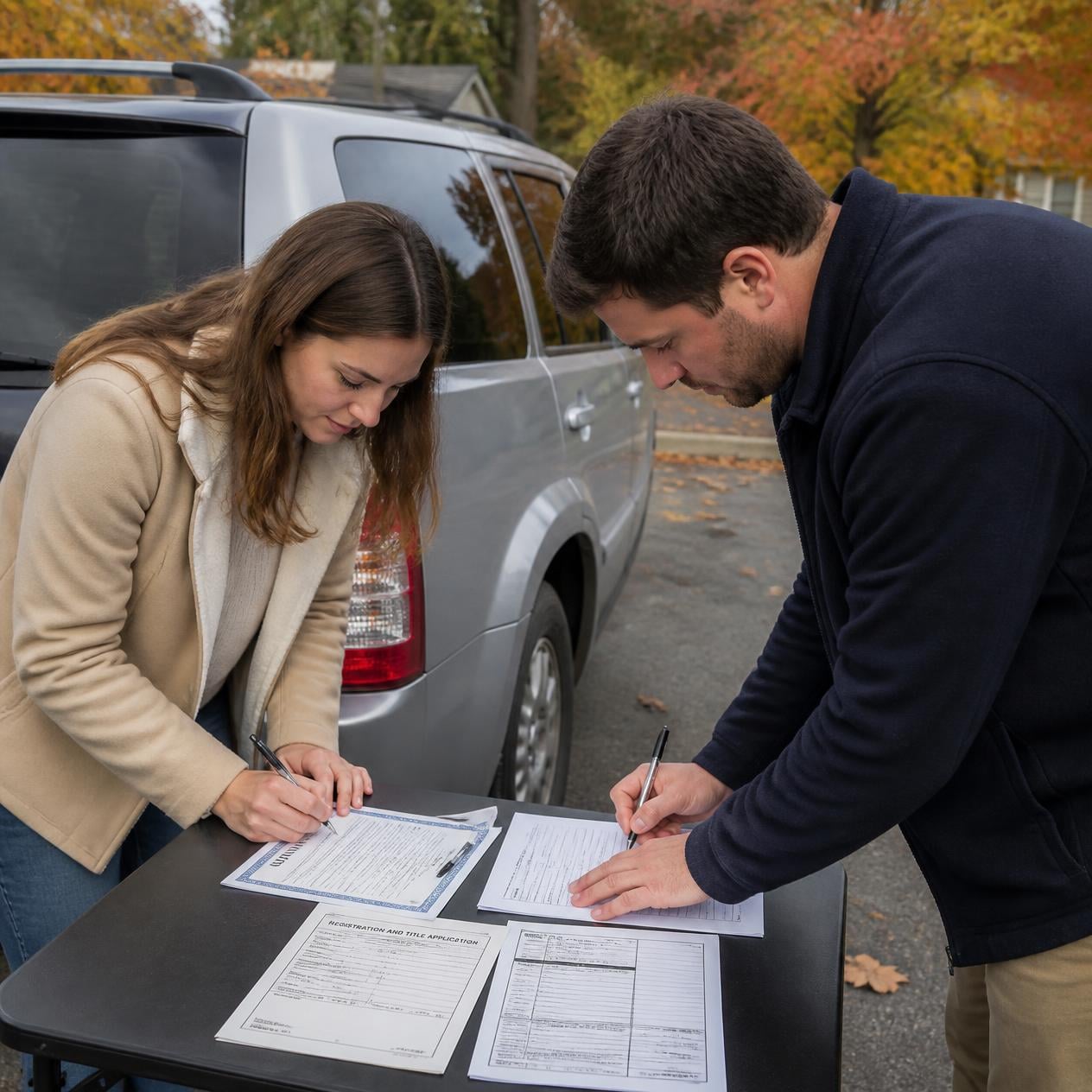
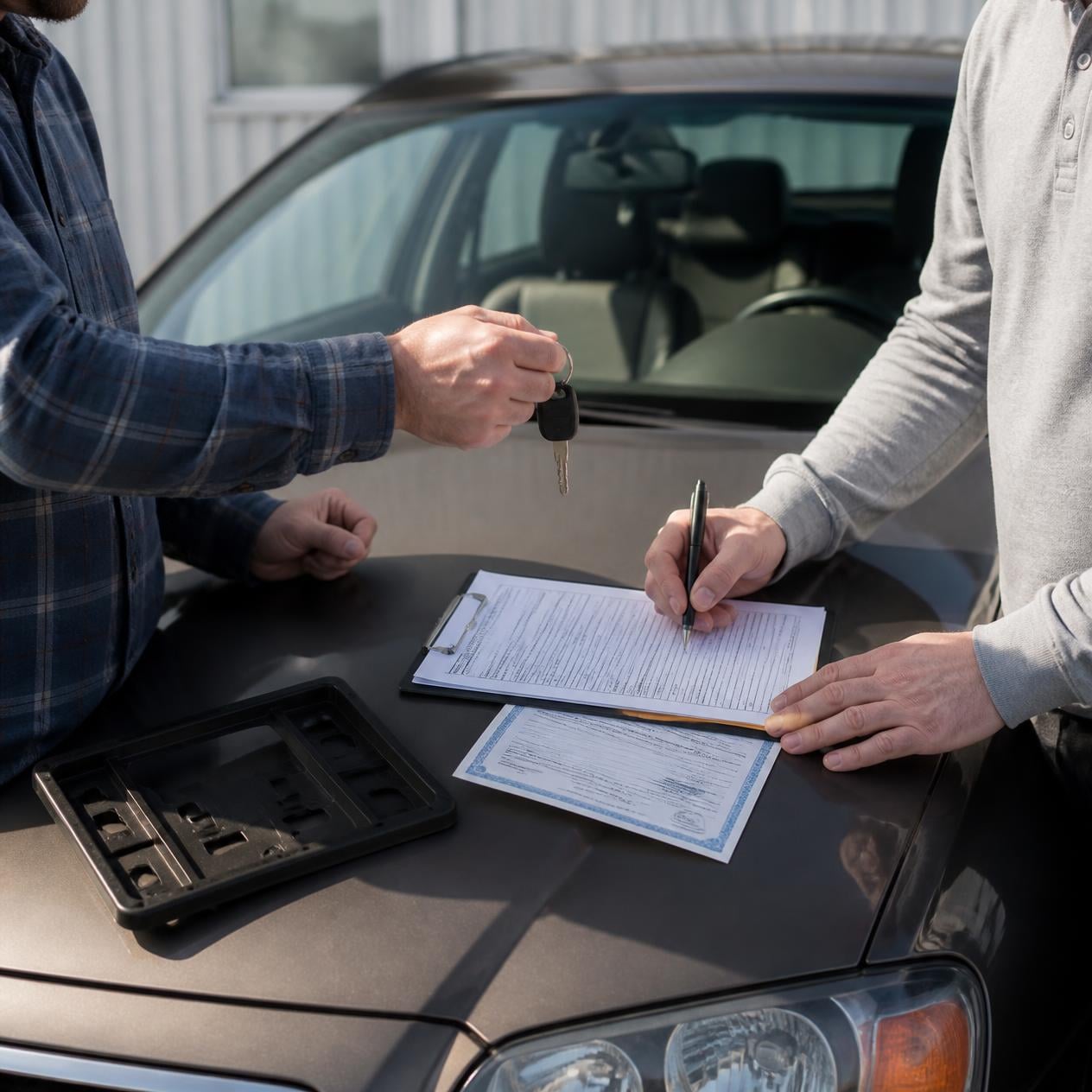
1. Title Transfer
You cannot purchase a vehicle in Nevada without having a title. The title is your golden ticket! When you meet up with the seller, always ask to see the certificate of title.
Seller's Signature - The Seller must sign their name on the back of the title in the "Signature of Seller" section.
Buyer's Signature - You must sign as the buyer on the certificate of title.
Seller's Name Matches with ID - Make sure that the name on the face of the title matches the seller's identification and matches the signature on the back of the title.
Notarization - The good news is that in the state of Nevada, the title does not require notarization, which is one less trip to the bank!
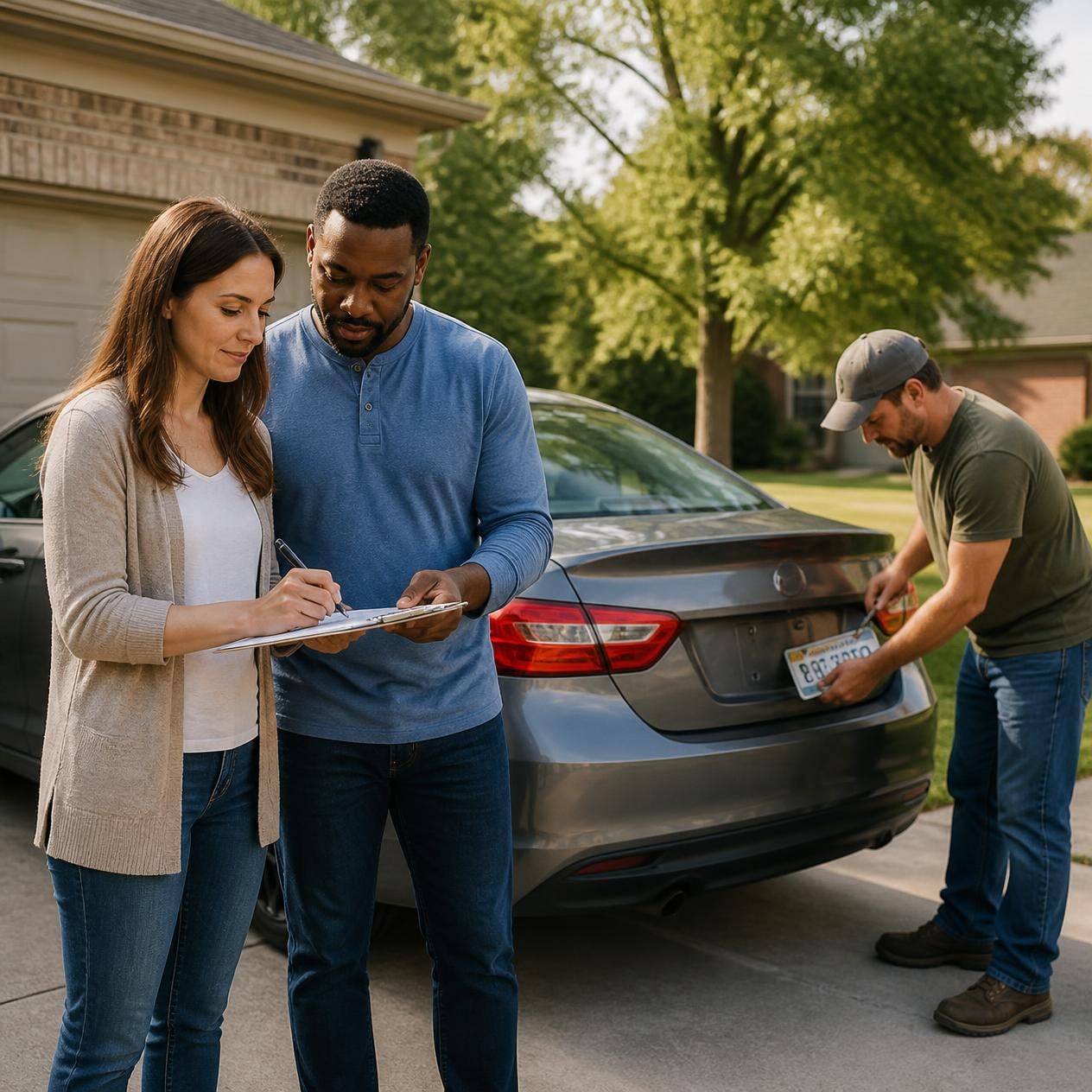
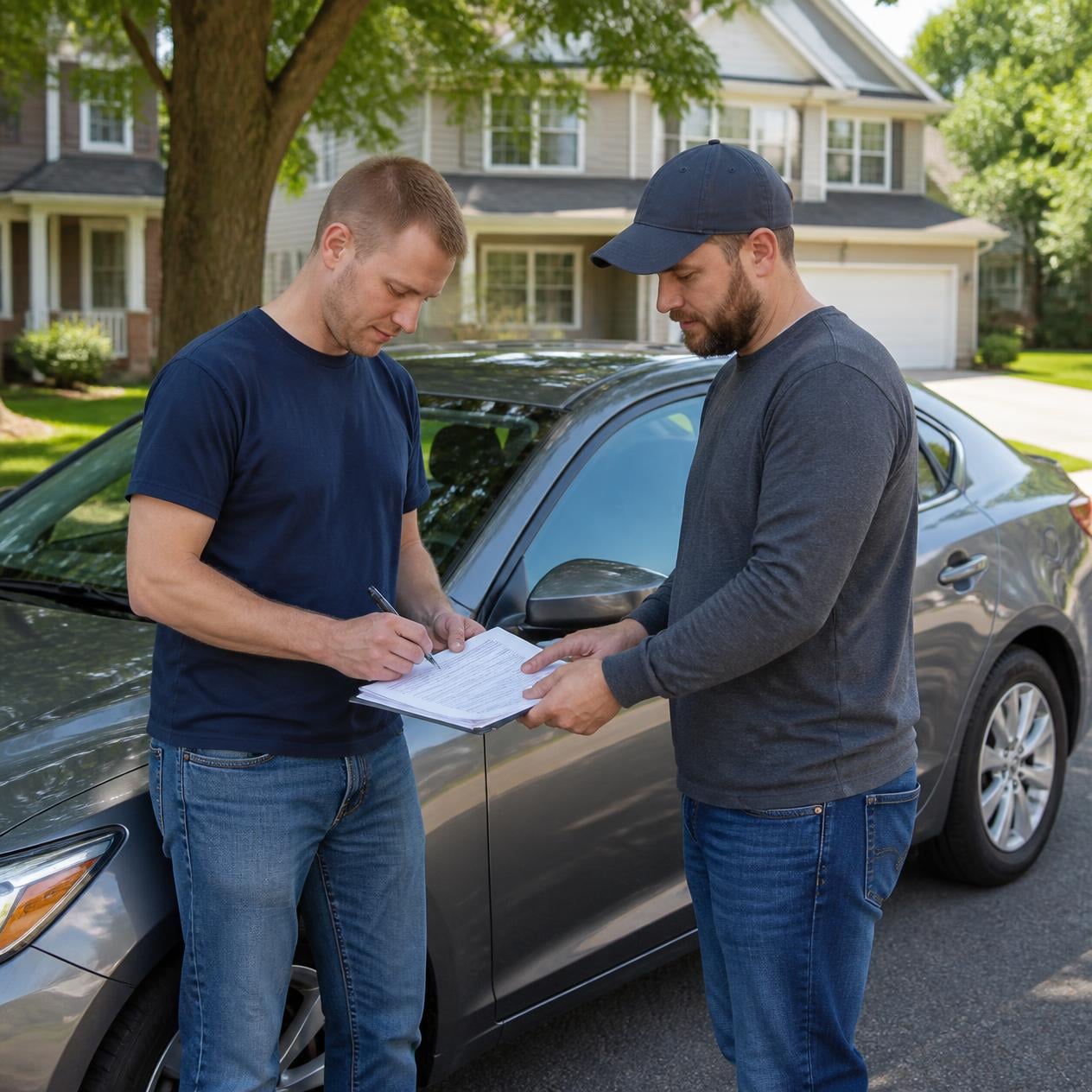
2. The Bill of Sale (Form VP104)
Nevada has strict requirements for having a Bill of Sale. The DMV specifically wants a Form VP104 for the Bill of Sale. This is not the same as a piece of paper; it serves as a legal document that provides protection to you.
The Bill of Sale must contain:
Purchase Price (this determines taxes).
Date of Sale.
Vehicle Identification Number (VIN).
Year, Make, Model.
Signatures from both buyer and seller.
3. Emission Inspections: A Challenge of City Living
Where you live is important. If you are purchasing a vehicle from Clark County (Las Vegas) or Washoe County (Reno), you must pass emissions testing before registering your car in Nevada.
The Seller’s Obligation: The seller is required by law to supply you an emissions inspection report, showing that your vehicle has passed the inspection.
The 90-Day Time Frame: The emissions inspection report is only valid for 90 days from the time of the inspection. If the seller had the inspection completed three months prior, you will need an additional emissions test.
Rural Exemption: If you are located in a rural area of the state, such as Fallon, you may qualify for an exemption; however, be sure to utilize the DMV’s zip code tool to confirm your eligibility.
4. Taxes and Fees
Taxes are part of your loan when you purchase from a dealer. Taxes are paid directly to the DMV when you purchase from a private seller.
GST & SGST - Nevada Government Service (G.S.T.) and Supplemental Government Services Tax (S.G.S.T.) are assessed as a property/sales tax in Nevada.
Calculating Taxes: Please consider that the taxes for your vehicle are assessed on the depreciated value of your vehicle and not just on the amount listed on the Bill of Sale.
Deadline - Once you have purchased your vehicle, you have 30 days from the date of purchase to get your taxes paid; if you don't pay your taxes within this time, you will be assessed additional penalties after the 30th day.

Inspecting Your Vehicle for Desert Conditions
Extreme desert conditions in Nevada are not good for cars. The heat of the southern part of the state during summer and the cold in northern Nevada during winter cause unique problems with how you should inspect vehicles.
Under The Hood
Fluids are essential to ensure all vehicles do their jobs properly. This is especially true for desert environments as fluids are critical to stop vehicles overheating.
Cooling System Fluid – Always check right away. If the fluid is dirty and at a very low level, then the vehicle may have overheated previously. A vehicle's cooling system is critical in a place like Las Vegas where the temperature reaches 110 degrees.
Belts and Hoses – The heat will dry up and crack rubber. When you test the upper and lower radiator hoses, squeeze (only when the engine is off) each hose. The hose will feel stiff and not crumbling or too sod. The belt should also be free of cracks.
Body and Tires
Sunlight: Look out for peeling clear coats on vehicles or faded paint which is common for those parked outside in Henderson and North Las Vegas.
Tires: Hot surfaces will destroy your tires. You should also check for dry-rot, which appears as small cracks along the tire's sidewall. A tire may still have lots of tread; however, due to exposure to heat, the structure could be unsafe.
Rust: Even though it is dry in Nevada, if your vehicle is from Reno, or has been operated in a snowy area, then it may have some rust on it due to road salt; so look for signs of this inside the wheel wells.
The Inside Test
Get in and shut the door.
The Smell Test: Does the car have a musty smell? If you suspect mold, it could be leaking. Is it heavily perfumed? If this is the case, they may be trying to cover up smoke.
AC Test: Immediately set the air conditioning to "max". If the air conditioner is malfunctioning in Nevada, it is more than an inconvenience; it can affect your health. It should produce frigid air within the first minute of operation.
Safeguarding Transactions: Stranger Danger
Exchanging thousands of dollars with a stranger can be dangerous. Take caution regardless of whether you are in Downtown Las Vegas or in Carson City on a secluded street.
Meeting in Public: Avoid meeting at the seller's house or his/her coming to yours, if at all possible. Meet instead at a "Safe Exchange Zone" (usually marked as a location for selling/buying items or like a police station) or at a busy shopping plaza or a bank's parking lot.
Using the Buddy System: Take a friend, so you both can check the vehicle for damage and be your own "insurance policy" as they provide an independent source for the exchange, if needed.
Using Cash: Do not carry cash for your transaction. If you are purchasing a $59,000 Tesla, only use a cashier's check or bank transfer; both provide a better form of transaction as both can be tracked.
Validating Identity: Confirm that the seller is the same individual that the name on the title indicates he/she is. Request to view the seller's driver's license. If the names do not match, do not proceed - the transaction is "title jumping" and illegal.

Reasons to Utilize Karkiosk
Karkiosk is transforming the way Nevadans buy and sell cars online for individuals who feel uncomfortable buying from Craigslist or Facebook Marketplace. They compile private listings by cities (for example, Sparks, NV; Henderson, NV; or North Las Vegas, NV), so that you can easily refine your search based on location.
Karkiosk provides:
Flexibility in Listings: All of their ads are categorized in such a manner that allows you to easily filter through them to find what you are looking for.
Verified Sellers: This adds an additional level of comfort that you will not receive when buying from a seller on an anonymous forum.
Profiles with Detailed Information: Each profile contains all of the necessary information (e.g., pictures, mileage, and a description) to ensure that you do not waste time driving from one end of town to another for an ineffective purchase.
Summary: Your Dream Car is Just a Short Distance Away in the Silver State
When purchasing an automobile from a private seller instead of a dealership, you'll need extra patience, but the benefits are considerable. You'll save money; you'll learn the history of your new ride; and you'll cut out all of the dealership's corporate rigmarole.
Provided you have the correct information—including the vehicle bill of sale (form VP104); a clean title; and passing your smog test—you can obtain your dream car, be it a luxury BMW, durable Ford F-150, or budget-friendly Nissan Versa, for a fraction of what it would cost you at retail.
Private seller listings abound throughout Nevada, from Las Vegas' ritzy streets to "the biggest little city in the world," so your next set of wheels is in the hands of a private party. Just make sure to conduct your due diligence and thoroughly inspect, and test drive any vehicle before purchasing!