

Bill of Sale Aug 31, 2026
When searching for a used car, you may often feel like you are in a high-stakes battle because you want to get the best price without the dealer markup. By searching for used cars for sale by owner in Connecticut, you will find many value options available, different vehicle selections and sometimes an easier purchase process.
If you buy a used car from a private seller, you will save money and have access to well-maintained vehicles. Buying a used car from a private seller requires some knowledge and caution so that you do not end up with a car that may not be reliable.
This guide provides you with the information you will need to confidently purchase a used car from a private seller in Connecticut. It will cover the advantages of using KarKiosk, the buying process, safety tips and how to easily use the KarKiosk website to locate your next used car purchase using our site.

Why Go with a Private Seller in Connecticut?
When buying a car, the experience is different when purchasing from a private seller than from a dealership. Because of this, many consumers choose to buy from a private seller in Connecticut. Typically, the sellers of private cars are regular individuals who are selling their cars because they have upgraded to newer models, are moving, or are changing their lifestyle—not because of a sales quota.
Because private sellers know their cars, they are able to provide buyers with a complete and accurate account of the history of their vehicle. Private sellers have the ability to provide buyers with all service records, maintenance records, and other important information that a large dealership may not be able to provide.
One major reason to purchase from a private seller is that the price is generally less than what a dealership offers. Private sellers do not incur the overhead cost that dealerships do for things such as showroom space, employee compensation, and advertising; thus, the price that private sellers can offer is significantly lower than that of a dealership.
Additionally, buyers do not have to pay the dealership for any document fees, dealer preparation fees, or extended warranty sales pitches.
Advantages and Disadvantages of Purchasing From a Private Seller.
Pros | Cons |
Lower Prices: Avoid dealership markups and fees. | "As-Is" Sales: Most sales are final, with no warranty or return policy. |
Direct Negotiation: You negotiate directly with the owner, which can be less intimidating. | More Legwork: You are responsible for inspections, paperwork, and financing. |
Full Vehicle History: Sellers often provide detailed maintenance records and personal history. | Risk of Scams: Requires more caution to avoid fraudulent listings or sellers. |
Less Pressure: A more relaxed buying environment without aggressive sales tactics. | No Financing Options: You must secure your own loan from a bank or credit union beforehand. |
Wider Variety: Access to unique, older, or modified vehicles not found on dealer lots. | Limited Recourse: If a problem arises after the sale, it's harder to get a resolution. |
Guide for Making a Safe Purchase from a Private Seller
Preparing and being diligent in the buying process are crucial to successfully purchasing a used vehicle from a private seller. By following this outline, you will protect yourself against making mistakes while getting the best deal on your vehicle purchase.
Step 1: Search for Listings on a Trusted Platform
The first thing you want to do is locate legit ads. The best source for private sale is a specialty online marketplace. KarKiosk is an example of a website that creates direct contact between buyers and sellers, giving a more structured and safer alternative to other types of listings such as general classifieds.
Utilize the search filters provided by the website to help narrow your search results based upon the following criteria:
Make & Model: Choose brands that are known for their reliability and low ownership cost.
Price Range: Stay within your budget. Don't forget about potential repair, tax and registration costs.
Mileage: In general, higher mileage indicates better value, but a high mileage vehicle in good condition could also offer great value.
Location: Searching within your local (Connecticut area) e.g. Hartford, Stamford, New Haven will save time and money in travel costs.
Step 2: Initial Contact & Screening
Once you have identified a potential buyer’s ad or vehicle, it is time to reach out directly to the seller. For this reason, it is always recommended that you use a secure messaging service offered by the website in order to protect your personal details.
During your first discussion with the seller, you should ask specific questions to gain insight about the vehicle such as:
What are your reasons for selling the vehicle?
Are you the initial owner of the vehicle?
Has your vehicle ever been involved in a collision?
Is there a clean title or do you possess the title to the vehicle?
"Are there any problems with the engine?"
If the answers to these questions are satisfactory and the seller is being honest, then you can proceed with purchasing the vehicle. If they do not sound honest or their responses don't jive then you should probably stop pursuing that vehicle.
Step 3: Obtain a VHR (Vehicle History Report)
The Vehicle History Report, also known as a VHR, can be obtained from various sources including Carfax or AutoCheck. The VHR will list detailed records about your potential new vehicle that includes but isn't limited to:
Accident Severity/Type(s): The report will give you information about the type and severity of any known accidents
Title Status (Salvaged, Flood, and/or Rebuilt): Any salvaged, rebuilt or flood titles are going to be red flags!
Odometer History: The VHR will provide odometer information and notify you of any potential rollbacks.
Service Records: You will be able to see service history as well as other maintenance that has been performed by different repair facilities.
Number of Previous Owners: You will know how many owners the vehicle has had prior to you.

Step 4 - In-Person Inspection and Test Drive
Once you receive your VHR and it is in Good standing, schedule a time to inspect the Vehicle. To ensure your safety, always meet at a Public Place during daylight hours. Examples of Good Places are Police Station Parking Lots or Busy Shopping Centers.
Visual Inspection of the Vehicle
Exterior: Look for signs of rust, mismatched paint (Signs of Body Work), dents, scratches, etc. Also check the tires for uneven wear, which may indicate a problem with the Alignment.
Interior: Check the Dashboard for any warning lights. Test every electronic item onboard including A/C, Heat, Windows and Stereo System. Check the Upholstery for rips, tears, wear or Water Damage.
Under the Hood: Look for visible leakage, Cracked hoses or Broken Belts. Check the Oil & Transmission Fluid levels and colours.
Evaluating the Vehicle :
Take note of the vehicle for at least 15 to 20 minutes over multiple routes, including both city streets as well as long distance highway driving.
Be mindful of any unfamiliar sounds coming from the engine and/or brake systems.
Observe how smoothly the transmission engages as it shifts.
Make sure the car does not vibrate or pull in any particular direction.
Find an area that is safe and free of other vehicles to test how well the brakes operate.
Step 5: The Mechanics Pre-Purchase Inspections (PPI)
Regardless of the vehicle seeming flawless, a qualified mechanic performing a pre-purchase inspection (PPI) is still necessary. A qualified professional will elevate the automobile to get a better view of the automobile and check for problems underneath the vehicle, including frame damage, engine problems, or a failing gearbox. The price for a PPI is approximately $100-$200.
When the seller does not allow for a PPI, it is a significant indication that the seller is attempting to hide problems with the vehicle. If the PPI identifies problems with the vehicle, then you can use that report to negotiate a lower price for the vehicle or elect to remove yourself from the sale.
Step 6: Price Negotiation
Once you know VHR and PPI, you can use the information you learned about the vehicle to negotiate. Use any issues you found as a reason to make a lower offer than the asking price. Offer a reasonable starting point, but know that you will likely end up meeting somewhere between your offer and what the seller wants.
Use the Market Valuation Tool provided by many listing websites to find out what similar vehicles have sold for recently in your market.

Paperwork for Closing the Deal in Connecticut
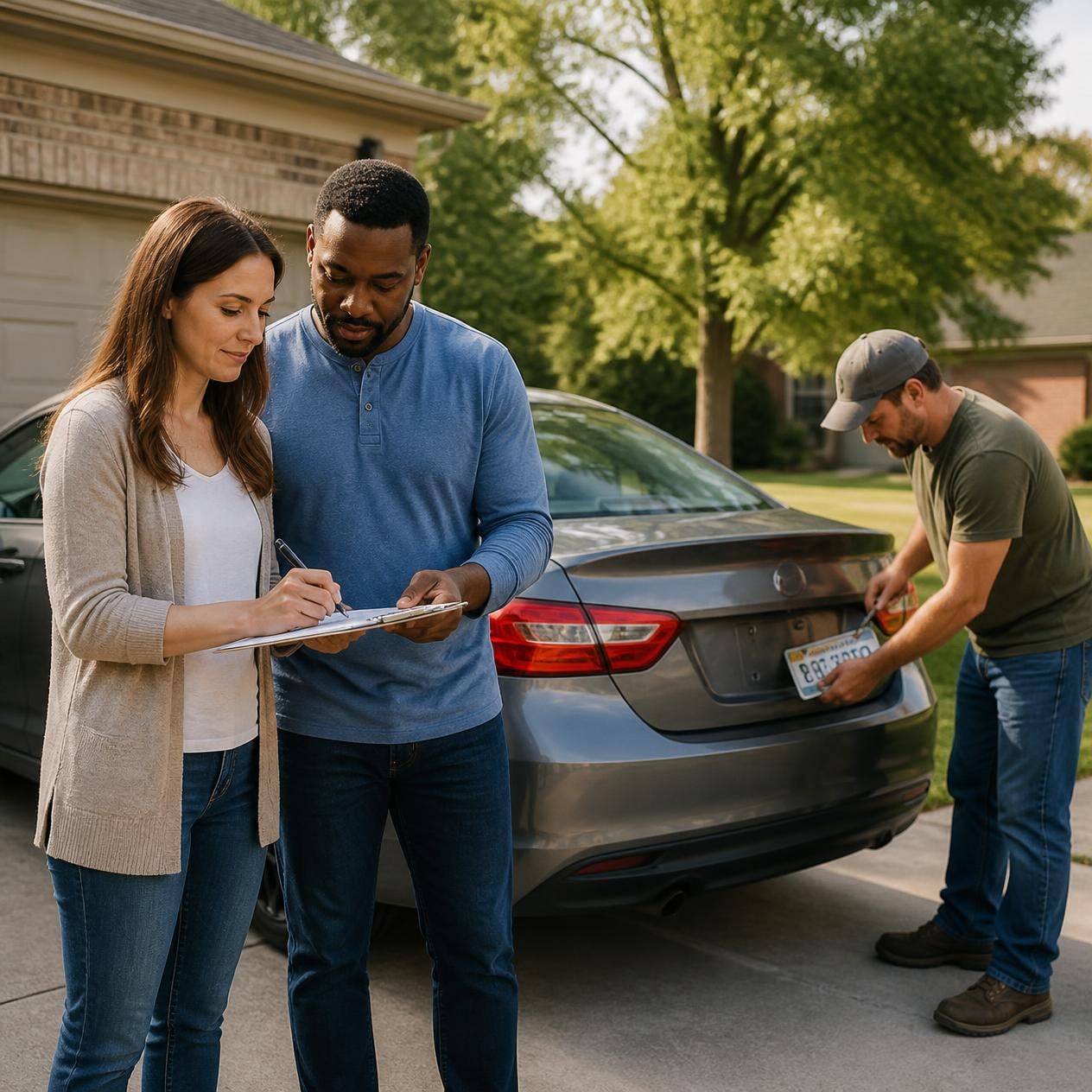
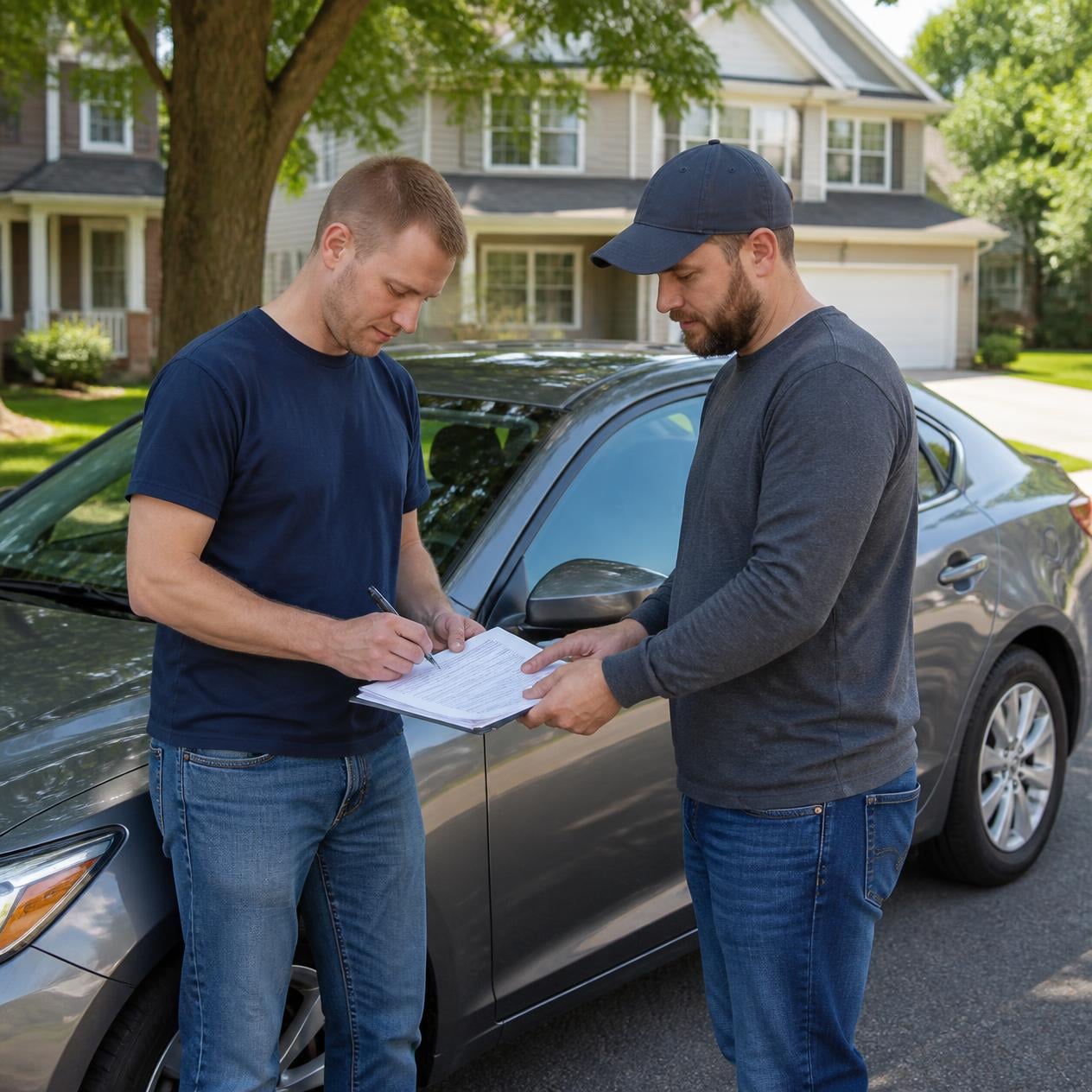
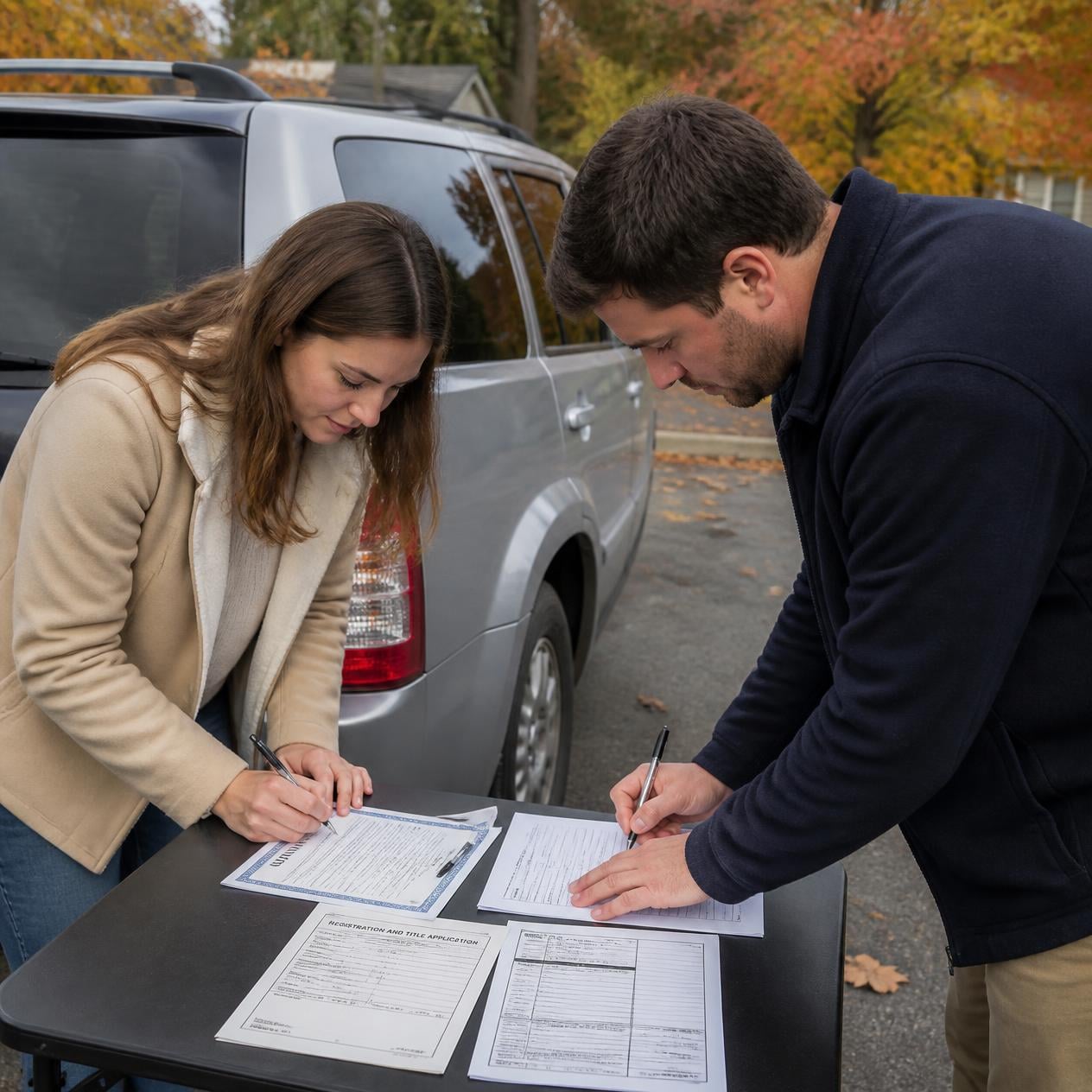
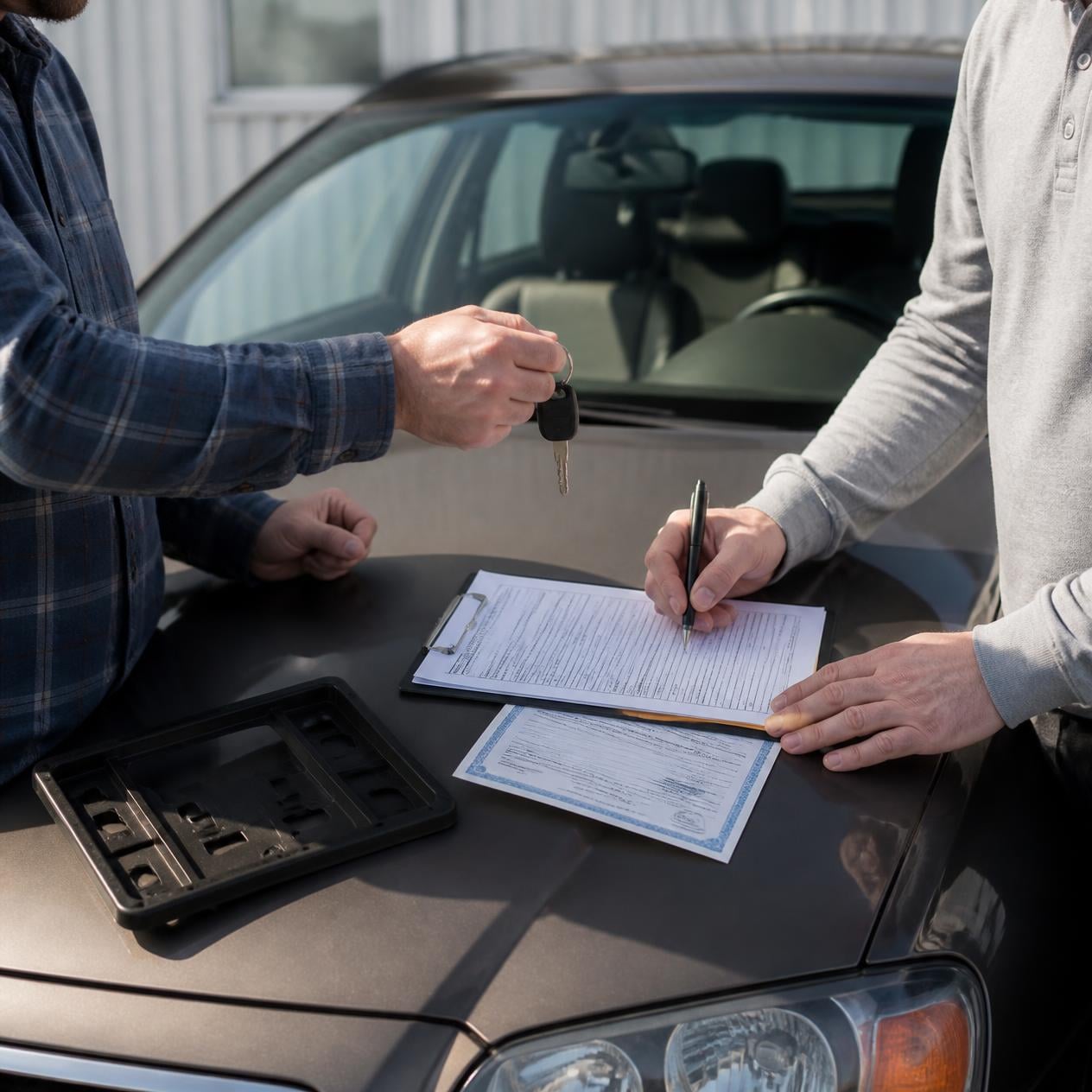
Once you've reached an agreement on a purchase price, the next step is to set up your paperwork. If you do not properly transfer ownership, it can create problems for you later with your vehicle (legal) as well as financially (title issues).
A summary of what needs to be done to complete your transaction is as follows:
Document | Buyer's Responsibility | Seller's Responsibility |
Vehicle Title | Verify seller's name, check for liens, and ensure VIN matches the car. | Sign the back of the title to transfer ownership. |
Bill of Sale (Form H-31) | Ensure all details are correct: price, date, VIN, and both signatures. Keep a copy. | Complete and sign the form. Provide a copy to the buyer. |
Odometer Disclosure | Verify the mileage is accurately recorded on the title or a separate form. | Accurately record the current mileage at the time of sale. |
Application for Registration (Form H-13B) | Complete this form to register the vehicle in your name with the CT DMV. | Provide the current registration certificate. |
Proof of Insurance | Obtain an insurance policy for the new vehicle before going to the DMV. | Cancel their insurance policy after the sale is complete. |
The last stage of the process is to bring your completed forms, proof of insurance, and tax and fee payment to a Connecticut DMV location to register your vehicle in your name and acquire new plates for your vehicle.

Conclusion About Your Car Buying Experience
You can save money by purchasing a used vehicle through a private vendor located in Connecticut. When you prepare yourself with enough knowledge; utilize such services as KarKiosk, and use a methodical approach when inspecting vehicles, you can reduce your risk of losing money and/or making an unwise investment.
The most important factors to take into account are patience, attention to detail, and caution. There shouldn't be any pressure on you to make an immediate decision. With proper preparation, you'll be able to fulfill all your automotive needs and have the confidence that you have spent less money than necessary when purchasing quality transportation.