

Bill of Sale Aug 31, 2026
Are you looking for a great deal on quality used cars in West Virginia but want to avoid paying dealership prices and fees? The process of finding a quality used vehicle through private sellers can sometimes feel as daunting as searching for gold in the mountains of Appalachia.
However, with some basic knowledge of how the used car market works, you'll be able to find great deals that are tailored to fit your budget. This guide will provide you with the information you need to locate and purchase a used automobile from a private seller throughout West Virginia. By following this guide, you'll also feel confident with your purchase.
We'll discuss how sites like KarKiosk are changing the way that West Virginians find and purchase used cars, why purchasing directly from an individual is advantageous, and how to complete the entire buying process as easily and securely as possible.
From the early stages of your search throughout larger metropolitan areas (Charleston & Parkersburg) until the moment you shake hands with the seller, this guide contains tips and insights to help you locate and purchase a great used car from a private seller.
Why Should You Buy from a Private Seller instead of a Dealership in West Virginia?
If you are looking for a used vehicle, your first decision will probably be where to shop for it. Many people choose to shop at dealerships because of the many different types of vehicles available to them. However, for many people living on a budget in West Virginia, buying a used vehicle from a private seller can provide a number of advantages over buying one from a dealership.
The biggest advantage of purchasing from a private seller is price. Private sellers do not have the same expenses associated with running a large dealership. They do not pay for the rental of a showroom, have to pay commission on sales staff, or spend money on advertising. Because private sellers do not incur these overhead costs, the savings they realize can be passed on directly to the buyers of their vehicles.
A second significant advantage of buying from a private seller is the ability to negotiate. Most private sellers are very motivated to sell their vehicle, and they are typically more willing to negotiate the pricing of their vehicle than a dealership would be, due to the fact that a dealership is typically working within strict profit margins.
When you buy from a private seller, you can usually negotiate a much better price than you would be able to get from a dealership if you were to go in and purchase a vehicle without having any prior conversations with the dealership's staff. Additionally, when you buy from a private seller, you are buying from the person who owns and drives the vehicle every day.
This gives you the ability to ask specific questions regarding how the vehicle has been maintained, its performance, and the type of driving conditions it has experienced in your area, such as steep mountain roads and snowy winter conditions, which would typically be unknown to a dealership salesperson.

What are the Pros & Cons of Buying from a Private Seller?
Pros | Cons |
Lower Prices: No dealership overhead means better deals for you. | "As-Is" Sales: Most sales are final, with no warranties or guarantees. |
Direct Negotiation: More flexibility on price compared to dealerships. | More Legwork: You are responsible for inspections, paperwork, and title transfer. |
No Dealer Fees: Avoid documentation, advertising, and other hidden charges. | Limited Inventory: You are searching for one car at a time, not a whole lot. |
Transparent History: Get firsthand information about the car from the owner. | Risk of Scams: Requires more caution to avoid fraudulent listings or sellers. |
West Virginia Step-by-Step Guide to Buying a Pre-Owned Vehicle
When buying a vehicle from a private seller, performing due diligence is very important, however, utilizing an organized method of purchasing will help to keep the process simple and safe.
Step 1: Research and Find the Vehicle
The first step in the vehicle-buying process is to conduct research and find the vehicle that meets your needs. Start by searching through a reputable online marketplace.
Websites such as KarKiosk will help you filter listings for West Virginia and allow you to see which vehicles are currently available for sale from private sellers located within your local community, from Huntington to Moundsville. The following filters may be applied to help you find a vehicle that suits your needs:
Make and Model - this will enable you to see which specific vehicle model(s) you are interested in.
Price - this allows you to set a budget, limiting you to only viewing vehicles that fall within your price range.
Mileage - this filter allows you to either find vehicles that have low or high mileage depending on what you require.
Location - you can search within the surrounding cities, making it easy to view the vehicle in person and arrange for a test drive.
As you are browsing through listings, be sure to compare similar models to gain an understanding of what constitutes a 'good deal'. By comparing similar makes/models you will have a better understanding of average pricing, mileage, and condition of the vehicle in order to identify a potentially 'good deal'.
Step 2. The Pre-Purchase Inspection
Once you've identified a vehicle with potential, you will want to inspect that vehicle so do not agree to buy a car without first inspecting it. By conducting an inspection on the vehicle prior to purchasing it, you can avoid future costs associated with expensive repairs.
Self-Inspection Checklist Initial Steps
Area to Inspect | What to Look For |
Exterior | Dents, rust spots, mismatched paint (sign of accident repair), tire tread depth. |
Interior | Upholstery tears, strange odors (mold or smoke), functionality of all electronics (radio, A/C, windows). |
Under the Hood | Check fluid levels (oil, coolant), look for leaks, inspect belts and hoses for cracks. |
Under the Car | Look for rust on the frame and any fluid drips on the ground. |
A professional inspection can help to ensure the vehicle you are considering buying is not just “a good deal”, but also safe to drive. You may spend between $100-$200 for a professional pre-purchase inspection (PPI). Many of the issues that could be overlooked by a novice, will be identified by a professional mechanic using appropriate equipment and methods.
Step 3: Take Time for a Test Drive
A good test drive is essential. Having the chance to drive the car down streets you're familiar with will help you determine how well it performs. While driving, you should evaluate the following:
The Engine – How easy/easy was it to start the car, and how smoothly does it run?
Brakes – How do they feel; are they responsive or spongy? Do you hear any grinding/squealing at the time you're applying the brakes?
Steering & Alignment – Does your car pull to one side? Is there any unusual vibration in the steering wheel?
Transmission – How well does it shift from one gear to another? Does it have a hesitation or “clunk” when shifting?
Noises – Listen to the sounds emitting from the engine, suspension and brakes. Is anything suspicious or unusual?
If it's possible, test drive the car on multiple types of roads (city streets, highways, backroads, etc.), and take it on the winding roads that West Virginia is famous for.

Step 4: Confirm All Documentation
Before you pay for the vehicle, you should confirm the vehicle's documentation. In West Virginia, this step is critical.
Verify the Title of the Vehicle: The title is the most important document. Make sure the seller's name on the title matches their ID. Look for a "clean" title. If the title shows "salvage," "rebuilt," or "flood," the vehicle has been significantly damaged in the past. Verify if the vehicle has any liens associated with it. If the seller has a bank or lender listed as a lienholder, they must provide you with a lien release.
History Report: You should obtain a history report for the vehicle using the Vehicle Identification Number (VIN). You can obtain one by going to either Carfax or AutoCheck Online and entering the VIN. The history report will provide an overview of the history of the vehicle, including accident history, title issues, service records, and any odometer rollbacks. Many of these organizations such as KarKiosk allow you to access this information simply.
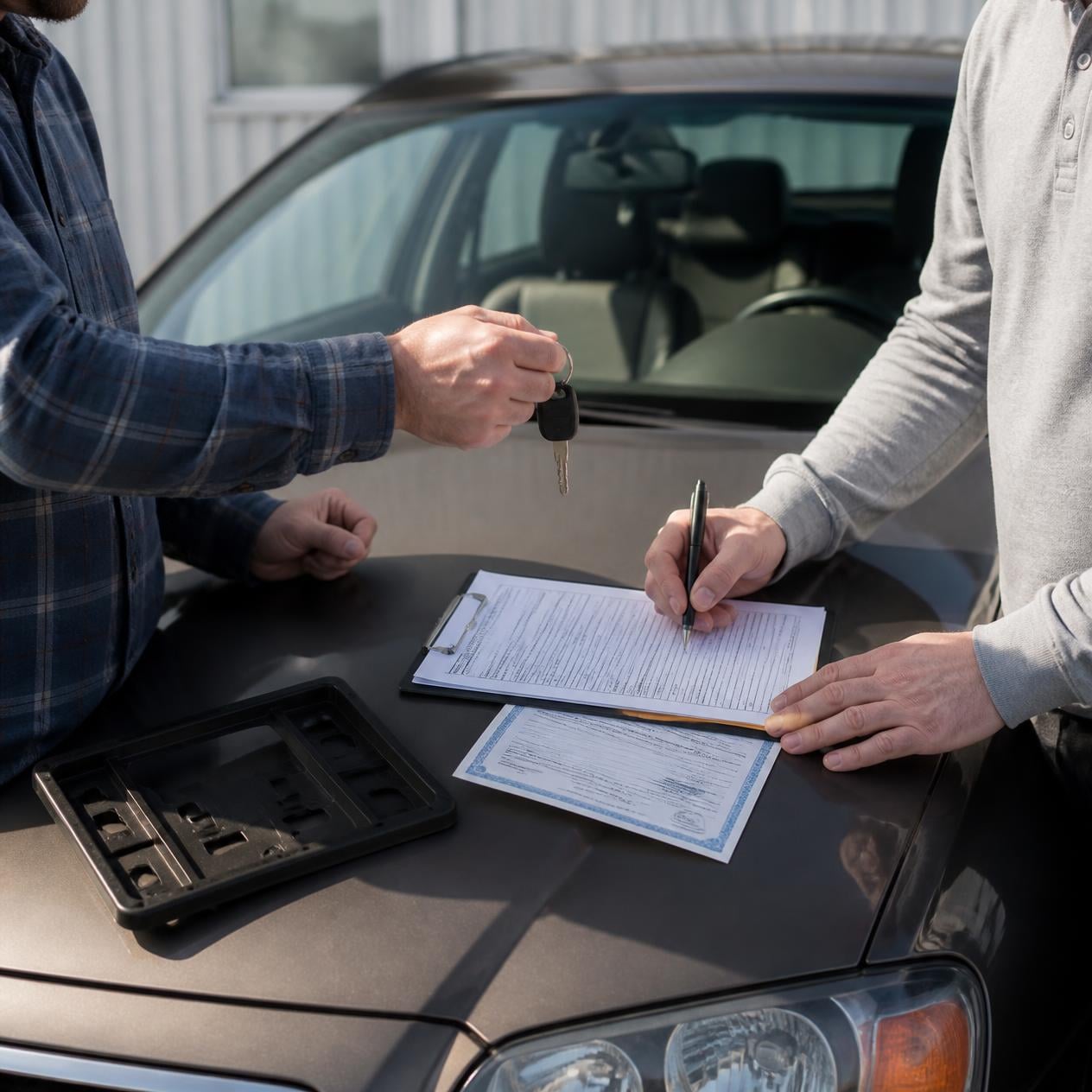
Bill of Sale: Even though it is not legally required in West Virginia, if the title has a space for the purchase price a bill of sale is still a good idea. A bill of sale acts as a receipt and provides a record of the terms of the sale. The bill of sale should include the year, make, model, and VIN of the vehicle, purchase price, date, and signatures of both buyer and seller.
Completing the Purchase of a Vehicle in West Virginia
After completing the research on the vehicle, performing an inspection on the vehicle and reviewing the associated paperwork, you are now ready to complete the purchase of the vehicle.
Negotiating the Purchase Price of a Vehicle
By performing a thorough inspection and gathering information from the vehicle history, you are well-positioned to negotiate for a fair and equitable purchase price for the vehicle. If any deficiencies were identified from the inspection report (PPI), you should have used the estimated cost of repairs to negotiate down the purchase price. Use polite language but communicate your firmness regarding the price, and if you cannot agree upon a reasonable price, do not hesitate to leave.
Paying for the Vehicle
It's advisable to avoid using hard currency whenever possible. When paying for the vehicle, it is better to use a cashier's check or wire transfer as there will be a secure paper record documenting the transaction. You should also meet the seller at your bank to visually complete the transaction. This is the safest method for conducting this type of transaction.
Transfer and Registration of Title
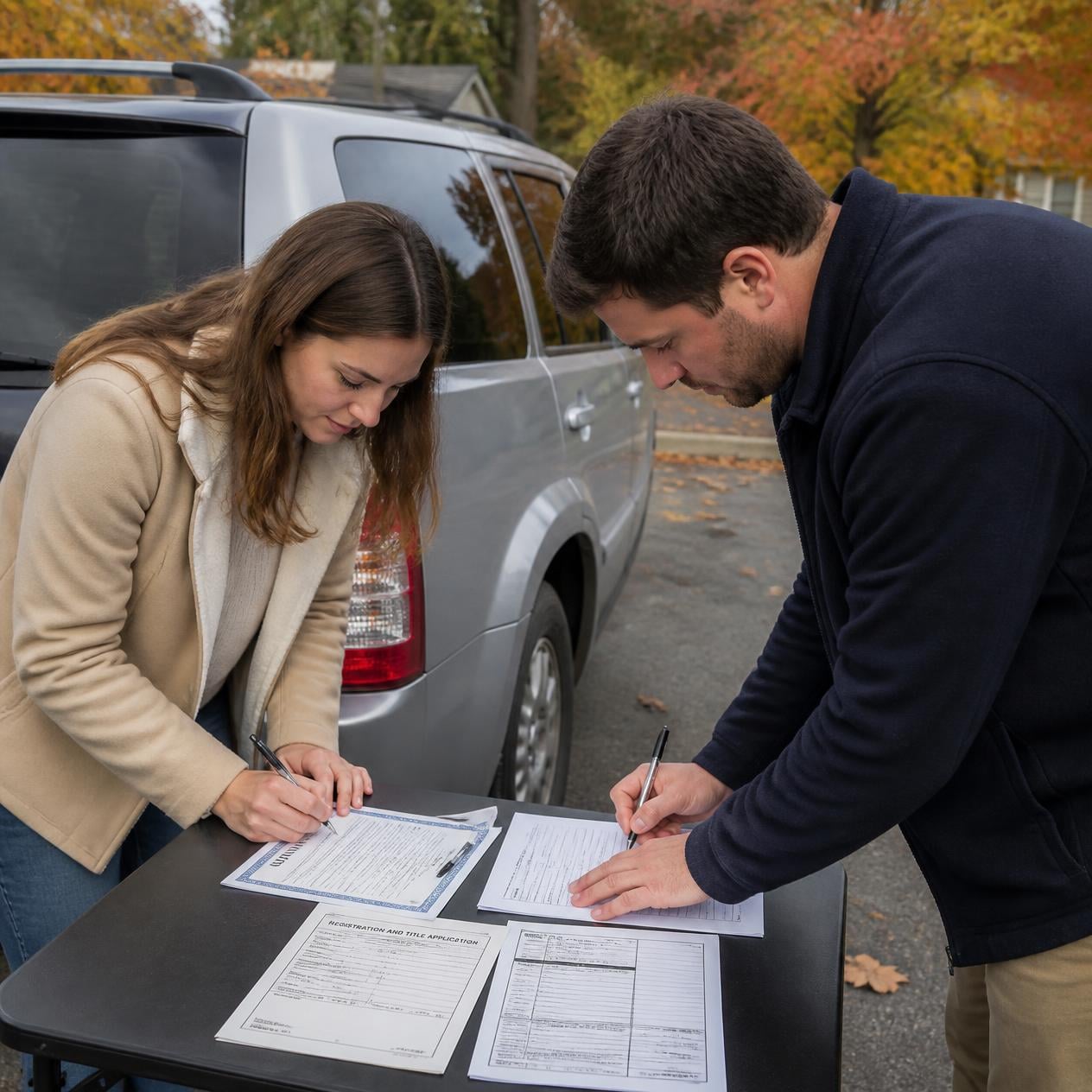
In West Virginia, sellers must sign the back of a vehicle title in ink and then have their signature notarized. Do not accept a signed title without being present. To register and transfer ownership into your name, once the title has been signed and notarized, it will be necessary for you to take the signed and notarized title to your local DMV office to complete the transfer of ownership and the registration of the vehicle. You will need:
a signed and notarized vehicle title.
a completed Bill of Sale (Form DMV-7-TR).
proof of residency in the state of West Virginia.
proof of insurance on the new vehicle.
payment for the title fee and 6% sales tax on the purchase price.

Be Cautious: Guidelines for Meeting Sellers
Because most private sellers are typically honest, exercise caution and make sure to meet in a secure and well-populated place. An example would be meeting in a well-lit, busy area of a public building, such as a police department. Many police departments allow you to use their parking lot to conduct a safe transaction.

Always Bring Someone With You: Always take someone with you when going to meet a seller or check a car.
Use Your Intuition: If something appears to be too good, or if a seller seems shady or untrustworthy, then don't hesitate to move on from that deal.
Do Not Wire Money Essence; When dealing with a scam, a seller will often request a deposit for a car. You should never send funds prior to inspecting the car in person and confirming the title.
By utilizing a platform like KarKiosk that carefully screens each seller and keeping these suggestions in mind, you will be able to confidently navigate the used car market and locate a reputable used car that works for your criteria and budget. Happy Car Search!