

Bill of Sale Aug 31, 2026
Purchasing a vehicle from a private seller can be an easy way to obtain a great price. You typically avoid paying dealer fees, plus you are able to negotiate directly with the seller. While price negotiations and completing the paperwork are the major parts of the transaction, it is also very important to understand taxes and fees, as these costs will play a significant role in your total cost of ownership.
This article will explain the types of taxes that can be associated with a private sale of a car, including sales tax, as well as title transfer and registration fees. The information provided in this article should give you the proper information necessary to help you make an informed decision and navigate the entire process successfully.

Sales Taxes: The Major Charge
Typically, the largest charge you can expect to incur is the sales tax. With the sale of a t-shirt, for example, the sales tax is charged at checkout; however, with respect to private sales of automobiles, you will pay the sales tax when registering the vehicle with your local Department of Motor Vehicles (DMV) or equivalent state agency.
What are the Methods of Calculation for Sales Tax?
Sales tax rates are set by state and local governments and are computed using one of the following two methods.
The Purchase Price: This method is commonly used. The amount of sales tax is calculated off the amount you paid for the vehicle. For example, if you purchase a vehicle for $10,000 and your state has a 6% sales tax, you would pay $600 in sales tax.
The Fair Market Value (FMV) of the Vehicle: There are some states who calculate the sales tax based on the standard book value of the vehicle such as Kelley Blue Book/NADA guides. This means that if you purchased a vehicle below its FMV, you may be taxed based on its book value as opposed to the actual purchase price (i.e., you received a deal).
Be sure to check your State DEQ for more specific details regarding the method used to calculate the sales tax on your car.
Varying State-to-State
There are wide variations in the sales tax policy from state to state. Sales tax laws are not uniform across the entire country.
No Sales Tax States: Certain states do not impose a statewide sales tax on vehicle purchases. These states include Alaska, Delaware, Montana, New Hampshire, Oregon, and if you reside in any of these states you do not need to be concerned with this section.
Taxable Sales by County/City: In some states, local municipalities (cities/county) are permitted to assess local sales tax in addition to state sales tax. As a result, the total sales tax may be greater, depending on where you live. For example, a state may have a 4% sales tax and your city may have a 2% sales tax, resulting in a total rate of 6% sales tax for you.
Trade-In Tax Credits: When you purchase a vehicle from a dealership, the value of your trade-in vehicle will usually be deducted from the amount subject to state sales tax. If you are buying from a private seller, this advantage is typically not provided; therefore, you will pay state sales tax on the entire purchase price of the vehicle.
The first step in determining how to accurately budget for your new vehicle is to learn about the local private transaction sales tax policy.

Understanding Title and Registration Costs
Now that you have paid the tax, you must legally put the vehicle into your name by paying for its title and registration. Title and registration costs are separate from sales tax as they go directly to the DMV.
What is a Title?
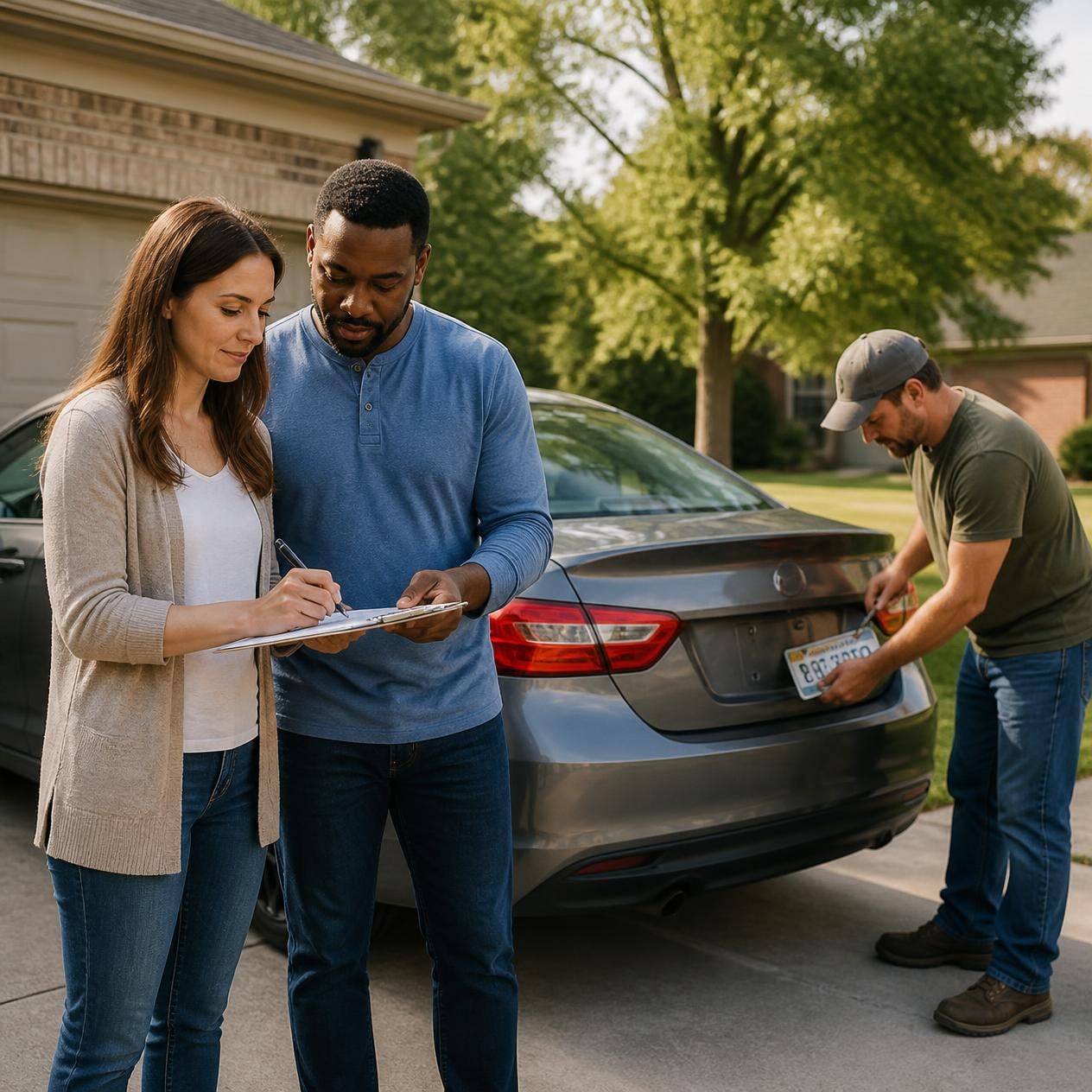
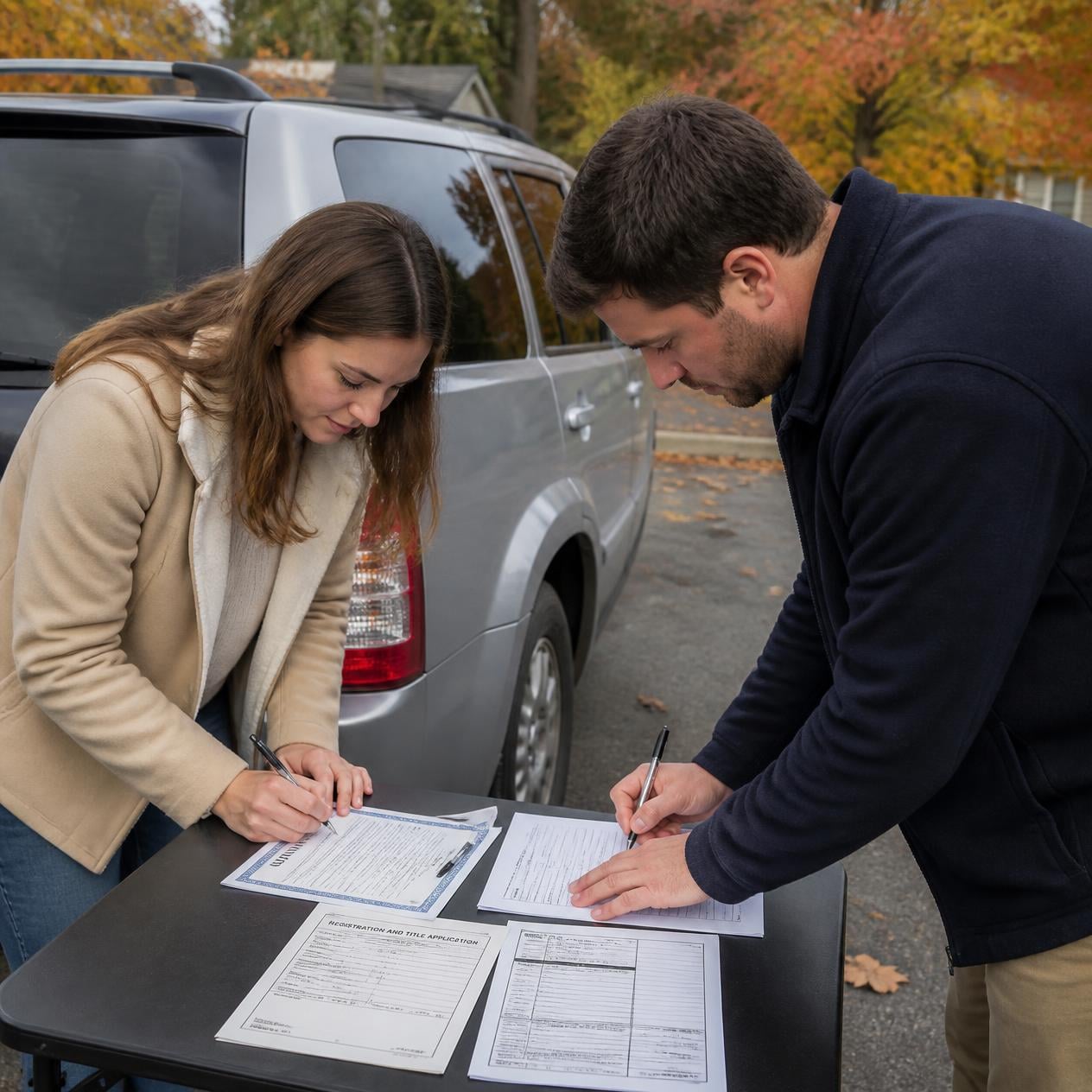
When purchasing a vehicle, the seller must provide a signed title to the buyer as proof of ownership. After receiving the signed title, the buyer must go to the DMV to apply for a new title in their name. This process is referred to as transferring a title.
Title Transfer fee
Each state has its own fee structure for the transfer of ownership on a vehicle’s title. Most states charge a flat fee for transferring ownership rather than charging based on the value of the vehicle, which can vary from approximately $20 to more than $150.
The exact transfer fee may differ from state to state, so please consult with your local DMV for precise rates.
Fee Type | Typical Cost Range | Purpose |
Title Transfer Fee | $20 - $150+ | To legally transfer ownership and issue a new title document in your name. |
Lien Recording Fee | $10 - $25 | Applicable only if you took out a loan; it records the lender's interest in the vehicle. |
Duplicate Title Fee | $15 - $75 | Paid if the original title was lost and a new one needs to be issued before the sale. |
Costs Associated with Vehicle Registration
In order for you to operate a vehicle legally on public roadways, you will need to register that vehicle. Vehicle registration is usually completed in conjunction with the vehicle title transfer. As compared to the costs associated with transferring ownership of a vehicle, vehicle registration fees tend to be more complicated and typically, must be renewed yearly or bi-yearly.
Vehicle Registration Fee Costs will be at the discretion of the registering agency based on several factors such as:
Vehicle Weight
Vehicle Age
Fuel Type (If the vehicle is an Electric Vehicle (EV), the associated fee may be different)
Vehicle Value
County/City of Residence
Due to these variables, vehicle registration costs can range anywhere from under $50 to hundreds of dollars for some vehicles. Vehicle registration fees are a significant part of determining the total sales tax and fees due for any used vehicle purchase.
Other Costs Related to Purchasing a Vehicle from a Private Seller
In addition to vehicle title transfer and DMV fees, there are several other expenses that can arise when purchasing a vehicle from a private seller. Understanding what those expenses may be will allow you to create an accurate budget for your vehicle purchase.
Inspection Fees for Smog and in Some Cases, Safety Inspections
In some states and within certain counties, you may be required to have your vehicle inspected for emissions (often referred to as "smog" checks) or safety inspections prior to registering the vehicle with the state.
Who Pays? Depending on the state you live in (e.g., California), the seller is required by law to provide the buyer with a current, valid smog inspection certificate. In other states, however, the buyer is responsible for obtaining the inspection.
Cost: Costs of smog and safety inspections typically range from $30-$70 depending on where you live. If your vehicle fails the inspection, you are also responsible for the cost of repairs necessary to bring it into compliance.
Fees for License Plates
If you're transferring a license plate from another vehicle, you won't have to pay the fee for that plate. However, you will need to purchase a new plate if you don't have one to transfer. License plates are a one-time fee, in addition to the annual registration renewal fee. Specialty and personalized plates may also be available for additional fees.
Transactions Involving Gifts & Family Members
What happens when a family member gives you a car? Do you have to pay taxes on it? It depends on the State in which you live.
Tax Exemptions: Many States exempt vehicle sales taxes for family transfers between an immediate family member (spouse, child/parent). However, the "immediate family" definition has been strictly interpreted.
Gift Affidavits: You will likely need to sign a sworn statement (also known as a Gift Affidavit) stating the car was a legitimate gift and no consideration was given.
Purchases at Low Prices: While you can buy a car from a family member for an extremely low price, the Department of Motor Vehicles (DMV) may question the transaction and charge taxes based on the fair market value of the vehicle.
Before conducting any transactions involving gift vehicles, check your State for any tax exemption rules before assuming the transaction will be tax-exempt.

Comparing the Private Seller and Dealership
When deciding whether to purchase a vehicle through a private seller or dealership, you will want to compare the advantages and disadvantages of each, particularly with regard to fees and convenience.
Aspect | Private Party Sale | Dealership Purchase |
Pros | - Lower purchase price is common. | - Handles all paperwork (tax, title, registration). |
Cons | - You are responsible for all DMV paperwork. | - Higher vehicle prices. |
If you buy a car through a private sale versus going through a dealer, you can save a considerable amount of money (the sticker price) but will need to put in more work to properly fill out all of the required legal and financial paperwork.
A Buyer's Guide, Step-By-Step
Are you feeling confused and a little lost? Follow this simple checklist.
Set A Price - Negotiate the final sale price with the seller.
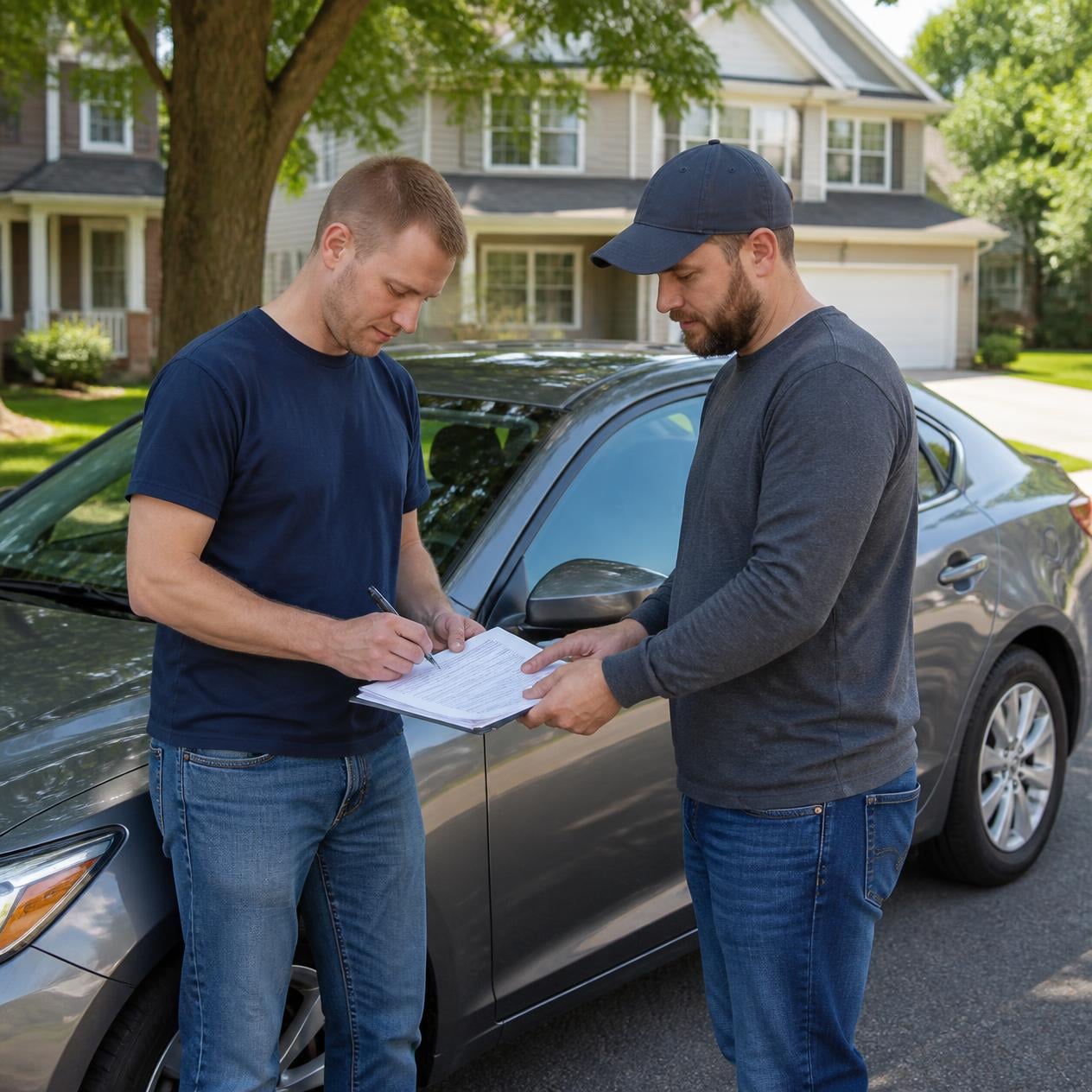
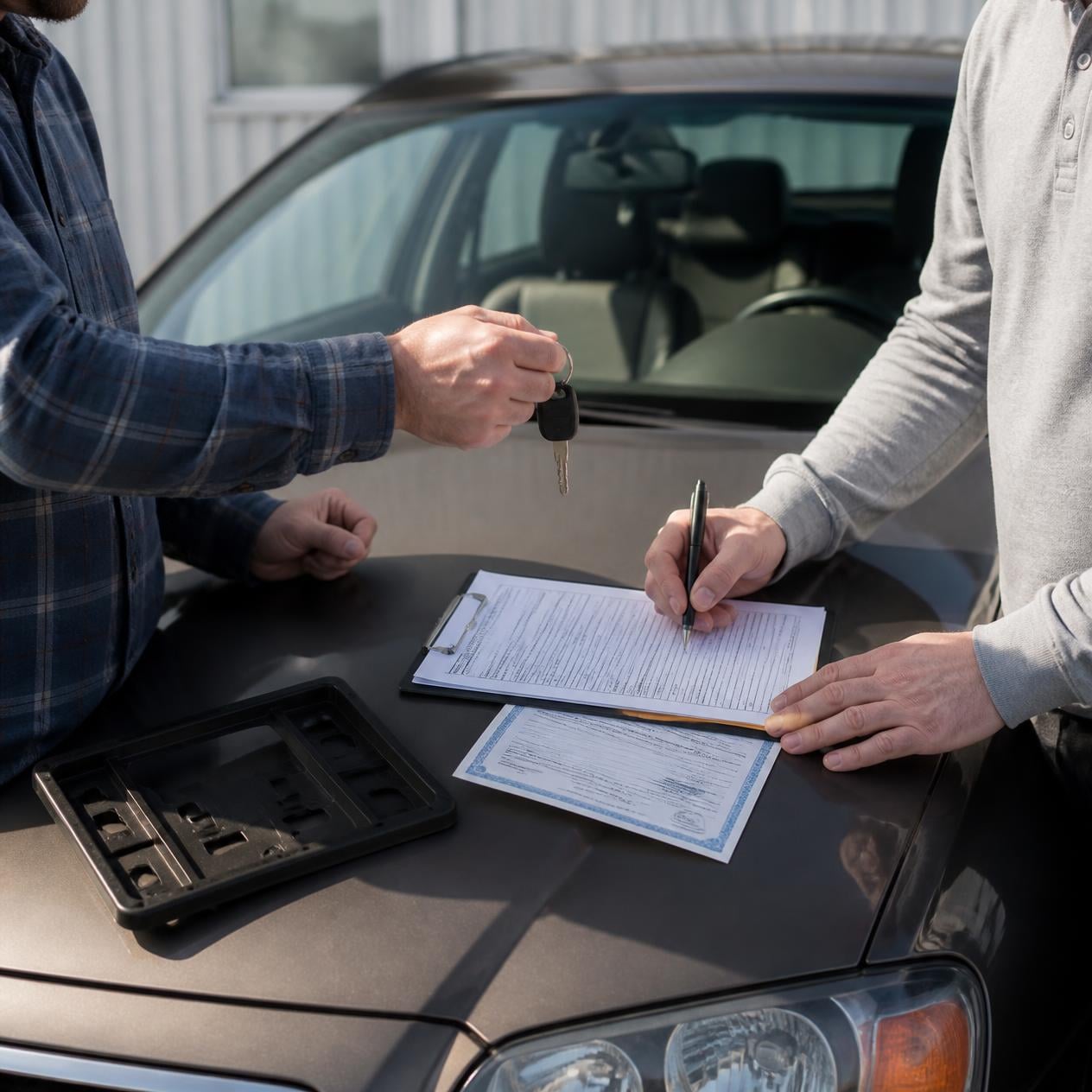
Create A Bill Of Sale - This document will contain the vehicle's information (vin number, make/model), total sale price, the date of sale, and signing by both buyer and seller. You can find a lot of states' bill of sale templates on the internet, including many DMVs.
Check the Title: The seller should have the title of the vehicle legally. Verify that the VIN showing on the title matches the VIN located on the vehicle. Look for any open liens (loans) listed on the title as well. The lien must be paid off and released by the financial institution prior to completing the sale.
Make Your Payment - After the above steps have been completed, you can complete the payment to the seller.
Ensure Obtaining the Signed Title: In order to transfer ownership of a vehicle, the seller must sign the section marked "Transfer of Ownership" on the back of the title. Avoid leaving the sale unless you have received a signed copy of the title.
Visit the DMV: After obtaining the signed title, bill of sale, insurance policy, and driver's license, go directly to the DMV with all necessary documentation in hand.
Pay for Taxes and Fees: When visiting the DMV, expect to pay sales tax, title transfer fee, and registration fee based upon your transaction.
Receive Plates and Registration: After submitting the above payments, the DMV will provide either the registration and license plates (or a temporary pre-printed registration tag) for the vehicle and allow you to legally drive on the roadway.
Online marketplaces such as KarKiosk.com are excellent online resources allowing users to search for private parties and view multiple vehicle comparisons whereby they can access a large assortment of available options before beginning their searches for new vehicles.

Final thoughts
Purchasing from a private party can provide you with a great way to save money on vehicle ownership, but success comes from preparation. If you do some research on the DMV's tax structure and other fees, it will help keep your budget accurate and avoid any unexpected expenses later on down the line.
Remember that you are the one in charge of the vehicle buying process- you gather the documents and do your research, and you'll be able to effectively navigate through the process of purchasing a vehicle from a private seller.