

Bill of Sale Aug 31, 2026
Selling a car in your driveway or buying one from a stranger online feels simple, right up until something goes wrong. Maybe the buyer never registers the car and you keep getting parking tickets.
Maybe the seller says the odometer reading was "just an estimate." A bill of sale is the one-page fix for almost all of that. It is proof of what was sold, for how much, and to whom, signed by both people on the day it happened.
This guide breaks down what a bill of sale is, when you legally need one, what belongs on it, and how buyers and sellers can each protect themselves. Whether you are selling your old sedan to a neighbor or buying a used truck from someone three states away, the paperwork habits in this guide will save you time, money, and a lot of stress.
What Is a Bill of Sale?
A bill of sale is a short written record of a private sale. For a car, it usually includes the make, model, year, and Vehicle Identification Number (VIN), the sale price, the date, and the names, addresses, and signatures of both the buyer and the seller.
It is not the same as the title. The title proves who legally owns the car. The bill of sale proves that ownership changed hands on a specific date for a specific price. Many state motor vehicle departments ask for both documents when a buyer registers a used car, especially if the title alone does not show the sale price or an odometer reading.
Why a Bill of Sale Matters for Both Sides
A bill of sale is one of those documents nobody thinks about until they need it. Then it becomes the only thing standing between a smooth resolution and a drawn-out argument.
1
Protection for the Seller
Once you sign a bill of sale marked "sold as-is" with the buyer's name and the date, you have a paper trail showing the car was no longer your responsibility as of that day. If the buyer gets a parking ticket, causes an accident, or simply never transfers the title, the bill of sale is your evidence that the car changed hands before that happened.
2
Protection for the Buyer
A signed bill of sale backs up the price you actually paid, which matters at tax time and if the deal is ever questioned. It also documents the odometer reading and any as-is or warranty language, so there is a written record of exactly what was promised at the point of sale.
Why a Bill of Sale Matters for Both Sides
A bill of sale is one of those documents nobody thinks about until they need it. Then it becomes the only thing standing between a smooth resolution and a drawn-out argument.
1
Protection for the Seller
Once you sign a bill of sale marked "sold as-is" with the buyer's name and the date, you have a paper trail showing the car was no longer your responsibility as of that day. If the buyer gets a parking ticket, causes an accident, or simply never transfers the title, the bill of sale is your evidence that the car changed hands before that happened.
2
Protection for the Buyer
A signed bill of sale backs up the price you actually paid, which matters at tax time and if the deal is ever questioned. It also documents the odometer reading and any as-is or warranty language, so there is a written record of exactly what was promised at the point of sale.
Do You Legally Need One? State Rules Explained
Most states do not require a notarized bill of sale for a private car sale, but a growing number require the document itself, and a handful require the signature on it (or on the title assignment) to be notarized. Rules also change from year to year, so always confirm with your state's Department of Motor Vehicles or equivalent agency before your sale date.
The table below gives a general picture of how requirements are grouped across the country. Treat it as a starting point, not a substitute for checking your state's current rules.
| Requirement Level | General Pattern | What Buyers and Sellers Should Do |
|---|---|---|
| Bill of sale itself must be notarized | A small number of states, most consistently cited as Louisiana and West Virginia | Schedule a notary appointment before the sale, or use a mobile or online notary service |
| Only the title assignment must be notarized | States such as Kentucky, North Carolina, Ohio, Oklahoma, and Wyoming, depending on current statute | Bring the title (not just the bill of sale) to the notary along with photo ID |
| No notarization required, but a bill of sale is still requested by the DMV | The majority of states, including large markets like California, Texas, and Florida | Fill out a complete bill of sale anyway; it speeds up registration and protects both parties |
| No state form or notarization required | Handful of states with no standard requirement | Still recommended for any private sale over a few hundred dollars |
What to Include in a Car Bill of Sale
A bill of sale does not need to be fancy, but leaving out one of the core fields can cause a headache at the DMV counter later. At minimum, include:
• Full legal names, addresses, and phone numbers of the buyer and seller
• Vehicle year, make, model, color, and body style
• Vehicle Identification Number (VIN), copied exactly from the dashboard or door jamb sticker
• Odometer reading on the day of sale, with a note if the mileage is exact or "not actual"
• Sale price, and whether it was paid in cash, by check, wire, or financing
• Sale date and location (city and state)
• Condition statement, most often "sold as-is, no warranty expressed or implied"
• Signatures of both parties, plus a notary block if your state requires one
If the car is a gift, being transferred between family members, or sold for a nominal amount like one dollar, say so directly on the bill of sale. This avoids confusion with your state's tax authority later, since gifted vehicles are often taxed differently than purchased ones.
Step-by-Step: How to Fill Out and Complete the Sale
1. Confirm the VIN on the bill of sale matches the VIN on the title and the vehicle itself. A single mistyped digit can delay registration for weeks.
2. Agree on the final price in writing before you sit down to sign anything, including how any deposit will be handled.
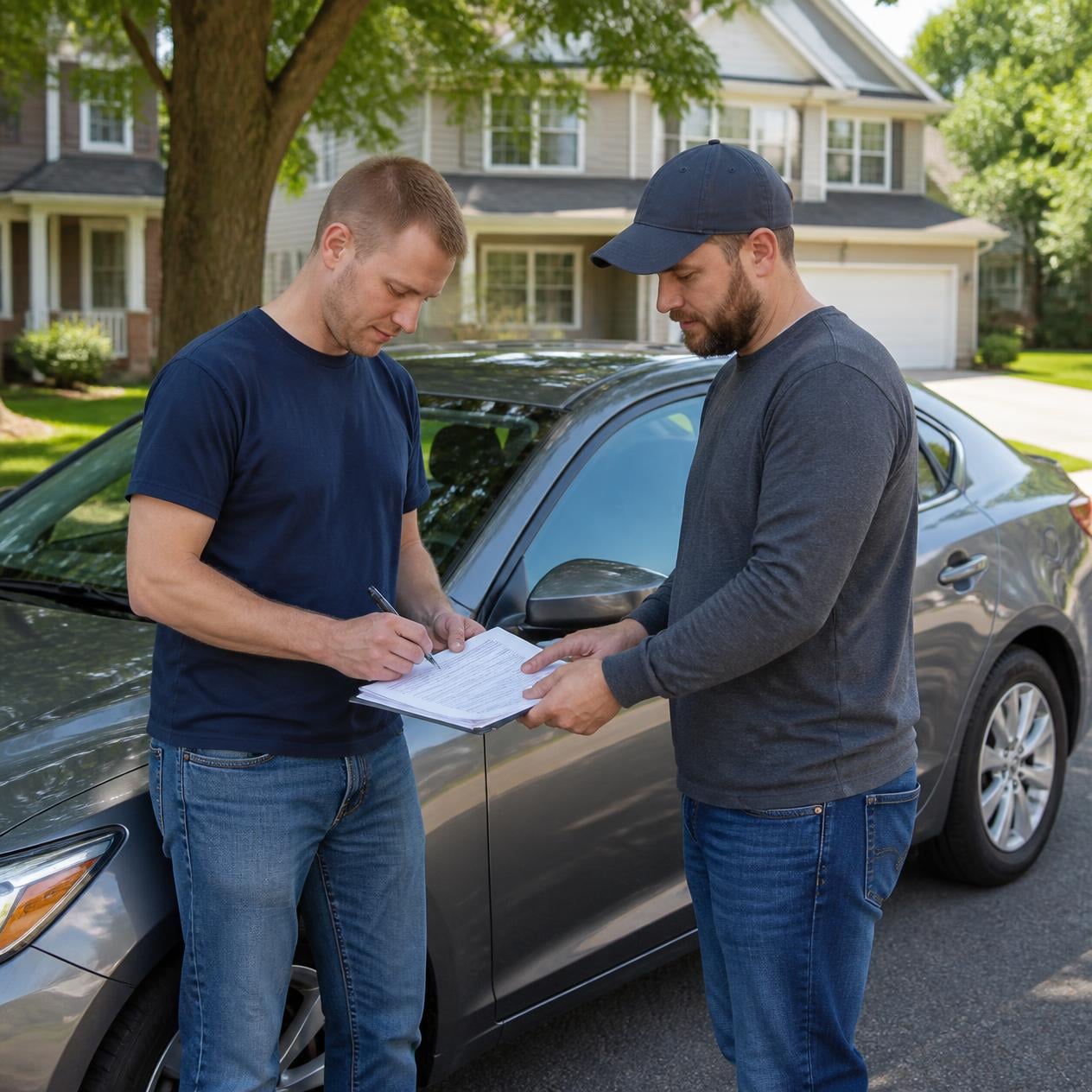
3. Fill out both copies of the bill of sale together, in person if possible, so both parties see the same information.
4. Record the odometer reading directly off the dashboard at the time of signing, not from memory or an old inspection report.
5. Sign and date both copies. If your state requires notarization, do this step at the notary's office or with a mobile notary present.
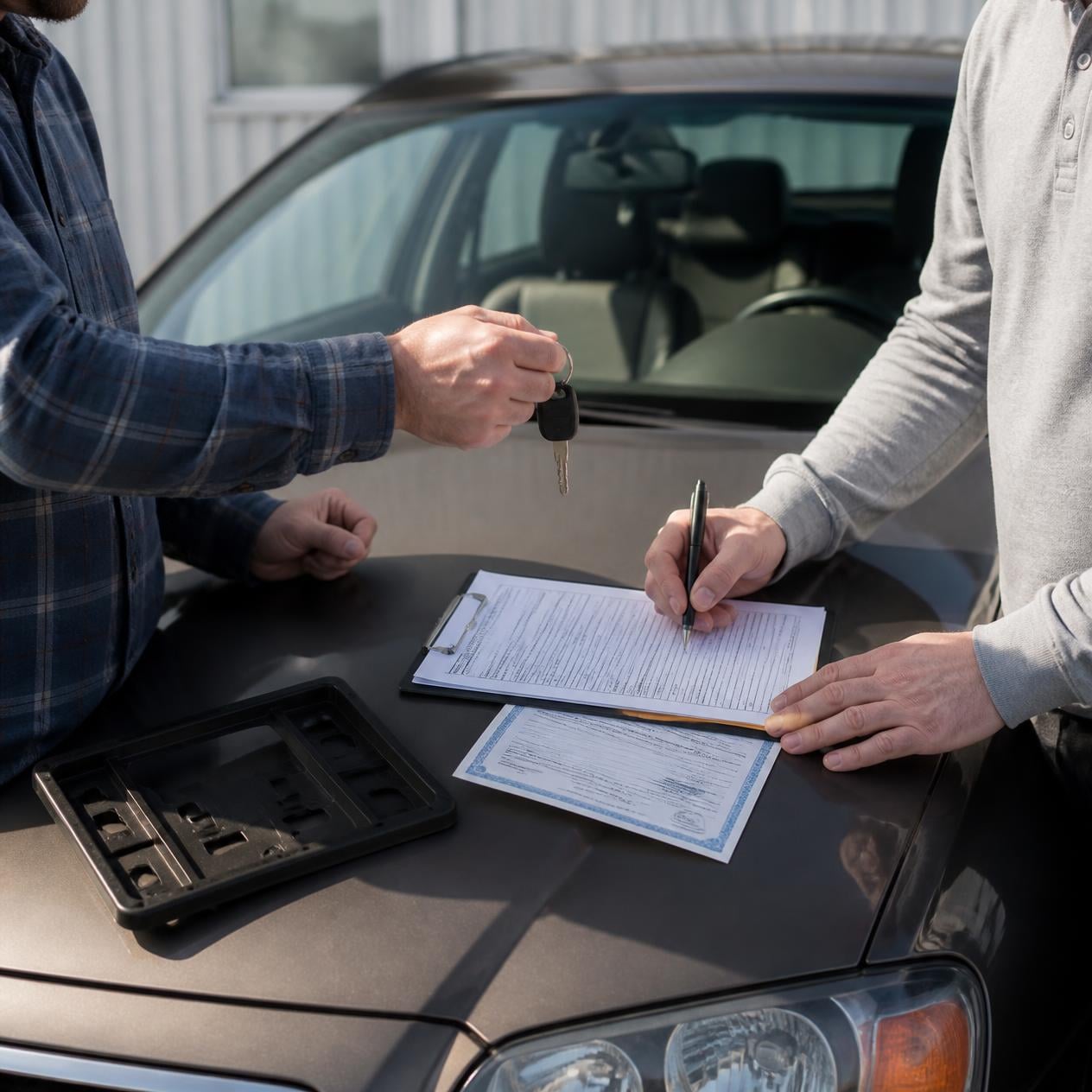
6. Exchange the signed title, keys, and any maintenance records at the same time you hand over payment.
7. Keep your own copy of the bill of sale indefinitely. Sellers in particular should hold onto it as proof the car was no longer theirs after the sale date.
8. Buyers should register the vehicle and transfer the title within their state's required window, often 10 to 30 days, to avoid late fees.
Buyer vs. Seller Checklist
Both sides walk into the same transaction with different priorities. Here is a side-by-side look at what each person should double-check before the sale is final.
| Task | Buyer | Seller |
|---|---|---|
| Verify VIN matches title and vehicle | Yes, before paying | Yes, before signing |
| Check for liens on the title | Yes, through a title check or lender payoff letter | Confirm loan is paid off, or arrange payoff at sale |
| Record odometer reading | Confirm it matches the dashboard | Disclose accurately; understating mileage is fraud |
| Get a bill of sale copy | Keep for registration and tax records | Keep as proof of transfer of responsibility |
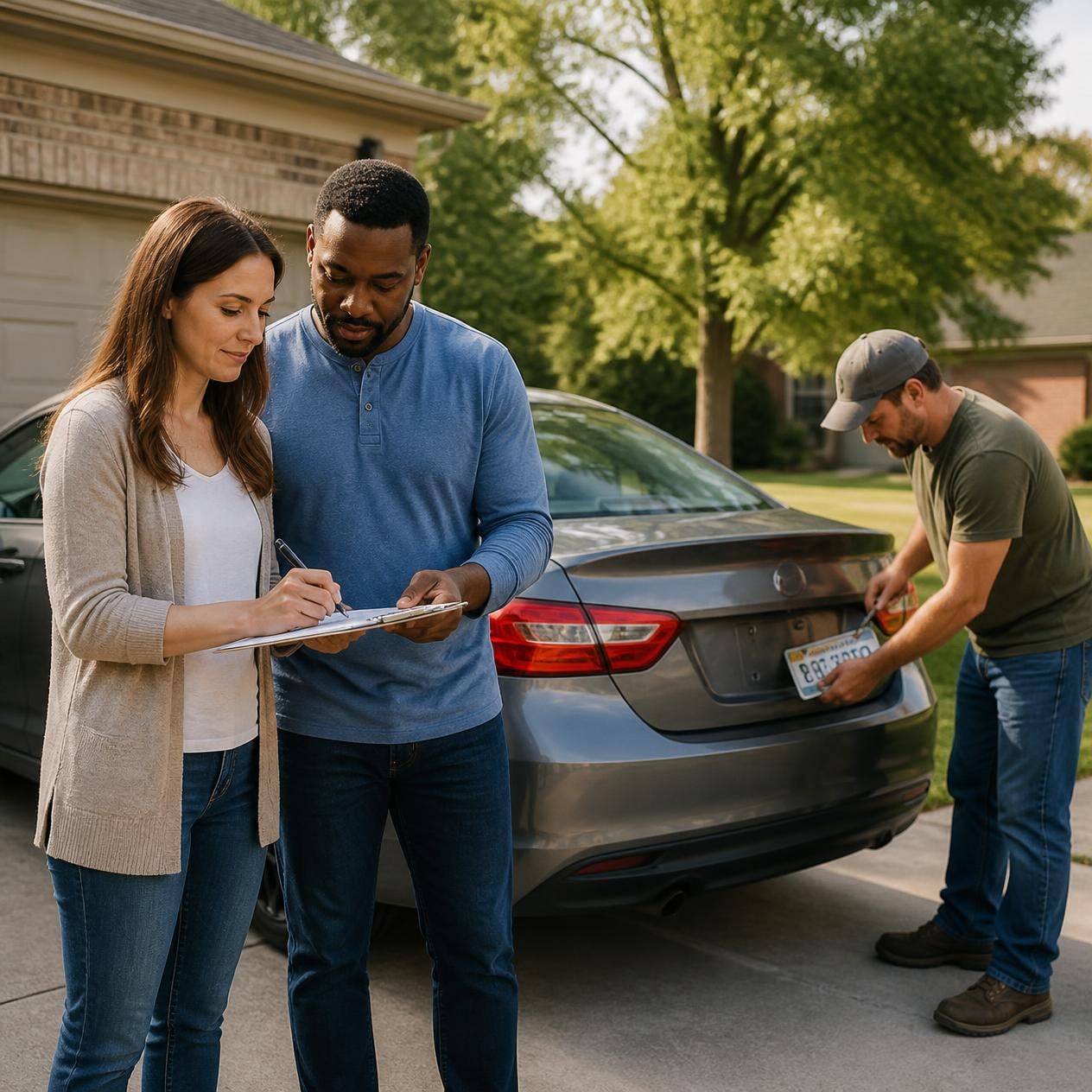
| Remove personal items and plates | Not applicable | Yes, unless local law lets plates transfer with the car |
| Notify DMV or insurer of the sale | Register and insure the car promptly | Cancel or transfer insurance; report the sale if required |
Bill of Sale vs. Title vs. Registration: What Is the Difference?
These three documents get mixed up constantly, but each one answers a different question.
1
Title
Who legally owns the car. This is the document that gets signed over from seller to buyer and filed with the state.
2
Bill of Sale
What was sold, for how much, and when. It supports the title transfer with sale details the title itself may not include.
3
Registration
Permission to drive the car legally in a given state, tied to license plates and renewed annually or biennially.
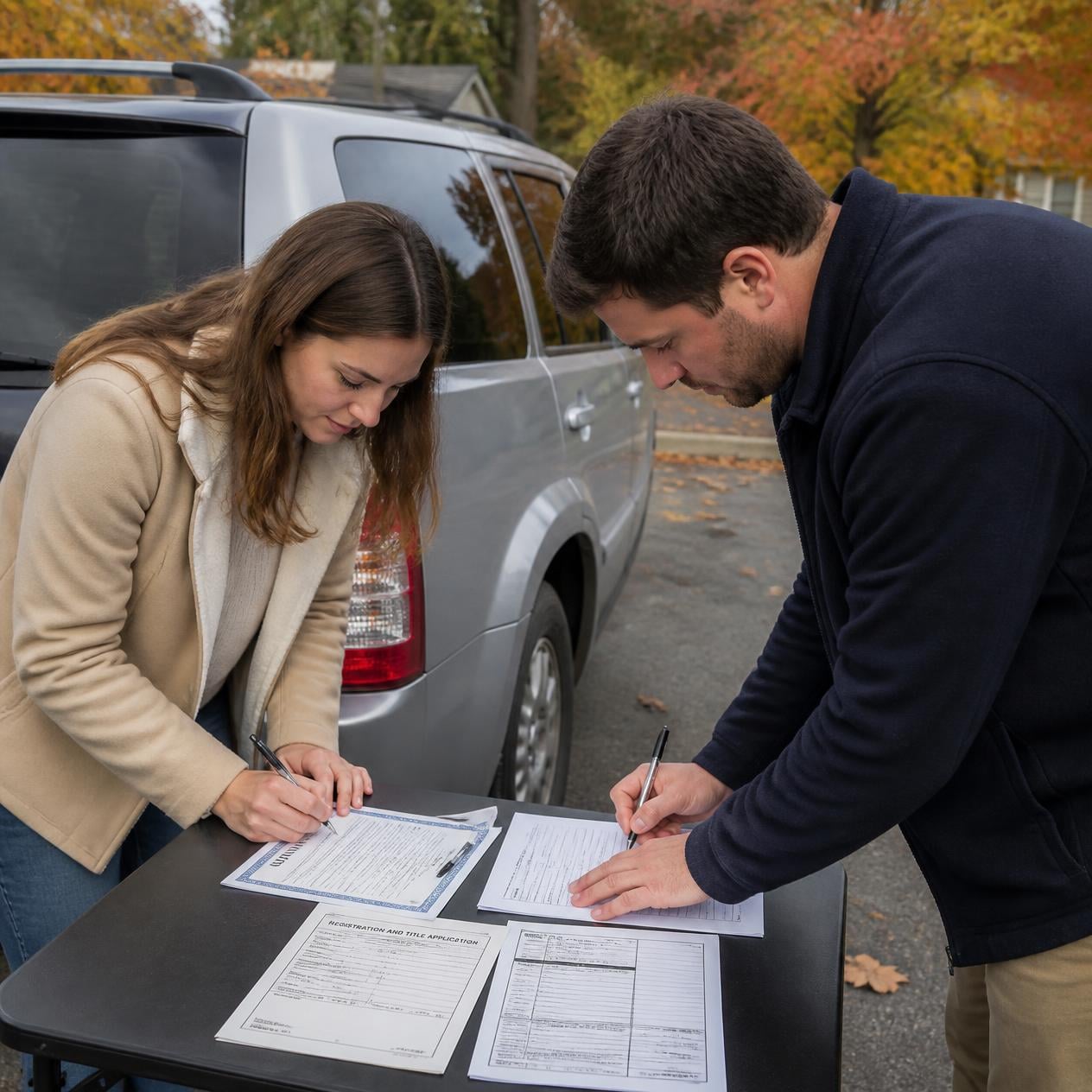
A buyer typically needs all three lined up in sequence: sign the title over, complete the bill of sale, then register the car in their own name using both documents plus proof of insurance.

Common Mistakes to Avoid
Most bill of sale problems come from rushing the paperwork after already agreeing on a price. A few habits prevent almost all of them.
• Leaving the buyer's name blank on a signed title, sometimes called an "open title," which can leave the seller liable if the car changes hands again informally
• Writing down a lower price than what was actually paid to reduce sales tax, which counts as tax fraud in most states
• Forgetting to note existing damage, warning lights, or known mechanical issues, which can lead to a dispute later
• Skipping a lien check, so the buyer later finds out the bank still has a claim on the car
• Not keeping a copy of the signed bill of sale, leaving no proof of the transaction if a question comes up months later
Digital Bill of Sale: Is It Valid?
Yes, in most states a printed template filled out by hand, a typed PDF, or a form completed through an online tool all carry the same legal weight, as long as it includes the required information and both parties sign it. Some states also accept remote online notarization, where a licensed notary verifies identity and witnesses the signature over live video.
If you are buying or selling across state lines, save a digital copy in addition to any paper copy. It is easier to email a PDF to a new state's DMV than to track down a paper original later.
Notarization Requirements at a Glance
The chart below illustrates, at a glance, how the roughly fifty states and Washington D.C. break down by notarization requirement level. Numbers are approximate and grouped for illustration; always verify your own state's current rule before a sale.

Tips for a Smooth, Safe Transaction
A little preparation on both sides turns a private car sale from a nerve-wracking exchange into a routine errand.
• Meet in a public, well-lit location for the handoff, or at a local police department's designated "safe exchange" spot if one is available
• Confirm payment has actually cleared before handing over keys and the signed title, especially for cashier's checks or digital transfers
• Take a few photos of the car's condition and the odometer reading on the day of sale, in addition to the written bill of sale
• Bring a government-issued photo ID to the signing, since many notaries and some DMVs require it
If you are listing a car for sale or browsing used vehicles online, doing your research on a platform built around private-party transactions makes the paperwork side easier to get right the first time. KarKiosk (karkiosk.com) is built specifically around U.S. private car sales, with guides and tools that walk both buyers and sellers through each step, including the bill of sale, from first listing to final signature.

Final Thoughts
A bill of sale takes ten minutes to fill out and can save both a buyer and a seller from months of back-and-forth if something goes sideways after the sale. Treat it as a required step in every private car sale, not an optional extra, and keep your copy long after the transaction closes.