

Bill of Sale Aug 31, 2026
When purchasing a pre-owned automobile rather than acquiring a brand new automobile (for consumer loyalty only), time savings will amount to thousands of dollars. Conversely, purchasing a previously owned automobile poses several risks. The primary concern for many consumers when considering the purchase of a previously owned vehicle is the possible risk of procuring a defective automobile or junk automobile which has been involved in previous wrecks or has a history of unreliable operation.
By being aware of certain warning signs, you increase your ability to avoid purchasing an unreliable vehicle, thus reducing the potential for loss. This guide will assist you in identifying possible warning signs throughout your search for a previously owned automobile.
You will find suggestions from searching for a previously owned automobile through viewing a previously owned automobile online to testing the automobile to develop your confidence in knowing you have made an educated decision to purchase.
With the correct information regarding a previously owned automobile, you should have the assurance necessary to productively eliminate the threat of acquiring a defective automobile and drive away with an automobile you can depend upon to provide reliable service.
The Exterior Inspection: What To Look For First
Prior to turning on the vehicle's ignition switch, you will be able to gauge a great deal about the condition and history of an automobile simply by visually inspecting the vehicle. Do not hurry through this step; instead, carefully walk all around the vehicle.
Exterior Red Flags
The car's body is the first line of defense for the car. If there are any inconsistencies in the body it may signify that the vehicle has been in an accident or has not been maintained properly.
Uneven Gaps Between The Body Panels: Inspect the gaps between the doors, hoods, and hatchbacks (on the hatchback) where they attach to the car frame; they should be level and uniform.
Inspect for Color Mismatch: Walk around the vehicle at different angles and good light to discover if color or finish differs between panels. Color mismatches is a classic sign of a vehicle that was repaired. A professional repair will be difficult to detect, however cheap repairs will be easily detected.
Inspect for Overspray: Inspect vehicle at window edges, plastic trim, or under wheel wells. Overspray in these areas is likely an indication the vehicle has been repainted to cover damage, rust, or other issues.
Inspect for Wavy Panels: Check down the side of the vehicle to see if the reflection appears distorted or wavy. Distortion or waviness in reflection may be a sign body filler was applied to fill dents prior to painting; therefore this is a sign of possible collision repair.
Inspect for Rust Bubbles: Surface rust is not unusual on a vehicle which has experienced age. However, rust bubbles under the paint could signal that the vehicle has rusted from the inside out and that you are dealing with a bigger problem to repair. Pay special attention to the wheel arches, rocker panels (the vertical panels below doors), and to the undercarriage of the vehicle.

Signs that Indicate Problems with Mechanical Condition
Inspecting a vehicle's mechanical condition does not require that you be a mechanic. Open hood and look for the following:
Fluid Leaks: Check for signs of active fluid leakage by checking for fluid under the hood and on the ground under the vehicle. The type of fluid is identifiable by the color of fluid. Black or brown fluid will most likely be engine oil; green or orange fluid most likely will be coolant; red fluid will be either transmission or power steering fluid. Any type of fluid leakage will require investigation.
Clean, Shiny Engine Bay: In general an engine bay that looks clean is good; however if the engine bay looks to have recently been steam cleaned an attempt may have been made to cover up or conceal fluid leak(s).
Fluid Levels Low or Dirty: Use both the engine oil dip stick and transmission fluid dip stick to determine if the fluid levels are above the "low" mark. Engine oil should be honey colored; if it is black and looks like sludge, then there is likely a problem. If the fluid levels are low this could indicate a fluid leak and/or that the vehicle has been poorly maintained.
Worn Wires or Belts: Visually inspect the condition of the rubber belts for signs of cracks or wear. Also check the wiring to verify that it is not cracked, exposed or held together with electrical tape. The presence of electrical tape is typically an indication of shoddy electrical repairs.
Here is a quick checklist for the under-hood inspection.
Component | What to Check | Red Flag |
Engine Oil | Pull dipstick, check color and level | Black, sludgy, or below the 'add' line |
Coolant | Check reservoir level and color | Low level, rusty or oily appearance |
Belts & Hoses | Visually inspect for wear | Cracks, fraying, or soft/bulging spots |
Battery | Look at terminals and date | Corrosion (white/blue powder), older than 4 years |
Frame Rails | Inspect the metal frame in the bay | Bent, crinkled, or welded metal |
Car Interior Inspection: Comfort and Red Flags
The condition of the interior of your car can show how well it has been taken care of by its previous owner as well as how comfortable it will be for you while driving the car, since that's where you're going to be spending every minute you're in the automobile.
Unusual Odors: A strong musty or moldy smell may indicate moisture problems in your vehicle or mold growing underneath your carpeting due to leaks. Heavy use of air fresheners may be an indication that someone tried to mask these or other strong odors like from cigarette smoke.
Worn Pedals/Steering Wheels: A vehicle with low mileage should not have a highly worn pedal surface or steering wheel or shifter. If the vehicle has an odometer reading of 30,000 but the pedal, etc. surfaces are worn smooth, it is possible that mileage was rolled back, prior to sale.
Warning Lights on the Dash: When the ignition is turned "on," all of the dashboard warning lights should illuminate and then go out. If there is still a "check engine" light, "ABS light," or "airbag light," there is a problem requiring diagnostics.
Nonfunctioning Electronic Devices: You should test everything. Turn on the radio, turn up/down the heater/air-conditioner, try the power windows and locks, and open the sunroof, etc. Any non-functioning electrical device can potentially be very costly to repair.

The Documents Show Where the Car Has Been
Cars can be ruined by a lack of proper documentation. You should not purchase a car without proper documentation or with mismatched or missing documents.
Conduct A Vehicle History Report
Request a Vehicle History Report using the vehicle identification number (VIN). Services like CarFax and AutoCheck can provide you with information about the vehicle history.

Look for the following key red flags on the history report:
Salvage or Rebuilt Title – A salvage title indicates that the vehicle has been deemed a total loss by the insurance company. A rebuilt title indicates that the vehicle has been repaired and has passed the state's inspection but may still have issues with the structure and electrical system. Purchasing a salvage or rebuilt vehicle could carry a lot of risks.
Odometer Discrepancy – A vehicle history report will track the odometer of the vehicle through the various point of vehicle inspection and service. If the mileage drops at any point, you can be reasonably sure that the odometer has either been reset or tampered with.
Flood Damage – The Vehicle History Report will indicate flood damage on the vehicle. The electronic components of a vehicle can be damaged by flooding, and hidden rust can occur due to flooding.
Multiple Owners In A Short Time – A vehicle that has changed ownership 8 times in a couple of years may indicate that the vehicle has continuing problems and is repeatedly being sold off by its previous owners.
Title & Registration
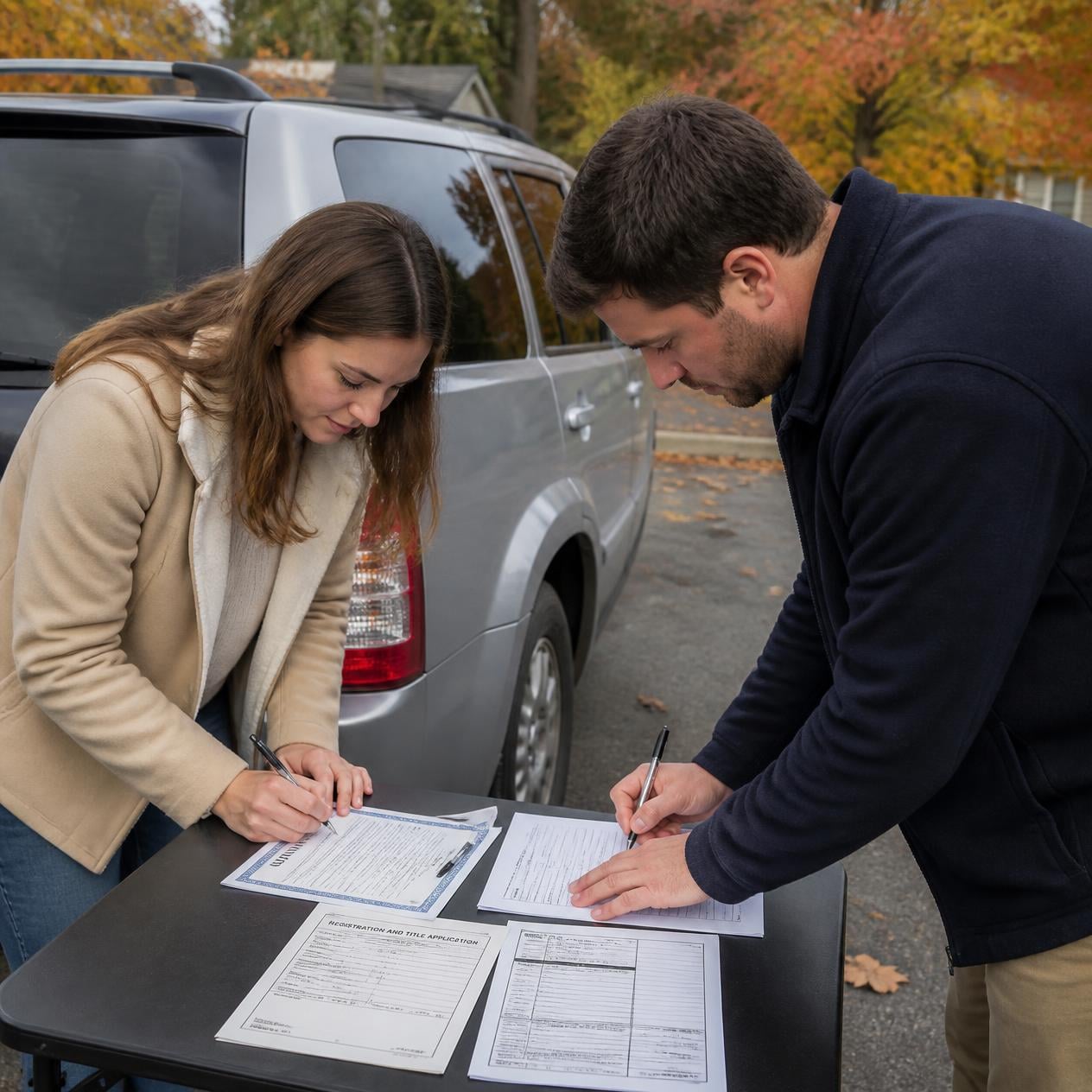
You should see the actual title because the name on the title should match at least one of the ID's of the seller. If the name on the title does not match the name on the seller's ID, there is a possibility the seller is a "curb hunter," meaning the seller is an unlicensed dealer selling a car as a private seller to sell a bad vehicle that does not follow disclosure requirements.
You should also verify that the VIN number on the title matches the VIN number on the vehicle located on the dashboard and at the driver's side door.
The Test Drive - How To Identify Problems
The test drive is usually your only opportunity to evaluate how the vehicle drives under normal driving conditions. To do this, you should conduct the test drive with the radio off while paying close attention to the different sounds and feel of the vehicle.
You should conduct the test drive for a minimum of 20 minutes on several different types of roadways, including city streets and highways if possible.
Here is a list of what you should be listening and feeling for during the test drive:
Engine Noises – You should be listening for any sounds that indicate there may be internal engine problems, such as knocking, clicking, or grinding.
Braking Problems – Your vehicle should brake straight without pulling to one side and the brake pedal should feel solid and not spongy when you apply the brakes. You should also listen for squealing or grinding while applying the brakes.
Transmission Problems – If you are test driving an automatic vehicle, you should feel the vehicle shift through all the gears smoothly. Jerking, hesitation, or loud clunking noises can indicate transmission problems, which are one of the most costly repairs. If you are test-driving a manual vehicle, the clutch should feel solid and smooth until it fully engages and releases; if it feels "sticky" or "grabby," continue looking for another vehicle.
Suspension & Steering Problems – While driving, you should pick a few spots to go over "bumps" on the roadway to evaluate the suspension. The vehicle should not excessively bounce up and down after going over the bump/s. The vehicle should not drift to any side when driving in a straight line; when you make short adjustments to the steering wheel, the vehicle should respond promptly to your steering changes.
Below is a table summarizing a few key feelings and sounds during your test drive and their possible causes:
Sensation or Sound | Potential Problem | Severity |
Car pulls to one side | Wheel alignment, tire issue, or brake problem | Low to Medium |
Squealing or grinding from brakes | Worn brake pads or rotors | Medium |
"Clunk" when shifting gears | Transmission or drivetrain issue | High |
Vibration at high speeds | Unbalanced tires or suspension problem | Low to Medium |
Knocking from the engine | Serious internal engine wear | High |
Pre-Purchase Inspections: The Most Valuable Protection
Even if your own inspection checks out, the last and most critical step is to obtain a pre-purchase inspection (PPI). An independent, certified mechanic will take the car off the ground (usually for a fee of $100 to $200) and perform a thorough inspection on the underside, as well as all areas of the exterior, interior, and engine compartment.
An independent mechanic will be able to identify problems that you may not be able to see, for example:
Structural damage that may be below the car.
Leaking seals that you can't see from above.
Worn components, including shocks or struts.
Fault codes present in the car's computer that do not turn on the engine's light.
If the seller won't allow you to perform an inspection, walk away. A qualified seller with no problems will have no issue with a third-party inspection.

Dealership vs Private Seller - Weighing Your Options
Where you buy your car may also make an impact on the transaction; both dealership and private seller have different pros and cons.
Aspect | Private Seller | Dealership |
Pros | - Often lower prices | - May offer warranties |
Cons | - "As-is" sales with no warranty | - Higher prices |
All the different buying venues don't change how to recognize lemons; they are the same everywhere. So, keep your eyes peeled, trust your gut, and carry on with your search.
The Final Step in Finding the Right Used Car
Patience, observation, and a thorough inspection will yield the best results when determining whether or not a used car may have hidden defects. You can find the majority of major problems by carefully scrutinizing the car's exterior and interior, reviewing all purchase contract and ownership history documents, and test driving the car for a suitable distance.
However, nothing offers the peace of mind of an inspection performed by a qualified technician. Once you have decided to complete the principles, be sure that you apply your principles with a resource to view a catalog of on demand used cars detailed accurately and honestly at a reputable source like https://karkiosk.com/.
It's a fantastic guide to finding a dependable used vehicle; however, no matter how reliable you believe the source to be, you should still conduct your own research. Good luck on your hunt for a used vehicle!