

Bill of Sale Aug 31, 2026
The procedure for selling your vehicle can often resemble a high-stakes wager. You select an arbitrary figure, pray it's not excessive enough to dissuade potential purchasers, whilst simultaneously wishing it's not so trivial that you end up leaving money on the table. However, selling your vehicle should not be based upon hunches, but rather data.
Previously, the only option you had for finding out what your neighbours were asking for their used sedan was through the classified ads published every Sunday in local newspapers, whereas today you have access to vast amounts of data. With the employment of market data tools you can establish a fair price.
This guide will teach you, step-by-step, how to establish a realistic used car market price based upon the use of data, rather than emotion.
The Dangers of Emotional Pricing
All of us have an attachment to our vehicles. We can recall where we went on vacation, the reliable rides to. Unfortunately, potential buyers do not care about your memories. Rather, they are going to pay you for four wheels.
When you set the price for your vehicle based on sentimental attachment (or the way you think it should be valued), you usually have one of the following outcomes:
Overpricing Your Vehicle: Your listing has been sitting stagnant for numerous weeks with no activity. The longer a vehicle sits, the more potential buyers will question if there is a problem. Eventually, you may need to reduce your price, thereby losing any potential for a profit while making yourself appear desperate.
Underpricing Your Vehicle: When you sell a car quickly (in several hours), your initial feelings of happiness may be dulled when you check the market and see that you could’ve had an additional $1,500 from your sale in the area where you live.
Understanding the Different Types of Vehicle Value
Before you go to your computer and start searching for cost information on your vehicle, you should understand that there is not only one value; there are three primary types of value available to you as the seller. Each has a different value depending on the buyer.
1. Trade-in Value
The trade-in value is generally the lowest of the three because this is the price that dealerships will typically pay for your vehicle. Trade-in value is typically low because the dealership must recondition, advertise and make a profit on reselling the vehicle.
2. Private Party Value
The private party price is typically the best price for most sellers because it is what you could expect to receive if you sold the vehicle directly to a private individual. Because you are taking care of the listing and displaying the vehicle on your own, the private party price will usually be higher than the trade-in value.
3. Retail Value
The retail value is the highest of the three values and represents the price that a dealership will charge. Unless you are providing financing as well as a warranty, you should not use this price as a seller. Many private sellers miscalculate the retail price by walking onto dealership lots In most cases, you cannot.

Top Market Data Tools for Car Pricing
Use trustworthy sources to determine your baseline numbers. Don’t depend on only one; combine data from multiple places.
Kelley Blue Book (KBB)
Kelley Blue Book (KBB) is the "gold standard" for many American consumers who are trying to purchase a used vehicle, as they often utilize their smartphones to research the vehicle they are interested in prior to making a purchase.
Edmunds
Edmunds' True Market Value (TMV) lets users adjust vehicle market value using local average paid prices, not just asking prices, for a realistic estimate.
NADA Guides
NADA Guides are frequently utilized by banks and credit unions to determine the value of loans for their customers. For a buyer who is pursuing a loan to complete the purchase of the vehicle, this number is much more beneficial than KBB value.
Local Listings
Local listings reveal demand for specific used vehicle makes and models. Local pricing often differs sharply from national averages, so factor these variations into used vehicle pricing.
A Step-by-Step Guide for Pricing Your Car
In order to produce an accurate number the first time, it is recommended to follow the workflow listed below in order to accurately price your vehicle.
Step 1: Collect Your "Vitals"
All of the specific details of the vehicle you are trying to assess will be necessary to produce an accurate price and collection of these detailed items is required. You should gather the following:
The current mileage of the vehicle.
VIN (Vehicle Identification Number).
Trim level (e.g., LE vs. XLE).
Optional features can also affect car value, such as a sunroof, navigation, etc.
Step 2: The Honest Mirror Test
Go around your car. Write down all scratches, dents, stains, and all the little quirks or mechanical things that don't work properly. Expect buyers to use these types of flaws and issues to negotiate the sales price lower; therefore, you must set the price of your car according to its current condition (not with the glory of the previous owner).
Step 3: Crunch the Numbers
Enter information on KBB and Edmunds. Save the private party range.
For example, according to KBB, the car is worth between $8,000 and $9,500, while the Edmunds site indicates that the vehicle value is $8,200.
Step 4: Scout the Competition
Find private sale vehicles on the internet that match your age, make, and model.
Do not include dealer listings.
Take note of how many days the vehicle has been listed. If the price of a vehicle is $9,500 and it has been listed for 45 days, its price is too high.

Adjusting Your Price for Real-World Factors
Just as the algorithms can show you a baseline for pricing your vehicle, you will need to adjust based on practical, real-life factors.
Seasonality
It is difficult to sell a convertible in Minnesota in December. Conversely, if you are attempting to sell a 4x4 truck in October, you can raise your price. Seasonality affects demand significantly.
Maintenance Records
If you have a folder with receipts, you've got gold. That folder represents that the vehicle was well taken care of; therefore, you can price the car near the top of the KBB price range. Make sure your ad states "Full service history."
Modifications
For car enthusiasts, this is a hard reality check - modifications generally do not add value! In most cases, they actually decrease the value. Most buyers want to purchase a stock vehicle. Modifications like aftermarket wheels or a loud exhaust limit potential buyers. Unless selling to a specific niche market, you should not increase your asking price due to modifications.
Here is a breakdown of what influences vehicle value the most.
Factor | Impact on Price | Why? |
Low Mileage | High Increase | Indicates more life left in the vehicle. |
New Tires/Brakes | Moderate Increase | Saves the buyer immediate maintenance costs. |
Custom Stereo | Neutral / Negative | Subjective taste; wiring issues are feared. |
Aftermarket Wheels | Neutral / Negative | Buyer may prefer original look/ride quality. |
Smoking Smell | High Decrease | Very difficult to remove; turns off most buyers. |
Accident History | High Decrease | Structural concerns and safety risks. |
Psychology of the Price Point
When it comes to determining what your vehicle will sell for, how you choose to present that price is equally as important as the actual number itself. Take the example for example:
The "99" Strategy:
9,900 – This number gives a perception that $10,000 is much closer, when it really is not. It is all just a mind game. What this does is keep your vehicle listed under the search filter for individuals with a maximum budget of $10,000.
On the other hand, if a buyer is searching for "$10,000 or more" they are likely looking for a higher-end vehicle.
Leave Negotiation Room:
If your bottom-line price for the vehicle is $8,000, do not list the car for $8,000. This is an expectation that every buyer has. The buyer will always want to feel that they "won" the negotiation process.
For example: 8,750 will be your list price.
Expected Results: Buyer will offer either $8,000 or $8,200; you will accept this offer, and both of you will be happy — you will have achieved your desired price.
If you are serious about obtaining the maximum amount for your vehicle in a timely manner, you will have to be willing to negotiate.

Pros and Cons of Online Valuation Tools
Due to their importance, online valuation tools are not 100 percent accurate. Below are both pros and cons for utilizing these online pricing tools.
Pros of Valuation Tools | Cons of Valuation Tools |
Objectivity: Removes emotional bias from the pricing process. | Lag Time: Data can be 30-60 days old and may miss sudden market shifts. |
Negotiation Power: You can show buyers a printed KBB report to justify your price. | Condition Ambiguity: "Good" condition is subjective and varies by platform. |
Speed: Gives you a starting number in seconds. | Ignorance of Extras: Algorithms often undervalue rare factory options or new tires. |
Credibility: Buyers trust brand names like KBB and NADA. | Regional Gaps: May not accurately reflect hyper-local demand differences. |
Writing Your Advertisement to Support Your Pricing
You've already calculated the price of your car based on data. Your advertisement should support the price you selected with detailed reasoning.
For example: Don't say, "Runs great."
Instead: "Price according to KBB private party valuation of 'Good' condition. Price includes recent $800 timing belt replacement and set of new all weather tires. No accidents, clean title in hand."
Providing this information establishes your credibility. By doing this, you let prospective buyers know that you're a reasonable and logical person who is well prepared.
When to Decrease Your Price
Occasionally, despite your thorough research and evaluation of the vehicle, the vehicle will not sell. You're going to know this by the following signals:
No calls during the first week; either your price is too high or your photos are poor quality.
Many phone inquiries but no one shows up to test drive; unless your location is bad.
Many successful test drives but no buyer; can indicate that the vehicle has an issue (odour, noise, or vibration) that wasn't considered in determining the price.
If you've not received serious interest after two weeks, then decrease the price between 5% and 10% and note on the ad, Price Reduced to reinvigorate buyer interest in the vehicle.

Final Words
You do not need to have an economics degree to price a used car properly. To properly assess the value of your vehicle, it is imperative to honestly assess the condition of the vehicle, as well as have the willingness to do a little bit of research when using a tool such as Kelley Blue Book (KBB) and comparing the values of similar vehicles that are available for sale in your area to find that perfect balance of value and demand.
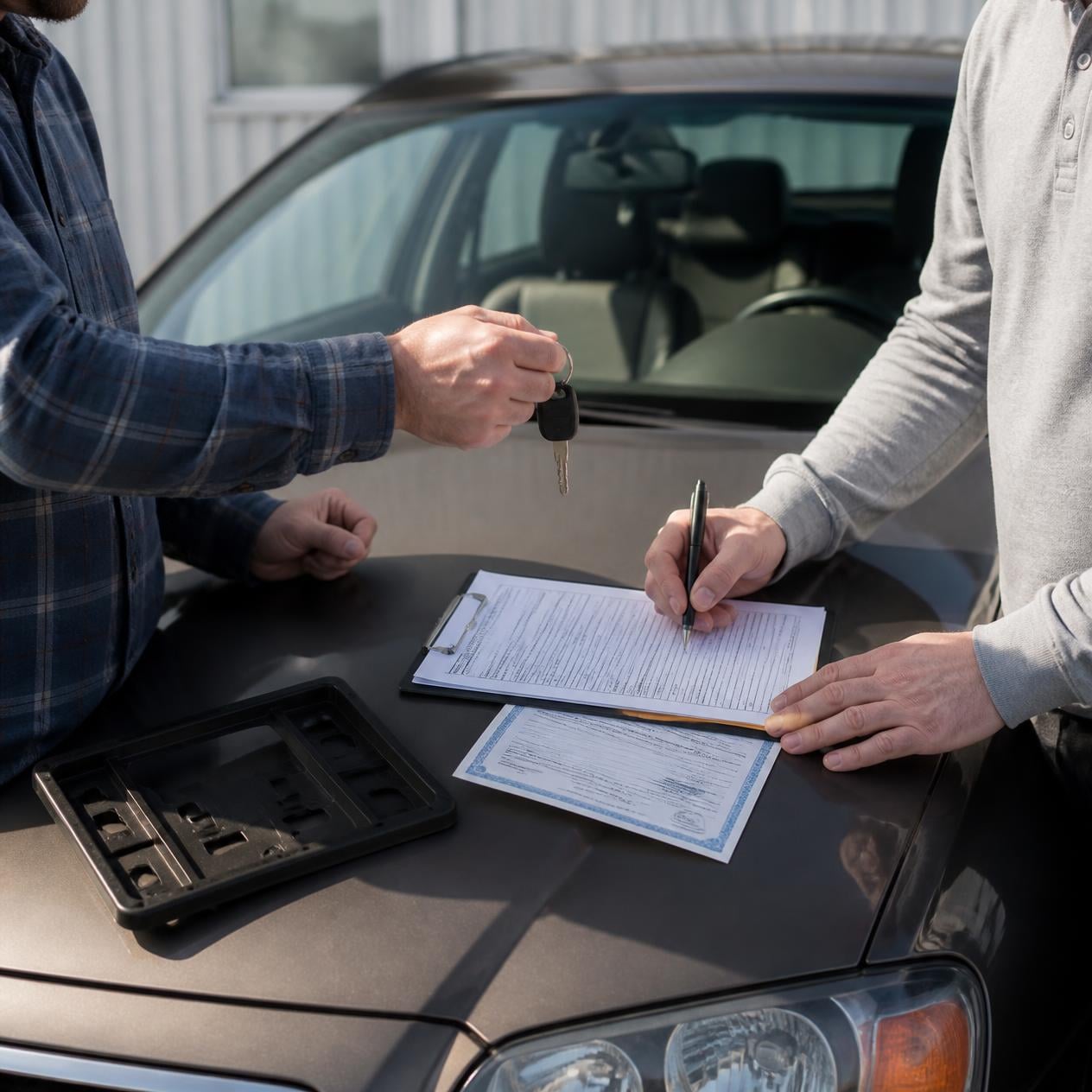
By pricing your vehicle in accordance with market conditions, treating your potential customers with respect, and presenting the vehicle in an upfront and honest manner, you will soon be handing over the keys and cashing the check.