
Bill of Sale Aug 31, 2026
Every private car sale has two people at the table: a buyer trying to find a great vehicle at a fair price, and a seller trying to get the most value for a car they no longer need. Whether you are currently shopping for your next car, getting ready to list your current one, or doing both at the same time as you upgrade, understanding both sides of the transaction makes you sharper on your own.
This guide brings together everything we have covered in our individual buyer and seller guides for states across the country. We will walk through what matters most for buyers, what matters most for sellers, where the two sides overlap, and where state rules create differences you need to know about. At the end, you will find a full directory linking to every state-specific buyer guide and seller guide we have published.
Why Private Sales Work for Both Sides
The appeal of a private sale comes down to the same basic math whether you are buying or selling. A dealership needs to cover overhead and build in a profit margin on every car that changes hands, whether it is a trade-in coming onto the lot or a used vehicle going back out. Cut out that middle step, and both sides of a private transaction benefit. Sellers get closer to true market value instead of a lowball trade-in offer, and buyers pay less than they would for the same car with a dealership markup attached.
That said, a private sale asks more of both parties. There is no finance office walking you through paperwork and no dealership warranty backing up the deal. Buyers take on the responsibility of inspecting the vehicle and verifying its history. Sellers take on the responsibility of pricing fairly and handling the transfer correctly. Platforms like KarKiosk exist to support both sides of this, offering listing tools, a vehicle history report, and a secure Message Center so buyers and sellers can communicate without exchanging personal phone numbers.
What Buyers Need to Get Right
For buyers, the process starts with a clear title check. The seller needs to be able to legally transfer ownership to you, free of any lien, before you hand over payment. From there, a pre-purchase inspection, whether from a trusted mechanic or a mobile inspection service, is one of the best ways to avoid an expensive surprise a few weeks after the sale.
A vehicle history report should be part of every serious buyer's process, and it is worth reviewing before you even schedule an in-person visit. It can reveal accident history, past title issues, or a flood-damaged vehicle long before you invest time driving out to see the car. When you do meet the seller, choose a safe, public location, bring someone with you, and take the car on a real test drive that covers a range of speeds and road conditions.
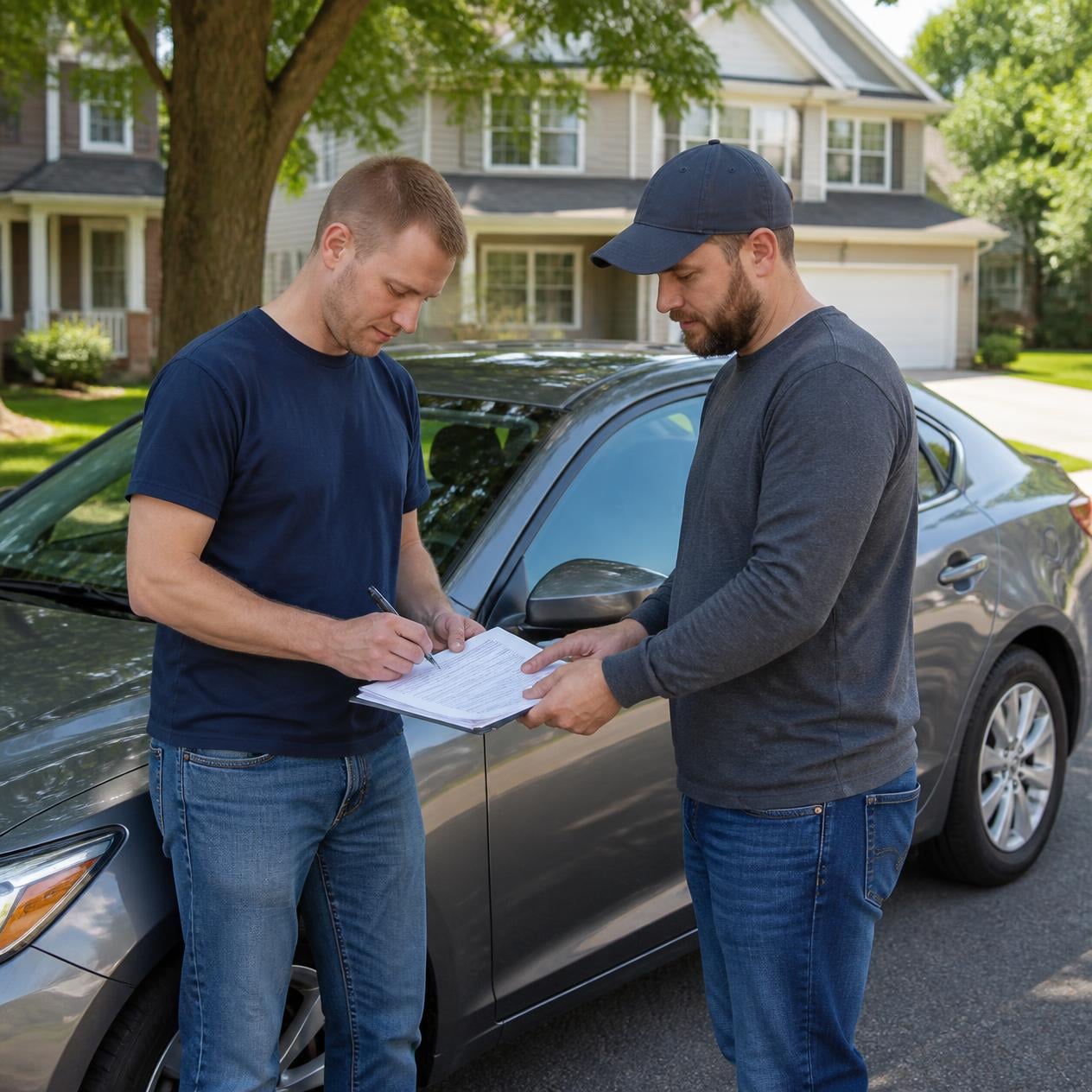
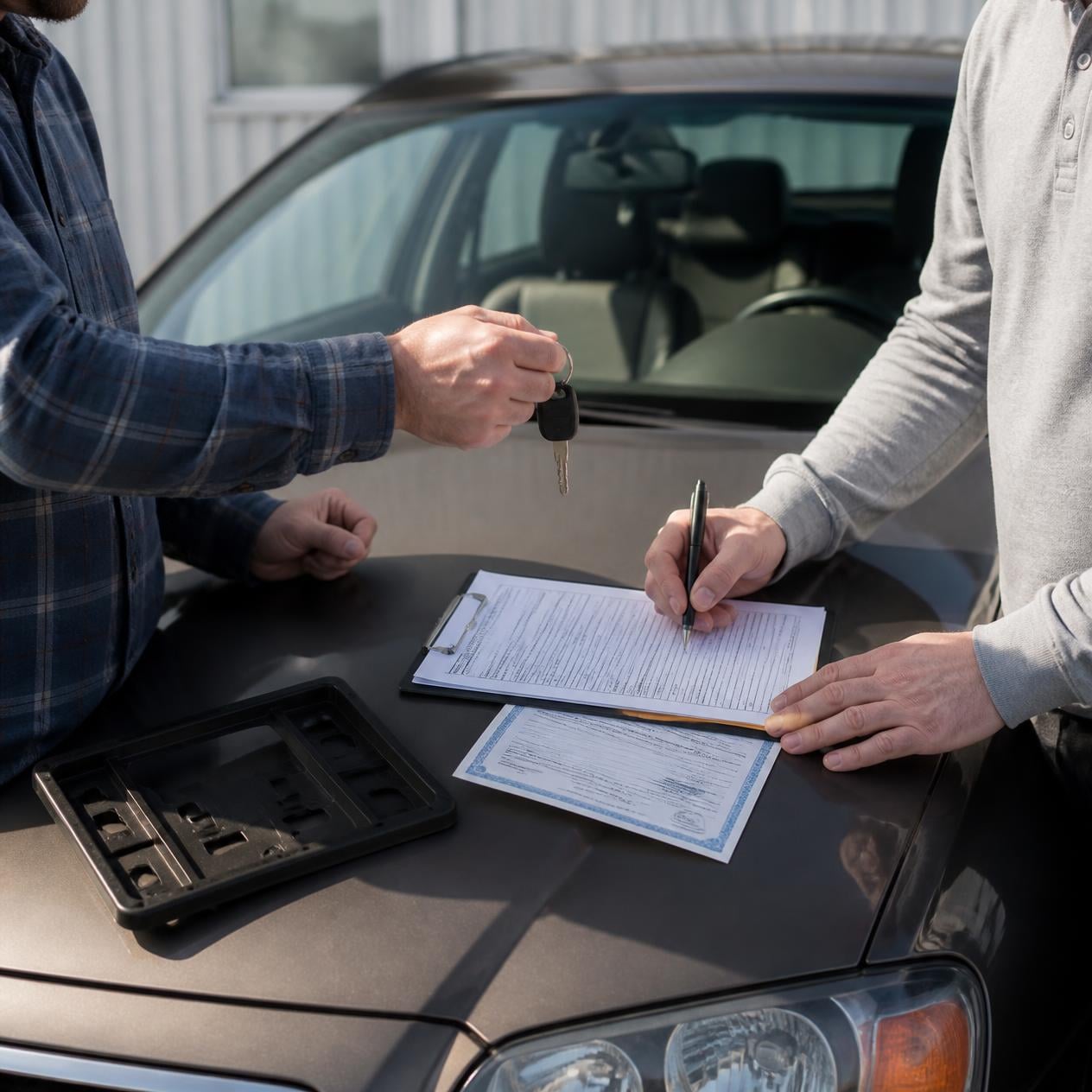
Once you are ready to move forward, insist on a completed bill of sale, confirm the title transfer is done correctly for your state, and use a secure payment method like a verified cashier's check or a confirmed electronic transfer. Wiring money to someone you have never met in person, before seeing the car, is one of the fastest ways a good deal turns into a scam.
What Sellers Need to Get Right
For sellers, everything starts with knowing your title status. If there is still a lien on the vehicle, resolve it before you list the car, since a lien will stall or derail a sale that is otherwise ready to close. Pricing comes next, and it deserves real research rather than a guess. Comparing similar listings on KarKiosk in your area gives you a realistic sense of where your car should be priced to sell within a reasonable timeframe.
Presentation matters more than many first-time sellers expect. Clean the car thoroughly, take clear photos in good daylight from multiple angles, and write an honest description that includes mileage, condition, and service history. Listings with strong photos and detailed descriptions consistently draw more serious inquiries.
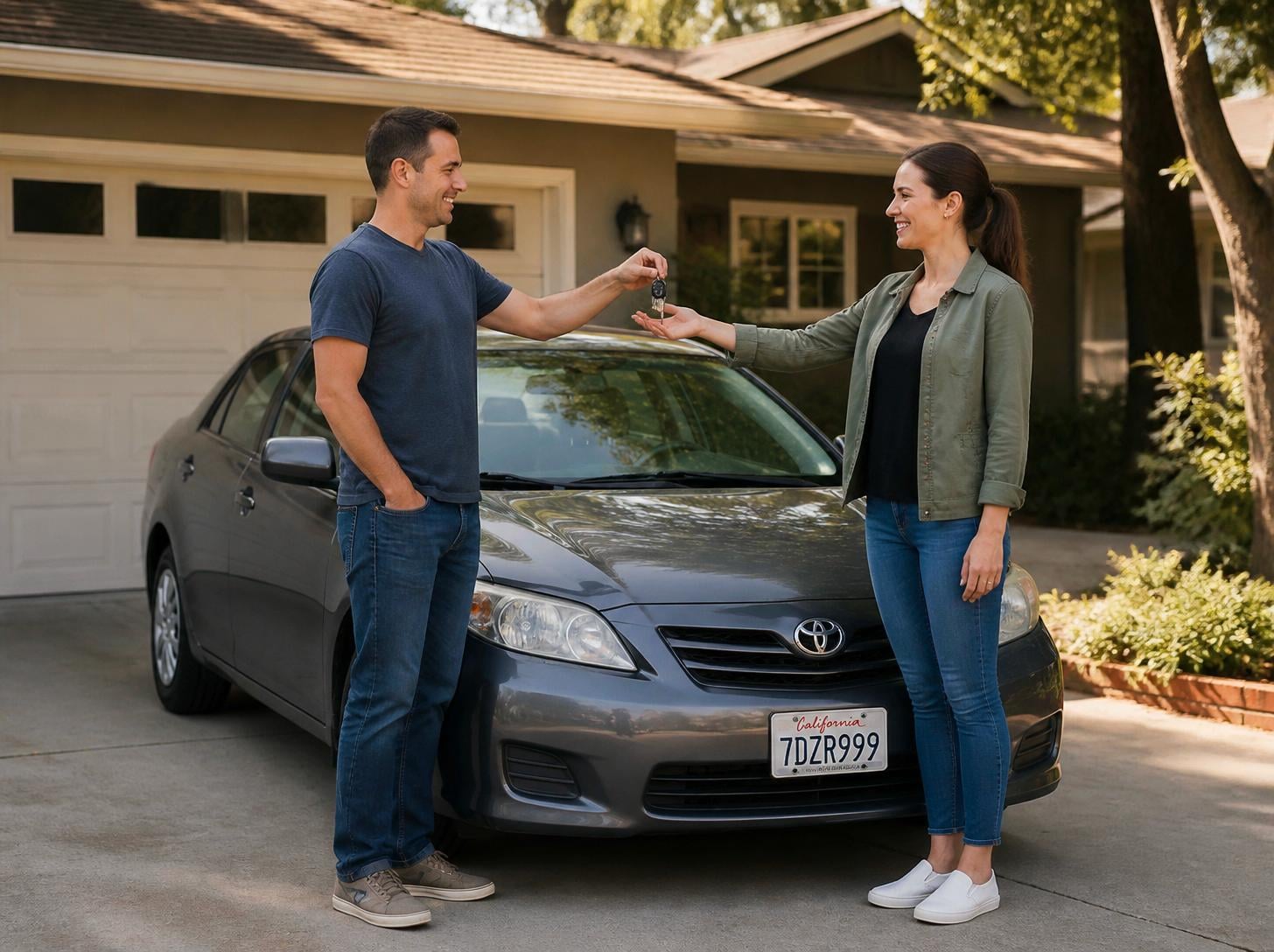
As offers and questions come in, keep the conversation inside a secure messaging system rather than sharing your personal number immediately. When you meet a buyer, choose a safe public location, ride along on the test drive, and only hand over the keys when you feel comfortable. Once you agree on a price, complete the bill of sale, follow your state's rules for notarization if required, and accept a secure payment method. If your state requires a release of liability filing after the sale, submit it promptly so you are not held responsible for anything the new owner does with the vehicle before officially registering it.

Where State Rules Affect Both Buyers and Sellers
Because both sides of a private sale are working within the same state's legal framework, the same variables show up on both the buyer guide and seller guide for any given state, just from opposite angles.
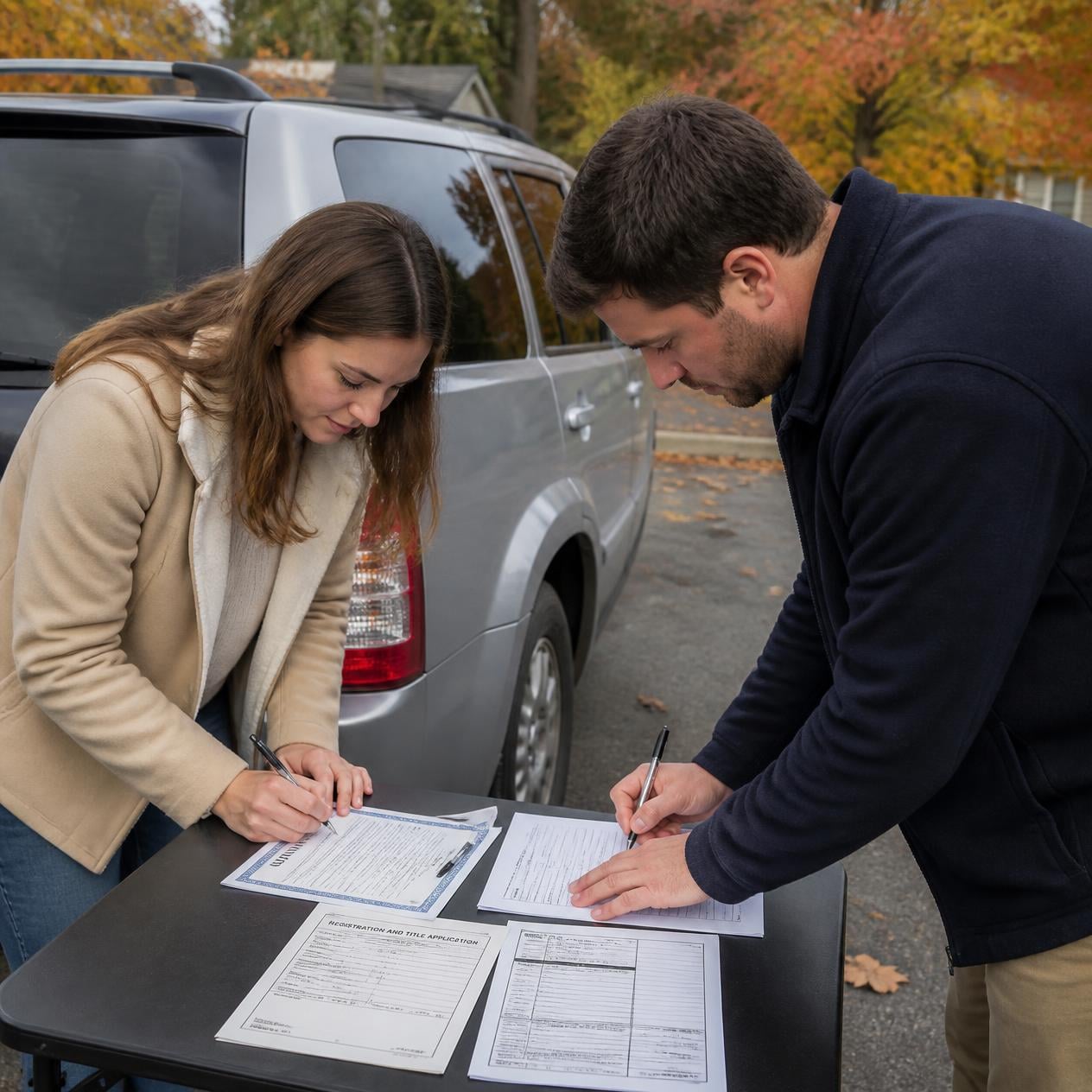
Sales tax structure affects the buyer's total cost directly, but it also affects sellers indirectly, since some states calculate tax based on the price recorded in the bill of sale rather than a flat fee. Notarization requirements affect how both parties schedule the day of the sale, since a missing notarized signature can leave a buyer unable to register the vehicle and a seller fielding frustrated follow-up calls weeks later.
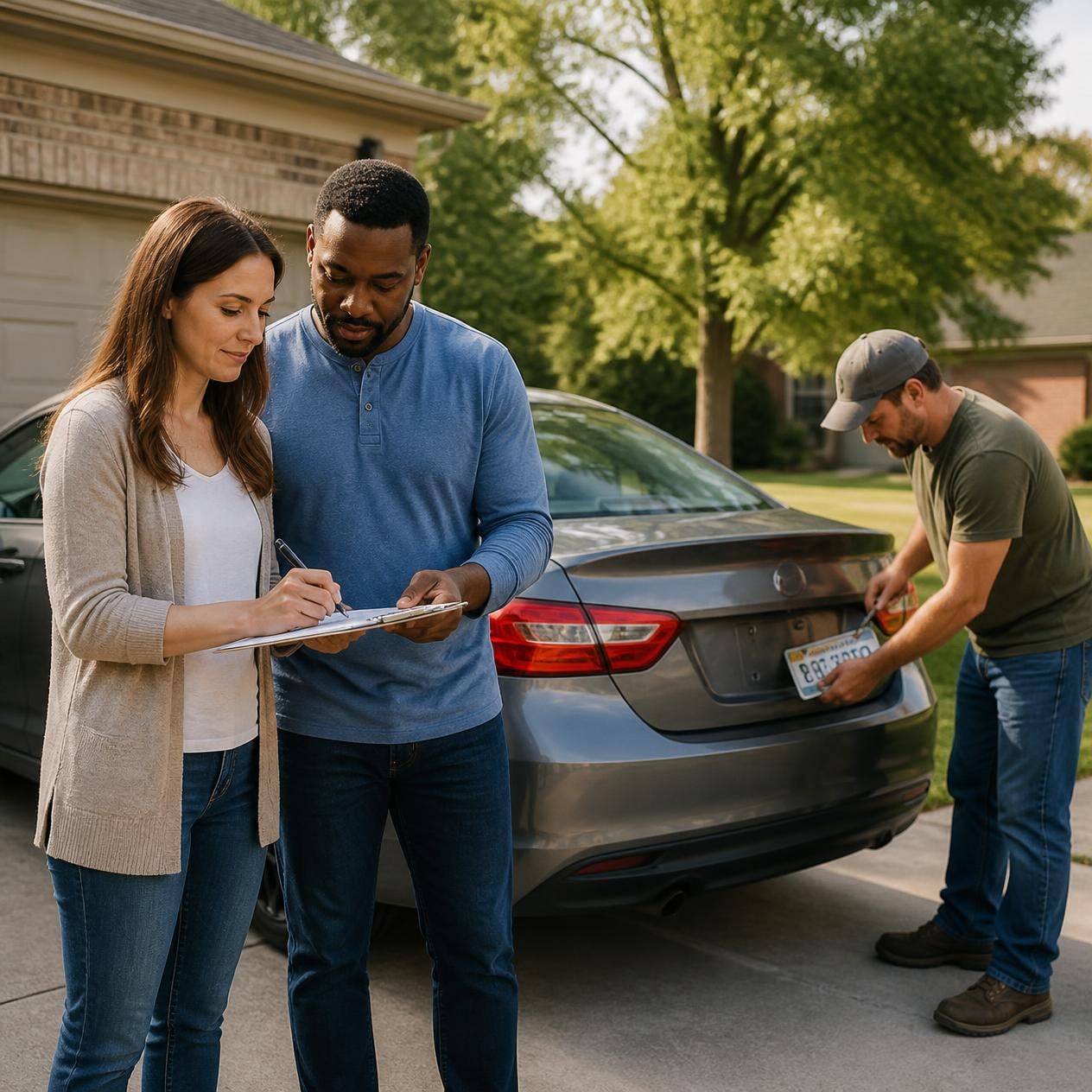
Emissions and safety inspection rules can determine whether a sale can legally close at all in certain counties, making it something both the buyer and seller should confirm before agreeing on a final price. License plate handling, meanwhile, determines what happens the moment the deal is done. In states where plates stay with the seller, the buyer needs a plan for driving the car home legally, whether that means temporary registration or arranging transport.
A Side-by-Side Comparison for Buyers and Sellers
| Category | Buyer's Concern | Seller's Concern |
|---|---|---|
| Title status | Confirm it is clear and ready to transfer | Resolve any lien before listing |
| Sales tax | Factor it into your total budget | Record an accurate price on the bill of sale |
| Notarization | Confirm requirement before the meeting | Bring valid ID and be ready to sign in person |
| Emissions or safety inspection | Confirm the vehicle can be registered where you live | Confirm the sale can legally close in your county |
| License plates | Plan for driving the car home legally | Know whether plates stay with you after the sale |
A Quick Checklist for Sale Day
| Step | Buyer Action | Seller Action |
|---|---|---|
| Before meeting | Review the vehicle history report | Prepare title, bill of sale, and disclosures |
| At the meeting | Inspect and test drive the vehicle | Answer questions honestly and ride along |
| Payment | Use a verified cashier's check or transfer | Confirm funds before releasing the title |
| After the sale | Register and title the vehicle promptly | File a release of liability if required |

Financing a private car sale is often different from buying through a dealership. Understanding how the process works can help both buyers and sellers avoid delays, complete the paperwork smoothly, and close the transaction with confidence.
If you're buying with a loan, secure pre-approval before negotiating. It gives you a clear idea of your budget and shows sellers that you're financially ready to complete the purchase.
Sellers are more likely to take your offer seriously when they know your financing is already in place, especially if multiple buyers are interested in the same vehicle.
Financing through a private-party loan may take longer than a cash sale because the lender needs to verify the vehicle, confirm the title is clear, and complete its approval process.
Keep the vehicle title and any required ownership documents readily available. Providing requested paperwork promptly helps the lender process the loan without unnecessary delays.
Good communication between the buyer, seller, and lender can keep the transaction moving forward and prevent paperwork issues from slowing down the sale.
Buyers who have not arranged financing should look for lenders that specifically offer private-party auto loans, as these are designed for purchases from individual sellers rather than dealerships.
Researching lenders and loan options before finding the right vehicle allows you to move quickly when you find a car that meets your needs.
Financing Considerations for Both Sides
1
Get Pre-Approved Before Shopping
2
Pre-Approval Can Strengthen Your Offer
3
Expect a Longer Closing Process
4
Sellers Should be Ready with Documents
5
Stay Patient and Responsive
6
Consider Private-Party Auto Loans
7
Arrange Financing Early
Regional Patterns Worth Knowing
While every state has its own specific rules, a few regional patterns tend to hold up across the country and are worth keeping in mind as general context, even though you should always confirm the specifics for your own state.
States with dense urban populations often have more counties subject to emissions testing requirements, since air quality regulations are frequently tied to metropolitan areas rather than applied uniformly statewide. Rural counties within the same state are frequently exempt, even when testing is mandatory closer to a major city.
States without a broad state income tax sometimes rely more heavily on vehicle sales tax and registration fees to fund public services, which can mean a higher effective cost at the point of sale even if the sticker price on the car itself is lower. On the other hand, some states keep vehicle-specific taxes low but require more frequent safety inspections to keep older vehicles on the road safely.
None of these patterns should replace checking your specific state's buyer guide or seller guide, but they can help set expectations as you compare notes with a friend or family member who lives in a different part of the country and describes a very different experience buying or selling their own vehicle.

Common Ground: Communication and Safety
Regardless of which side of the table you are on, the same safety habits protect everyone involved. Keep communication inside a platform's secure message center for as long as possible, rather than moving to personal phone numbers or outside apps too early. This creates a written record and reduces the risk of miscommunication about price, condition, or timeline.
Meet in safe, public locations, and bring someone along whenever possible. Be cautious of counterparts who push for unusual payment arrangements, refuse a vehicle history report, or seem unwilling to meet in person before finalizing a deal. These patterns show up in scams targeting both buyers and sellers, and recognizing them early can save you significant time, money, and stress.
Browse Every State Buyer and Seller Guide
We have published dedicated buyer guides and seller guides covering the private car sale process for states across the country. Whether you are buying, selling, or both, use the directory below to find the exact requirements for your state.
Buyer Guides by State
Alabama | Alaska | Arizona | Arkansas | California | Colorado | Connecticut | Delaware | Florida | Georgia | Hawaii | Idaho | Illinois | Indiana | Iowa | Kansas | Kentucky | Louisiana | Maine | Maryland | Massachusetts | Michigan | Minnesota | Mississippi | Missouri | Montana | Nebraska | Nevada | New Hampshire | New Jersey | New Mexico | New York | North Carolina | North Dakota | Ohio | Oklahoma | Oregon | Pennsylvania | Rhode Island | South Carolina | South Dakota | Tennessee | Texas | Utah | Vermont | Virginia | Washington | West Virginia | Wisconsin | Wyoming
Seller Guides by State
Alabama | Alaska | Arizona | Arkansas | California | Colorado | Connecticut | Delaware | Florida | Georgia | Hawaii | Idaho | Illinois | Indiana | Iowa | Kansas | Kentucky | Louisiana | Maine | Maryland | Massachusetts | Michigan | Minnesota | Mississippi | Missouri | Montana | Nebraska | Nevada | New Hampshire | New Jersey | New Mexico | New York | North Carolina | North Dakota | Ohio | Oklahoma | Oregon | Pennsylvania | Rhode Island | South Carolina | South Dakota | Tennessee | Texas | Utah | Vermont | Virginia | Washington | West Virginia | Wisconsin | Wyoming