

Bill of Sale Aug 31, 2026
Selling a car privately in Arizona is one of the best ways to get more money than a dealer trade-in offer. But before you hand over the keys, there is one document that can save you a major headache later: the bill of sale.
Whether you are selling a family sedan, an old work truck, or a car you inherited, the paperwork side of the sale is what protects you once the vehicle is no longer in your driveway. A few minutes of preparation now can prevent months of back-and-forth later.
This guide breaks down everything a private seller needs to know about the Arizona bill of sale. You will learn what it is, whether the state actually requires one, what details it must include, and how to fill it out correctly.
We will also walk through notarization rules, title transfer steps, the Sold Notice deadline, and the most common mistakes sellers make with their paperwork. By the end, you will be ready to close your sale with confidence.
If you are getting ready to list your vehicle, KarKiosk makes the whole process easier, from writing your listing to connecting with serious buyers across Arizona. You can start your listing anytime at karkiosk.com.
What Is a Bill of Sale, and Do You Need One in Arizona?
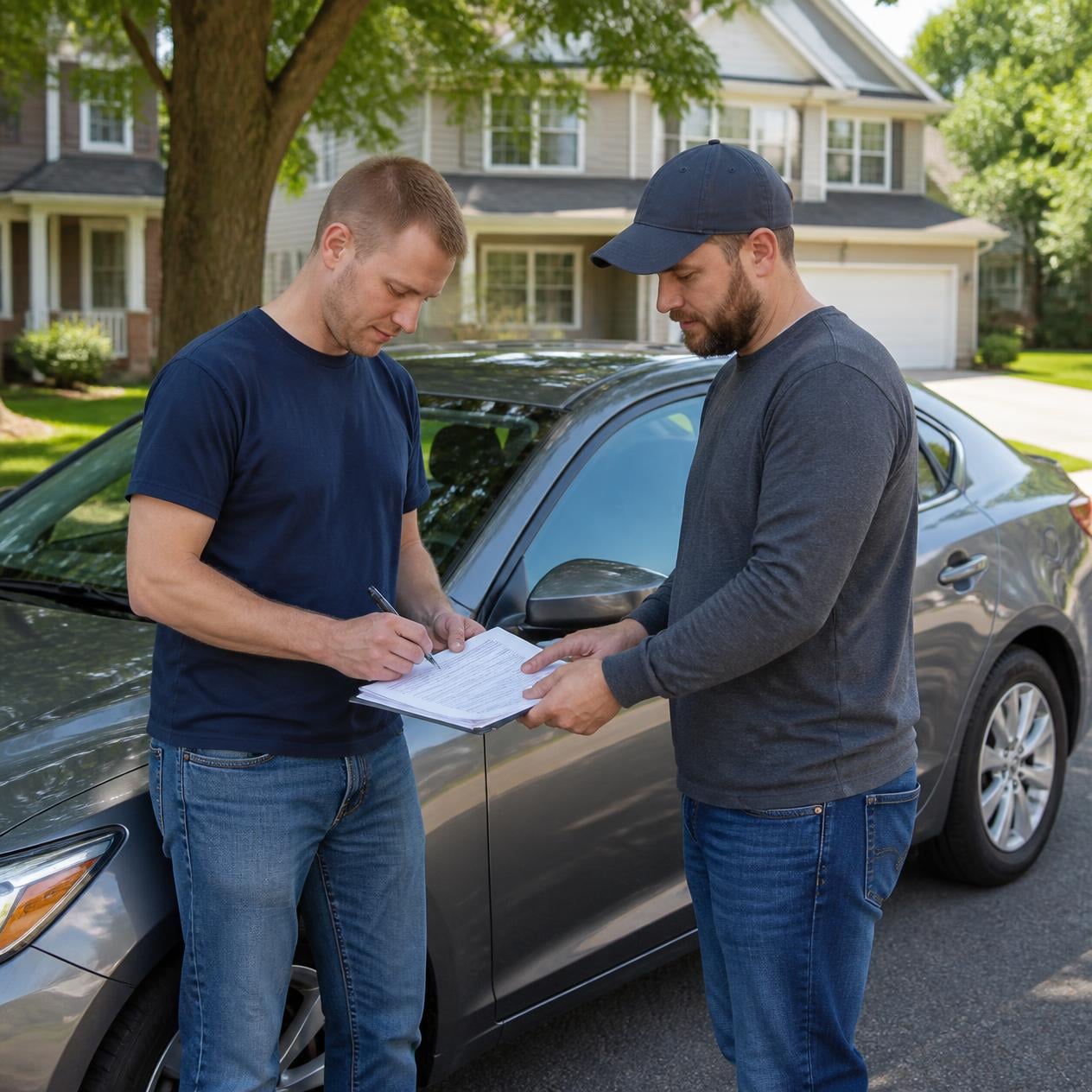
A bill of sale is a short document that records the sale of a vehicle between two people. It lists the buyer, the seller, the car's details, and the price that changed hands.Here is something that surprises a lot of first-time sellers: Arizona does not legally require a bill of sale to transfer a title. The Arizona Motor Vehicle Division, or MVD, relies mainly on the signed Certificate of Title itself to prove that ownership changed hands.
So why bother with one? Because a bill of sale protects you. It is your proof of the sale date, the sale price, and exactly who bought the car. If a dispute ever comes up, such as a missed payment, a mixed-up VIN, or a buyer who claims you promised something you did not, this document backs you up.
Think of it as cheap insurance. It takes about five minutes to fill out and can save you hours of frustration down the road.
Arizona's Official Bill of Sale Form (48-2004)
The Arizona Department of Transportation, known as ADOT, publishes its own bill of sale template, called Form 48-2004. You can find a printable copy through ADOT or through a trusted private template that covers the same fields.
Using the state's exact form is not mandatory, but it is a smart choice. It already includes every field Arizona buyers and sellers typically need, and many county tax offices and MVD locations are familiar with the layout.
Note that Arizona also has a separate dealer retail bill of sale (Form 38-1305), which is used only when a licensed dealer sells to an individual buyer. Private, person-to-person sales should stick with the standard motor vehicle bill of sale.
What Information Goes on an Arizona Bill of Sale
Whether you use ADOT's exact form or write your own version, your bill of sale should always include the same core details. Missing even one of these fields can make the document less useful if a question ever comes up later
| Field | Required on Form | Why It Matters |
|---|---|---|
| Buyer and seller full names | Yes | Confirms who was involved in the transaction |
| Buyer and seller addresses | Yes | Needed for records and future contact |
| Vehicle year, make, and model | Yes | Identifies the exact car being sold |
| Vehicle Identification Number (VIN) | Yes | Prevents confusion with similar vehicles |
| Sale date | Yes | Marks when liability shifted to the buyer |
| Purchase price | Yes | Used for tax and registration purposes |
| Odometer reading | Yes, if under 20 years old | Required by federal odometer disclosure law |
| Signatures of both parties | Seller required; buyer recommended | Shows both sides agreed to the terms |
Filling out the bill of sale is straightforward once you know the order to do things in. Here is a simple process most Arizona sellers can follow in about fifteen minutes.
Pull out your title and match the VIN, year, make, and model exactly as they appear. A typo here is one of the most common reasons a bill of sale gets rejected or questioned later.
Write down the exact amount the buyer paid. If you accepted a deposit earlier, note the total price, not just the balance paid at handoff. Cash, cashier's checks, or verified digital transfers are the safest payment methods for private sales.
Federal law requires an odometer disclosure for most vehicles under 20 years old. Write the exact mileage shown at the time of sale, and double-check it against the number on the title.
Arizona requires the seller's signature on the title itself to be notarized or witnessed by an authorized MVD agent. It is smart to notarize the bill of sale at the same appointment, since you are already there.
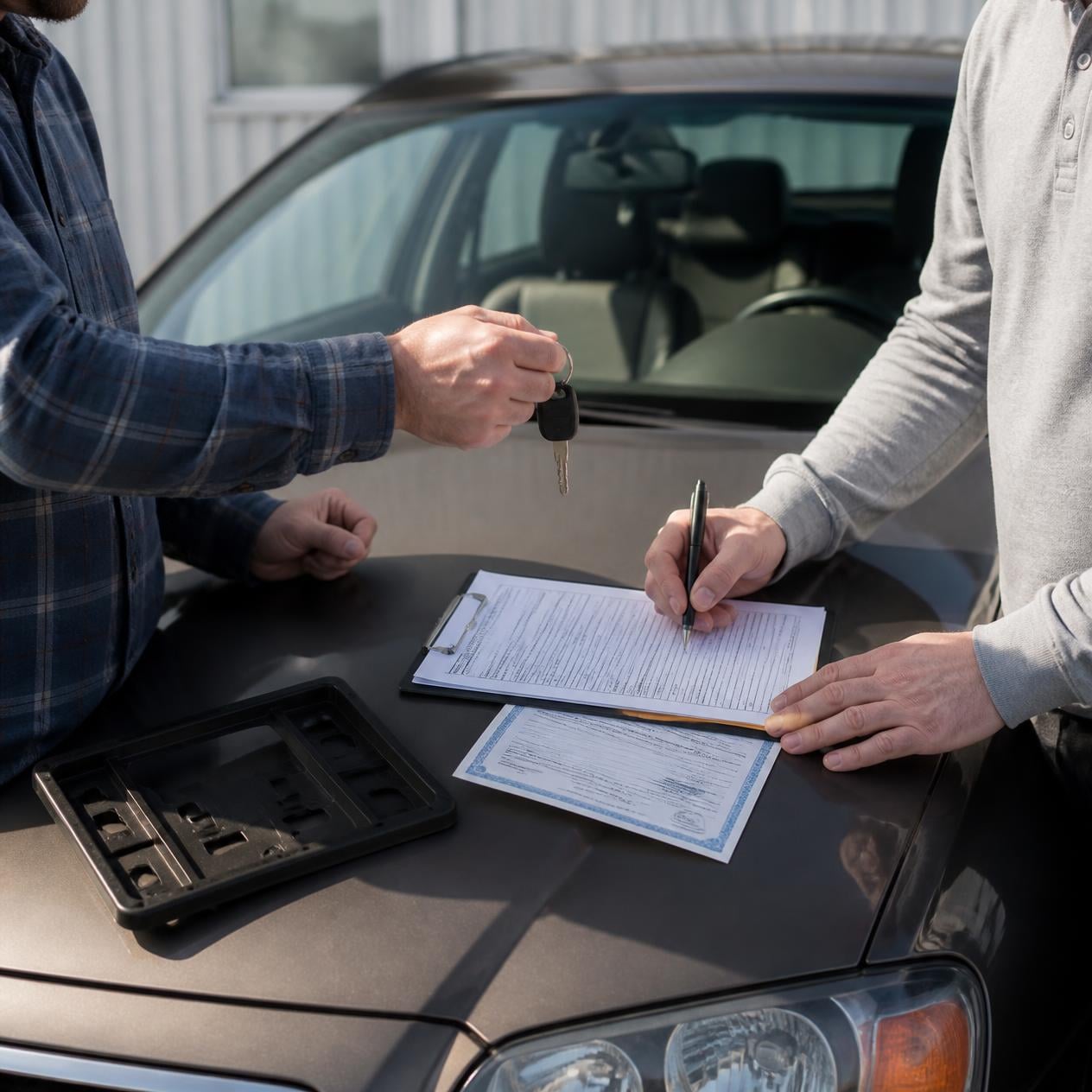
Make two copies, one for you and one for the buyer, before the buyer drives away. Keep your copy somewhere easy to find in case you need it for tax records or a future question from the MVD.
Step-by-Step: Completing Your Bill of Sale
1
Confirm the Vehicle Details
2
Record the Sale Price and Payment Method
3
Note the Odometer Reading
4
Sign in Front of a Notary or MVD Agent
5
Give Copies to Both Parties

Notarization Requirements in Arizona
Arizona is one of the few states that requires the seller's signature on the vehicle title to be notarized or verified by an authorized MVD agent. This rule exists to reduce title fraud and confirm the real owner authorized the sale.
The bill of sale itself does not have a separate notarization requirement under state law, but many sellers choose to notarize it anyway, at the same time as the title, simply for extra peace of mind.
You can get a document notarized at a bank, a shipping store, a local notary office, or often directly at an MVD or Authorized Third Party office while you handle the rest of your paperwork.
Title Transfer and Registration After the Sale
Once the bill of sale and title are signed, the responsibility shifts to the buyer. In Arizona, the buyer has 15 days from the purchase date to apply for a new title in their name. Licensed dealers get a longer 30-day window, but private buyers are held to the shorter deadline.
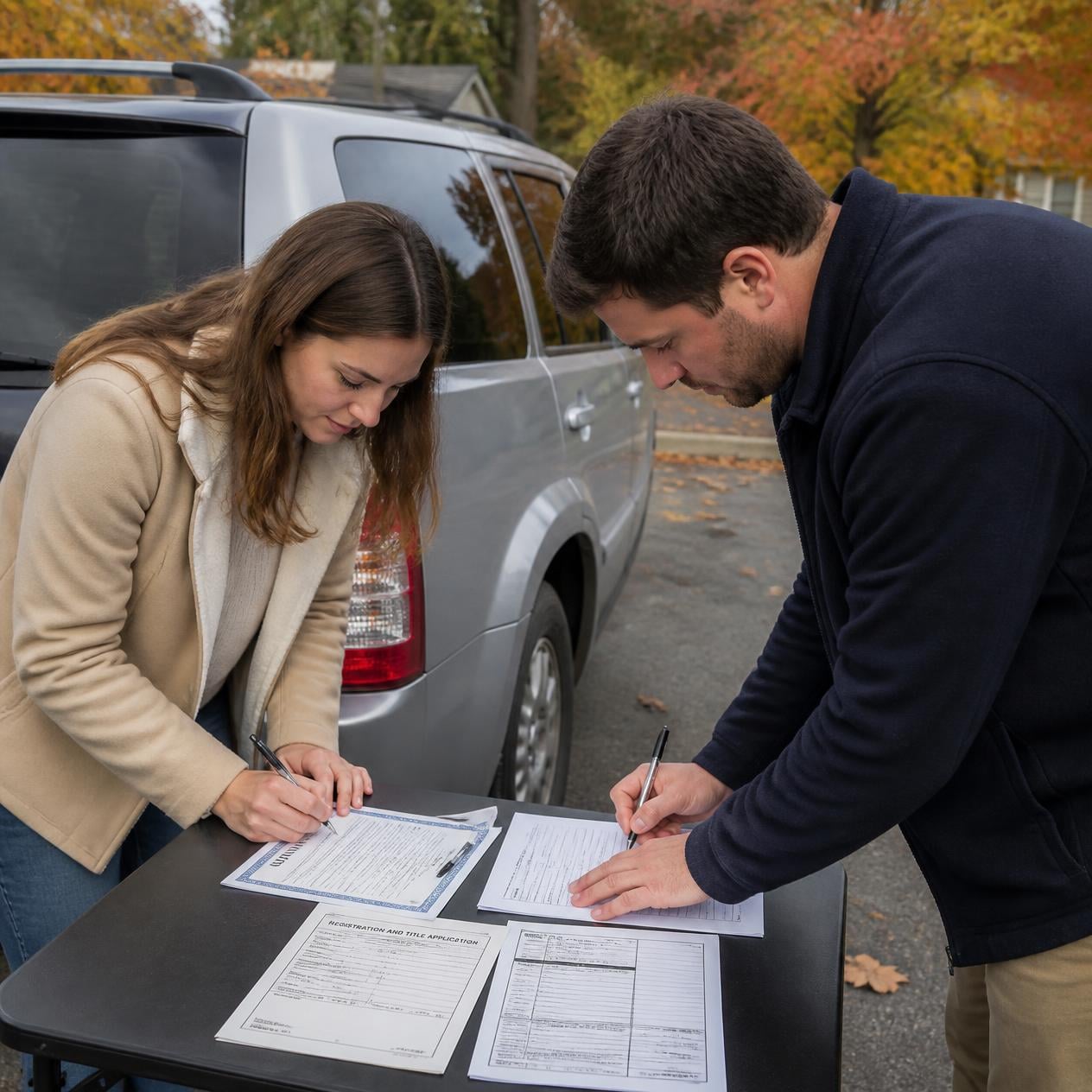
Registration cannot be completed online for a brand-new-to-you title in Arizona. The buyer must visit a local MVD office or an Authorized Third Party provider in person, bringing the signed title, the bill of sale, and proof of Arizona insurance.
If the buyer lives in the Phoenix or Tucson metro areas, an emissions test is usually required before registration can be finalized. Sellers do not need to worry about this step themselves, but it helps to mention it so buyers are not caught off guard.
Registration itself is typically valid for one or two years, depending on the vehicle type, and can be renewed online once the initial in-person registration is complete.
Sales Tax and Fees the Buyer Should Expect
As the seller, you generally will not owe sales tax on a private car sale in Arizona. That responsibility falls on the buyer when they register the vehicle at the MVD.
Arizona calculates the vehicle use tax based on the purchase price listed on the bill of sale, which is another reason the document matters so much. If the price field is missing or inaccurate, the buyer could run into delays or an incorrect tax bill at the counter.
Buyers should also budget for a title fee, a registration fee, and possibly a Vehicle License Tax based on the car's assessed value. These amounts vary by vehicle age and county, so it is worth mentioning to your buyer that costs beyond the sale price are normal and expected.
The Sold Notice: Protecting Yourself as the Seller
This is the step many first-time sellers skip, and it is arguably more important than the bill of sale itself. Arizona law requires sellers to file a Sold Notice with the MVD within 10 calendar days of the sale.
The Sold Notice tells the state that you are no longer responsible for the vehicle. Without it, you could remain on the hook for parking tickets, red-light camera violations, toll charges, or even accidents involving the car after it left your driveway.
You can file the Sold Notice for free online through the AZ MVD Now portal, and it takes only a few minutes. The safest habit is to file it the same day you complete the sale, rather than waiting close to the deadline.
Remember to also remove your license plates before the buyer drives off. In Arizona, plates stay with the seller, not the vehicle, so you will need to transfer them to another car, surrender them to the MVD, or destroy them properly.
Common Mistakes to Avoid
● Leaving the odometer field blank or estimating instead of reading the exact number
● Forgetting to file the Sold Notice within the 10-day window
● Handing over the plates along with the car instead of keeping them
● Using a purchase price that does not match what was actually paid
● Skipping notarization on the title, which can delay the buyer's registration
Bill of Sale vs. Other Arizona Sale Documents
A bill of sale is only one piece of the paperwork puzzle. Here is how it compares to the other documents involved in a typical Arizona private car sale.
| Document | Who Files It | Deadline | Purpose |
|---|---|---|---|
| Bill of Sale (Form 48-2004) | Seller and buyer | At time of sale | Proof of sale price, date, and parties involved |
| Signed Certificate of Title | Seller | At time of sale | Legally transfers ownership to the buyer |
| Sold Notice (Form 46-8502) | Seller | Within 10 days | Releases seller from future liability |
| Title Application | Buyer | Within 15 days | Registers the vehicle under the buyer's name |
| Emissions Test Certificate | Buyer, if applicable | Before registration | Required in Phoenix and Tucson metro areas |

What If the Buyer Wants to Register the Car Out of State?
Sometimes an Arizona seller finds a buyer who lives across the border or plans to move the vehicle out of state right away. In that case, the bill of sale becomes even more important, since the buyer will not be dealing with the Arizona MVD directly.
If the vehicle needs to be driven before registration is complete, the buyer may need a Restricted Use Three-Day Permit from ADOT to legally transport it to its new home state. This permit is separate from the bill of sale and title, so let out-of-state buyers know to plan for it.
As the seller, your job stays the same either way: sign the title, hand over a completed bill of sale, and file your Sold Notice within the 10-day window. What the buyer does afterward, whether registering in Arizona or another state, does not change your responsibilities.
Selling Smarter with KarKiosk
Getting the paperwork right is only half the job. The other half is finding a buyer who is ready to pay a fair price without the back-and-forth hassle of other classified sites.
KarKiosk was built for exactly this. The platform connects Arizona sellers with a wide network of serious buyers, gives you an easy step-by-step listing process, and keeps your personal information secure throughout the transaction.
Listing your car takes just a few minutes: sign up, upload clear photos from every angle, write an honest description of your vehicle's condition and history, and set a competitive price using KarKiosk's pricing tools.
Once your listing is live, you can pair it with the paperwork steps in this guide, so by the time a buyer says yes, you already have your bill of sale, title, and Sold Notice ready to go.
Ready to get started? Visit karkiosk.com to create your listing and start connecting with buyers across Arizona today.