

Bill of Sale Aug 31, 2026
Buying or selling a used car in Alabama comes with more paperwork than most people expect. A bill of sale is one of the simplest documents in the entire process, but it still trips people up because the rules shift depending on which county you live in. Some counties want a notary. Others just want two signatures. And in most cases, the state does not even require the form at all, which confuses buyers and sellers even more.
This guide walks through what a bill of sale actually is, when Alabama requires one, what information has to be on it, and how to avoid the small mistakes that hold up a title transfer. Whether you are selling your car to a neighbor down the street or buying a used truck off a classifieds site, this guide will help you close the deal with paperwork that actually holds up later.
What Is a Bill of Sale in Alabama?
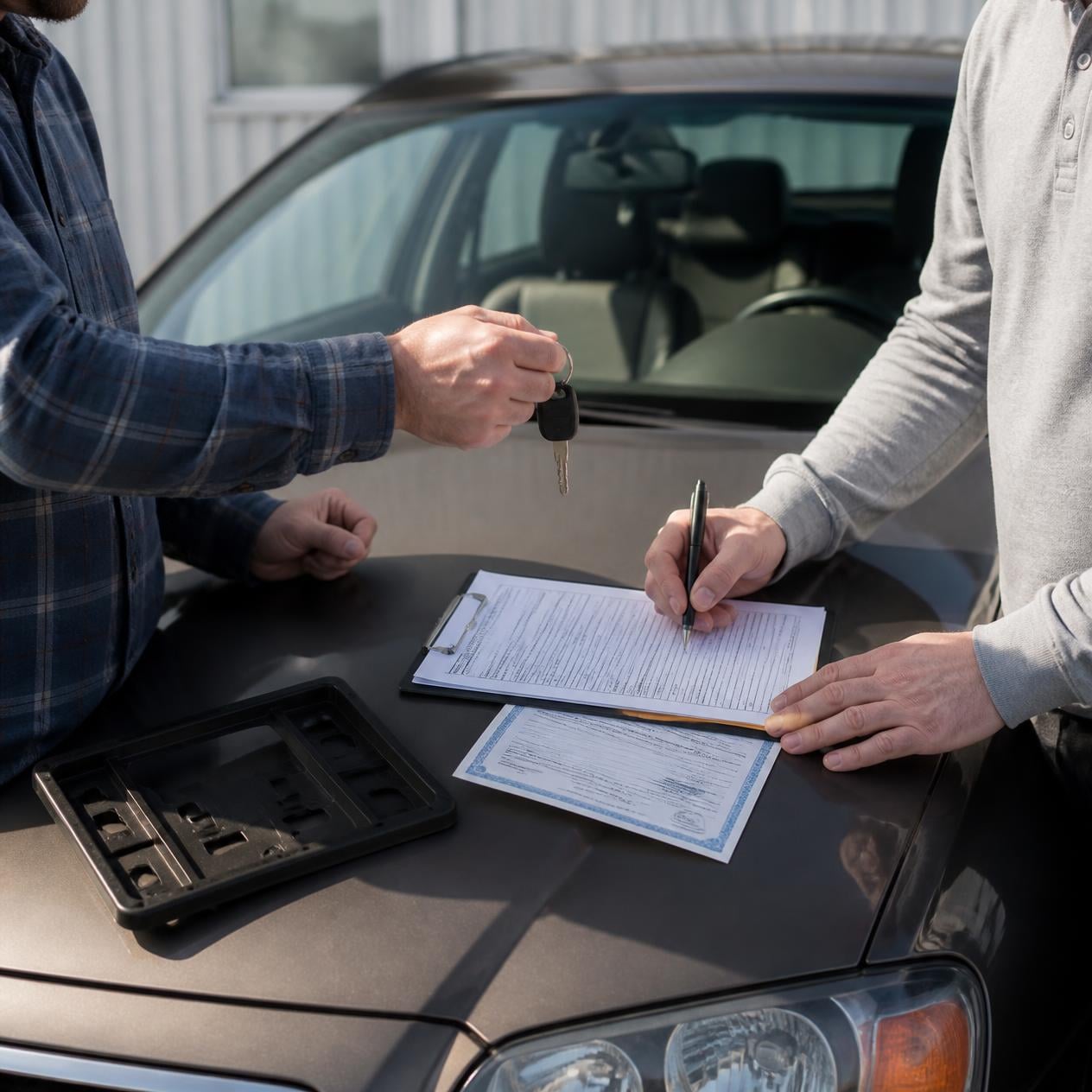
A bill of sale is a short written record of a vehicle sale. It lists the buyer, the seller, a description of the vehicle, and the price both sides agreed on, and it gets signed by both parties. Think of it as a receipt with legal weight. If a disagreement comes up months later about the sale price or the exact date the car changed hands, this is the document that settles it.
In Alabama, a bill of sale is not always required by law, but it is still one of the most useful papers a private seller can hand over. It protects the seller if the buyer never registers the vehicle or lets it sit unpaid on parking tickets under the old owner's name. It protects the buyer too, since it proves exactly what was paid and when possession changed hands.
A lot of first-time sellers assume an invoice or a text message confirming the deal is good enough. It is not. Alabama treats a bill of sale as a distinct document, separate from any receipt or invoice, and county offices will ask for the real thing if they need it.
Here is a simple example. Say a seller in Huntsville agrees to sell an older pickup truck to a buyer for two thousand dollars in cash. The truck's original title was lost years ago. Without a bill of sale spelling out the price, the date, the VIN, and both parties' names, the buyer would have a hard time proving the truck is legally theirs when it comes time to register it. A short, properly filled-out bill of sale solves that problem in a few minutes.
When Do You Actually Need One?
Alabama's rule of thumb is simple. If the vehicle has a valid title, that title handles the transfer of ownership on its own. The seller signs the back of the title over to the buyer, and that signed title becomes the official record of sale. A bill of sale becomes mandatory in a narrower set of situations.
1
Vehicles Without a Title
If the title is lost, was never issued, or simply cannot be produced, the Alabama Department of Revenue treats the bill of sale as the paper trail proving the sale actually happened. Without it, a buyer can run into real trouble getting a replacement title issued in their own name.
2
Vehicles Older Than 35 Years
Older vehicles that fall outside Alabama's normal titling requirements still need some kind of document to show the change of ownership. For these cars, a bill of sale often becomes the only paperwork standing between the buyer and a clean registration.
3
County-Level Add-Ons
Even in situations where the state itself does not require a bill of sale, plenty of individual counties ask for one anyway as part of registering a vehicle locally. A quick call to your county's licensing office before the sale can save an unnecessary return trip once the paperwork is already signed.
When Do You Actually Need One?
Alabama's rule of thumb is simple. If the vehicle has a valid title, that title handles the transfer of ownership on its own. The seller signs the back of the title over to the buyer, and that signed title becomes the official record of sale. A bill of sale becomes mandatory in a narrower set of situations.
1
Vehicles Without a Title
If the title is lost, was never issued, or simply cannot be produced, the Alabama Department of Revenue treats the bill of sale as the paper trail proving the sale actually happened. Without it, a buyer can run into real trouble getting a replacement title issued in their own name.
2
Vehicles Older Than 35 Years
Older vehicles that fall outside Alabama's normal titling requirements still need some kind of document to show the change of ownership. For these cars, a bill of sale often becomes the only paperwork standing between the buyer and a clean registration.
3
County-Level Add-Ons
Even in situations where the state itself does not require a bill of sale, plenty of individual counties ask for one anyway as part of registering a vehicle locally. A quick call to your county's licensing office before the sale can save an unnecessary return trip once the paperwork is already signed.
Counties like Jefferson, Madison, and Montgomery each run their own licensing offices, and while the core requirements stay close to the state standard, small differences in preferred wording or extra copies do show up from one office to the next. Sellers who deal in vehicles regularly, such as small independent lots, tend to keep a folder of blank bill of sale forms already matched to their home county's preferences so they are never caught without the right version.
What Information Must Be on an Alabama Bill of Sale
Alabama's Revenue Department expects certain details no matter which county you are dealing with. Leaving out even one of these fields is the most common reason a bill of sale gets rejected at the counter.
| Required Field | Why It Matters |
|---|---|
| Buyer's full name and address | Confirms who is taking ownership |
| Seller's full name and address | Confirms who is giving up ownership |
| Vehicle make, model, and year | Identifies exactly which car changed hands |
| VIN | Prevents mix-ups with similar vehicles |
| Sale date | Marks when ownership legally changed |
| Purchase price | Used for tax and registration purposes |
| Odometer reading | Required for most vehicles under federal law |
| Signatures of both parties | Makes the document valid |
A street address is required for both the buyer and the seller. A P.O. box will not be accepted in place of a physical address, and if the seller is a licensed dealer, the dealer's official name has to appear on the form instead of an individual's name.
It also helps to write numbers clearly. Purchase price, sale date, and odometer reading should all be written in full, without abbreviations that a clerk might misread. A small mistake here, like a transposed digit in the VIN, can delay the entire registration process.

Does It Need to Be Notarized?
Notarization requirements in Alabama depend almost entirely on where you live. Some counties will not accept a bill of sale without a notary's stamp. Others are perfectly fine with two witness signatures instead. And in many parts of the state, the buyer and seller's own signatures are enough with nothing extra required.
| County | Typical Requirement |
|---|---|
| Lee County | Notary public required |
| Mobile County | Only the seller has to sign |
| Most other counties | Buyer and seller signatures, no notary |
Because these rules genuinely vary by county, the safest move is a short phone call to your local licensing office before the sale takes place. It only takes a few minutes and it can save both parties from showing up with a document that gets turned away.
Registering the Vehicle After the Sale
Buying the car is really only half of the process. Once the sale is done, Alabama gives the buyer a set window of time to get the vehicle registered under their own name.
1
How Long You Have
For an in-state purchase, buyers have 20 days from the date of sale to register the vehicle. For a vehicle bought out of state and brought into Alabama, that window stretches to 30 days. Missing either deadline can trigger a late fee, commonly around fifteen dollars, and continuing to drive on an unregistered vehicle can create bigger headaches if you are pulled over in the meantime.
2
What to Bring to the License Office
A buyer heading to the county license office should plan to bring the signed title, or the bill of sale if no title exists, a valid driver's license showing a local county address, and proof of liability insurance that meets Alabama's minimum coverage limits. If the driver's license does not show a local address yet, proof of residency such as a utility bill or signed lease usually fills that gap. Payment for registration fees, and any sales tax that applies, rounds out the paperwork needed on the spot.
It helps to call ahead, especially in busier counties, since wait times at the license office can stretch on during peak hours. Some counties also offer online renewal for vehicles already registered, but a first-time registration after a private sale almost always needs an in-person visit so a clerk can confirm the VIN and odometer reading against the paperwork in hand.
Registering the Vehicle After the Sale
Buying the car is really only half of the process. Once the sale is done, Alabama gives the buyer a set window of time to get the vehicle registered under their own name.
1
How Long You Have
For an in-state purchase, buyers have 20 days from the date of sale to register the vehicle. For a vehicle bought out of state and brought into Alabama, that window stretches to 30 days. Missing either deadline can trigger a late fee, commonly around fifteen dollars, and continuing to drive on an unregistered vehicle can create bigger headaches if you are pulled over in the meantime.
2
What to Bring to the License Office
A buyer heading to the county license office should plan to bring the signed title, or the bill of sale if no title exists, a valid driver's license showing a local county address, and proof of liability insurance that meets Alabama's minimum coverage limits. If the driver's license does not show a local address yet, proof of residency such as a utility bill or signed lease usually fills that gap. Payment for registration fees, and any sales tax that applies, rounds out the paperwork needed on the spot. It helps to call ahead, especially in busier counties, since wait times at the license office can stretch on during peak hours. Some counties also offer online renewal for vehicles already registered, but a first-time registration after a private sale almost always needs an in-person visit so a clerk can confirm the VIN and odometer reading against the paperwork in hand.
Gifting or Transferring a Vehicle to Family
Not every vehicle change of ownership in Alabama involves cash. Parents hand cars down to kids heading off to college, and relatives pass along a spare vehicle all the time. A bill of sale still has a place in these transactions, even when no money changes hands.
For a gifted vehicle, the bill of sale should simply state the transaction as a gift and list a purchase price of zero, rather than leaving the price field blank. This matters because Alabama's tax treatment for a gifted vehicle differs from a paid sale, and a clearly labeled gift transaction helps avoid confusion when it is time to register the car under the new owner's name. Keeping the paperwork honest here protects both sides if questions ever come up later about how the vehicle changed hands.
Common Mistakes That Slow Down a Sale
A handful of small errors account for most of the delays sellers and buyers run into with an Alabama bill of sale.
● Leaving the purchase price blank, or writing something vague like "as-is," instead of an actual dollar figure.
● Listing a P.O. box instead of a real street address for either party.
● Forgetting to record the odometer reading, or leaving out a digit in the VIN.
● Skipping the notarization question and finding out too late that the county required one.
● Handing over the vehicle before payment has actually cleared.
Cash in hand, or a confirmed and cleared payment, should come before the keys change hands, not after.
How KarKiosk Makes Private Car Sales Simpler
For private sellers in Alabama, most of the friction in a car sale is not the mechanics of the deal itself. It is tracking down the right paperwork and making sure everything is filled out the way the county wants it. KarKiosk is built around exactly this kind of transaction. It gives private sellers a straightforward way to list a vehicle, connect with buyers who are actually ready to purchase, and work through a paperwork checklist tailored to their state, so nothing important gets missed on either side of the deal.
If you are getting ready to sell a vehicle in Alabama, karkiosk.com is a good place to start the process before you ever sit down to write out a bill of sale.